

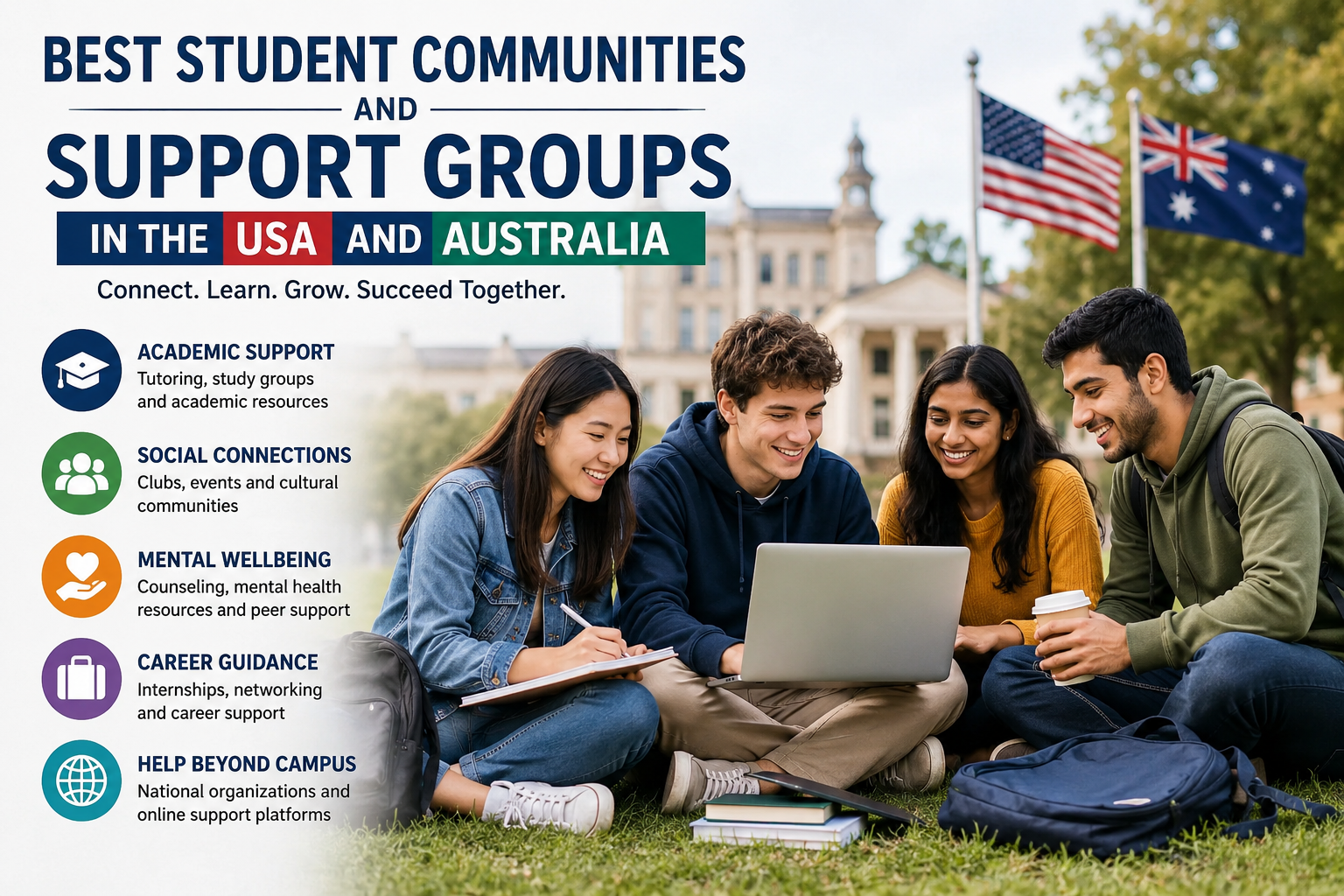
Best Student Communities and Support Groups in the USA and Australia

Moving to the USA for higher education brings excitement, opportunity, and more than a few challenges. International students often face academic pressure, cultural adjustment, financial concerns, and feelings of isolation. That is why student communities and support groups have become one of the most important factors in helping students succeed in both the USA and Australia.
The strongest student experiences rarely happen in isolation. They emerge from networks of support that help students adapt, connect, and thrive throughout their educational journey.
Why Student Communities Matter More Than Ever
Student support systems do much more than organize social events. Research shows that students who engage with support services are more likely to stay enrolled, perform better academically, and report higher levels of wellbeing.
For international students, the transition can feel like learning the rules of a completely different game. A student may understand the course material but struggle with classroom participation, assignment expectations, or visa requirements. Support groups help bridge these gaps.
Universities across the USA and Australia have invested heavily in dedicated services that assist students with academic guidance, career planning, immigration advice, and mental health support. These services reduce stress and allow students to focus on their studies rather than administrative challenges.
Think of student support networks like a GPS system in an unfamiliar city. The destination remains the same, but the guidance makes the journey faster, safer, and far less stressful.
Campus-Based Support Services Students Should Use
Most universities operate dedicated international student offices designed to support students from arrival through graduation.
In the United States, International Student and Scholar Services (ISSS) offices provide assistance with visa compliance, work authorization, orientation programs, and cultural adjustment. These departments often coordinate with academic advisors, career centers, and counseling services to create a connected support experience.
Australian universities follow a similar model. Students can access academic skills workshops, language support, career services, peer mentoring, and wellbeing counseling through centralized student support hubs.
One of the biggest mistakes new students make is waiting until a problem appears before seeking help. The most successful students engage with these offices early, attend orientation sessions, and build relationships with advisors before challenges arise.
Many universities also offer peer mentoring programs where experienced students help newcomers understand campus life, study expectations, and local culture. These programs often provide practical advice that cannot be found in official handbooks.
Student Clubs Create Belonging and Lasting Connections
Academic success is closely linked to social connection. Students who feel they belong are more likely to stay motivated and engaged.
This is where student clubs and societies become valuable. Cultural associations, professional organizations, sports clubs, volunteer groups, and academic societies help students meet people who share similar interests and experiences.
For international students, nationality-based organizations often serve as a home away from home. Indian, Chinese, African, Middle Eastern, and Latin American student associations frequently organize cultural celebrations, networking events, and peer support activities.
Professional societies offer another advantage. Students studying engineering, business, healthcare, information technology, and other fields can connect with future colleagues while gaining access to workshops and industry events.
When students need additional academic guidance beyond campus resources, platforms like Expertsmind.com's subject expert network can complement university support systems by providing flexible tutoring and assignment assistance outside normal campus hours. This can be particularly useful during exam periods when demand for academic help is at its highest.
National Organizations Supporting Students
Support extends far beyond university campuses. Both the USA and Australia have national organizations dedicated to improving the student experience.
In the United States, EducationUSA helps students understand higher education opportunities, admissions requirements, and funding options. Organizations such as NAFSA and the Institute of International Education contribute to policy development, scholarship opportunities, and international student advocacy.
Students from specific cultural or ethnic backgrounds can also benefit from organizations that provide mentorship, scholarships, leadership development, and networking opportunities.
Australia offers similar support through national organizations such as the Council of International Students Australia (CISA) and the Australian Federation of International Students (AFIS). These groups advocate for student rights while creating opportunities for leadership and community engagement.
These organizations often become especially valuable when students are seeking internships, scholarships, professional connections, or guidance on issues affecting international students nationwide.
Mental Health Support Is Part of Student Success
Academic achievement and mental wellbeing cannot be separated. Universities increasingly recognize that emotional health directly affects learning outcomes.
Many students experience stress, anxiety, loneliness, or homesickness during their studies. International students may face additional pressures related to language barriers, cultural adjustment, and distance from family.
In the USA, universities often provide counseling centers, mental health workshops, and online support resources. Students can access both professional services and peer-led support communities.
Australia has developed a comprehensive network of wellbeing services. Organizations such as Lifeline, Headspace, and the Suicide Call Back Service provide accessible support for students experiencing emotional difficulties.
Seeking support should be viewed as a strength rather than a weakness. Students who address challenges early often prevent small problems from becoming major obstacles.
Building Your Personal Support Network
No single organization can meet every student need. The most effective approach combines multiple forms of support.
Students should begin with university services to understand available resources and institutional policies. Joining clubs and societies helps establish friendships and informal study networks. National organizations can provide scholarships, advocacy, and professional development opportunities. Online academic support platforms offer additional flexibility when coursework becomes demanding.
The key is to build connections before they become necessary. A strong support network creates confidence, improves wellbeing, and makes academic challenges easier to manage.
Students who actively engage with communities around them often discover that success abroad is not simply about earning a degree. It is about building relationships, gaining confidence, and creating a foundation for future opportunities. The right support system turns a challenging transition into one of the most rewarding experiences of a student's life.


