

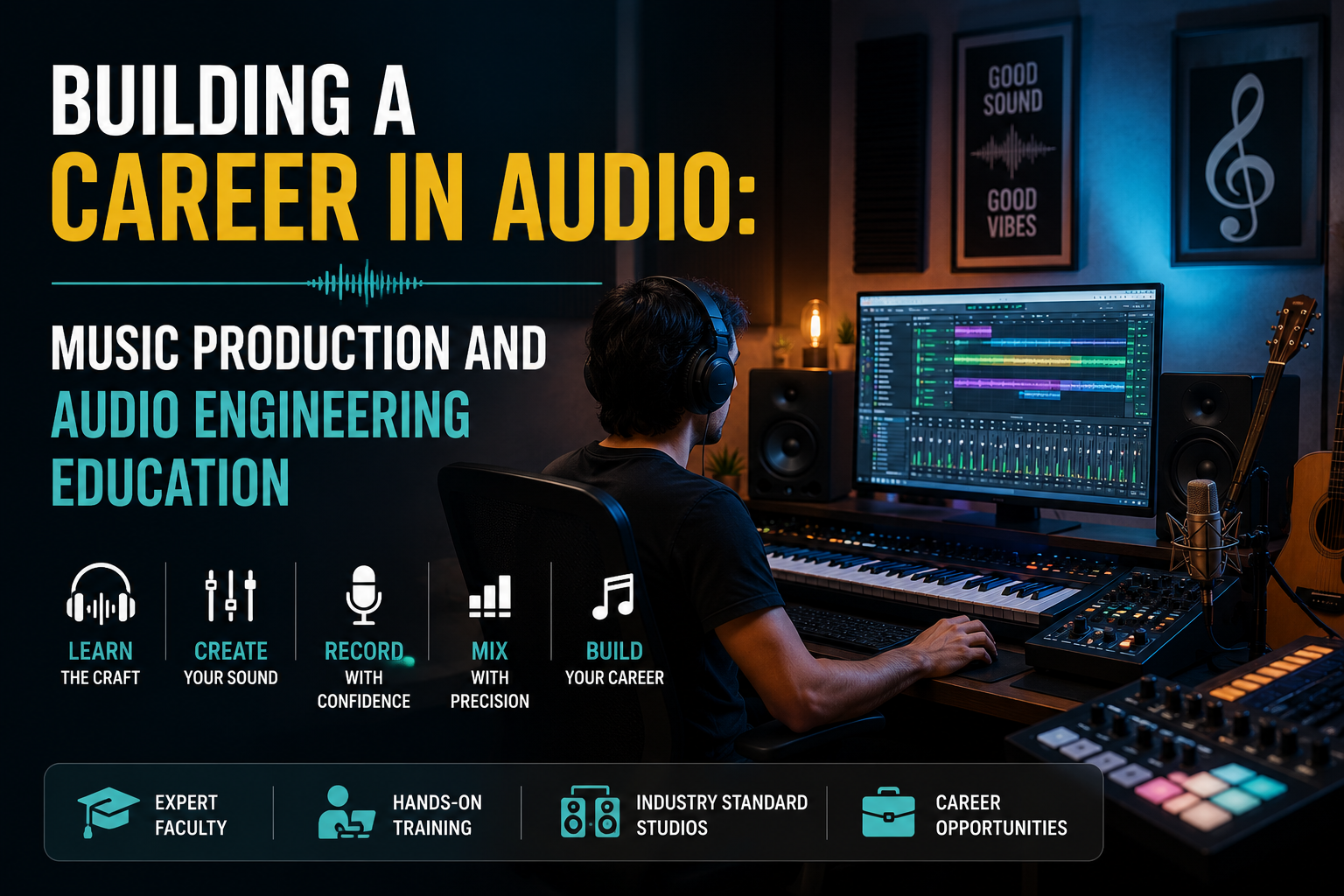
Building a Career in Audio: Music Production and Audio Engineering Education

Explore Practical Training, Creative Skills, and Industry-Focused Learning for Aspiring Audio Professionals
The modern entertainment industry offers numerous opportunities for individuals interested in music, sound, and technology. From film and television to streaming platforms, advertising, gaming, podcasts, and live events, quality audio plays an important role in delivering engaging experiences. As the industry continues to evolve, professional education can help aspiring audio professionals develop the technical knowledge and creative skills required to work confidently in different production environments.
Understanding Music Production and Audio Engineering
Music production and audio engineering are closely connected fields, but each involves different areas of expertise. Music production focuses on transforming creative ideas into finished musical compositions through arrangement, recording, editing, sound design, and production techniques. Audio engineering focuses more heavily on the technical aspects of capturing, processing, mixing, and reproducing sound.
A professional learning program can introduce students to both creative and technical concepts. They can learn how microphones work, how sound travels through recording systems, how digital audio workstations are used, and how different processing techniques influence the final sound.
Why Professional Training Matters
Although technology has made music production more accessible, professional results require more than simply knowing how to operate software. Understanding signal flow, acoustics, recording techniques, frequency response, dynamics, equalization, compression, and effects is essential for developing high-quality audio.
Structured education gives learners a systematic approach to understanding these concepts. Instead of learning individual techniques randomly, they can progress from fundamental principles to advanced production methods. Practical sessions also allow them to apply classroom knowledge in realistic studio environments.
Developing Creative Production Skills
Music production requires a combination of technical knowledge and artistic decision-making. Producers need to understand arrangement, rhythm, harmony, instrumentation, sound selection, and overall musical structure.
Students can develop these abilities by creating original compositions, experimenting with virtual instruments, working with MIDI, arranging tracks, and exploring different genres. Regular practice allows them to understand how individual production decisions contribute to the final character of a song.
Modern digital audio workstations also provide extensive creative possibilities. Learners can explore sampling, synthesis, automation, effects processing, and digital editing while developing their own production workflows.
Practical Learning in Professional Studios
One of the most valuable aspects of audio education is hands-on experience. Reading about recording or mixing techniques is useful, but applying them in an actual studio environment provides a deeper understanding of professional workflows.
Students can gain experience with microphones, mixing consoles, monitoring systems, recording equipment, software, and other studio tools. Practical assignments can also encourage them to work on complete projects, from recording and editing to mixing and final preparation.
This type of learning can help students understand how technical decisions affect sound quality and how different production environments require different approaches.
Career Opportunities in Music and Audio
The audio industry offers several career paths for individuals with relevant training. Depending on their interests and specialization, learners may explore opportunities in music production, recording, mixing, mastering, studio engineering, live sound, film audio, television, advertising, podcast production, gaming, and other digital media sectors.
Independent music has also created additional opportunities. Artists and producers can collaborate remotely, release music through digital platforms, and build professional networks without being limited to traditional production environments.
A strong technical foundation combined with creativity and practical experience can help learners adapt to these changing industry requirements.
Choosing the Right Music Production Program
Selecting an appropriate course requires careful consideration. Students should examine the curriculum, practical training, studio facilities, software exposure, faculty expertise, project opportunities, and overall learning environment.
For aspiring producers looking for specialized education, Music Production Courses In Chennai can provide an opportunity to learn in a growing creative environment. Chennai has a long association with music, film, television, and entertainment, making it a relevant location for individuals interested in developing professional music production skills.
A well-designed program should introduce learners to music theory, recording, arrangement, MIDI programming, sound design, mixing, mastering, and other essential production concepts. Practical projects can further help them build a portfolio that demonstrates their abilities.
Understanding Audio Engineering Education
Audio engineering extends beyond music production and covers a broad range of professional applications. Sound engineers may work in recording studios, concert venues, film production, broadcasting, television, advertising, theatre, gaming, and digital content production.
A comprehensive program can introduce students to studio recording, live sound reinforcement, acoustics, microphone techniques, mixing consoles, signal processing, monitoring, and professional audio systems. These skills can prepare learners to work with different types of audio equipment and production environments.
Building Industry-Ready Skills
The transition from education to professional work becomes easier when learners have practical experience. Industry-oriented training can help them become familiar with professional workflows, communication practices, project management, and collaborative production.
Students can also benefit from working on real-world projects and receiving feedback from experienced professionals. This allows them to identify areas for improvement and gradually develop greater confidence in their technical decisions.
Portfolio development is another important part of professional preparation. Completed recordings, mixes, compositions, sound design projects, and other work can demonstrate practical ability to potential employers and collaborators.
The Importance of Continuous Learning
Audio technology continues to change, with new software, plugins, production techniques, and creative workflows emerging regularly. Professionals therefore need to remain open to continuous learning.
Students who develop strong fundamentals can adapt more easily to technological changes because they understand the principles behind the tools they use. Experimentation, independent projects, collaboration, and regular practice can further strengthen their abilities.
For individuals seeking comprehensive training across the country, Audio Engineering Courses In India can offer structured pathways into the broader audio industry. Institutes can help learners build foundational knowledge while providing practical exposure to professional equipment, software, recording techniques, mixing, and other areas of sound production.
Conclusion
A career in music production or audio engineering requires a balanced combination of creativity, technical knowledge, practical experience, and continuous development. Professional education can provide learners with the foundation needed to understand modern audio workflows and explore different career opportunities.
With structured training, hands-on practice, experienced guidance, and a strong portfolio, aspiring audio professionals can gradually transform their interest in music and sound into valuable industry skills. Choosing the right learning environment can be an important step toward building a sustainable and rewarding career in the evolving world of audio.


