
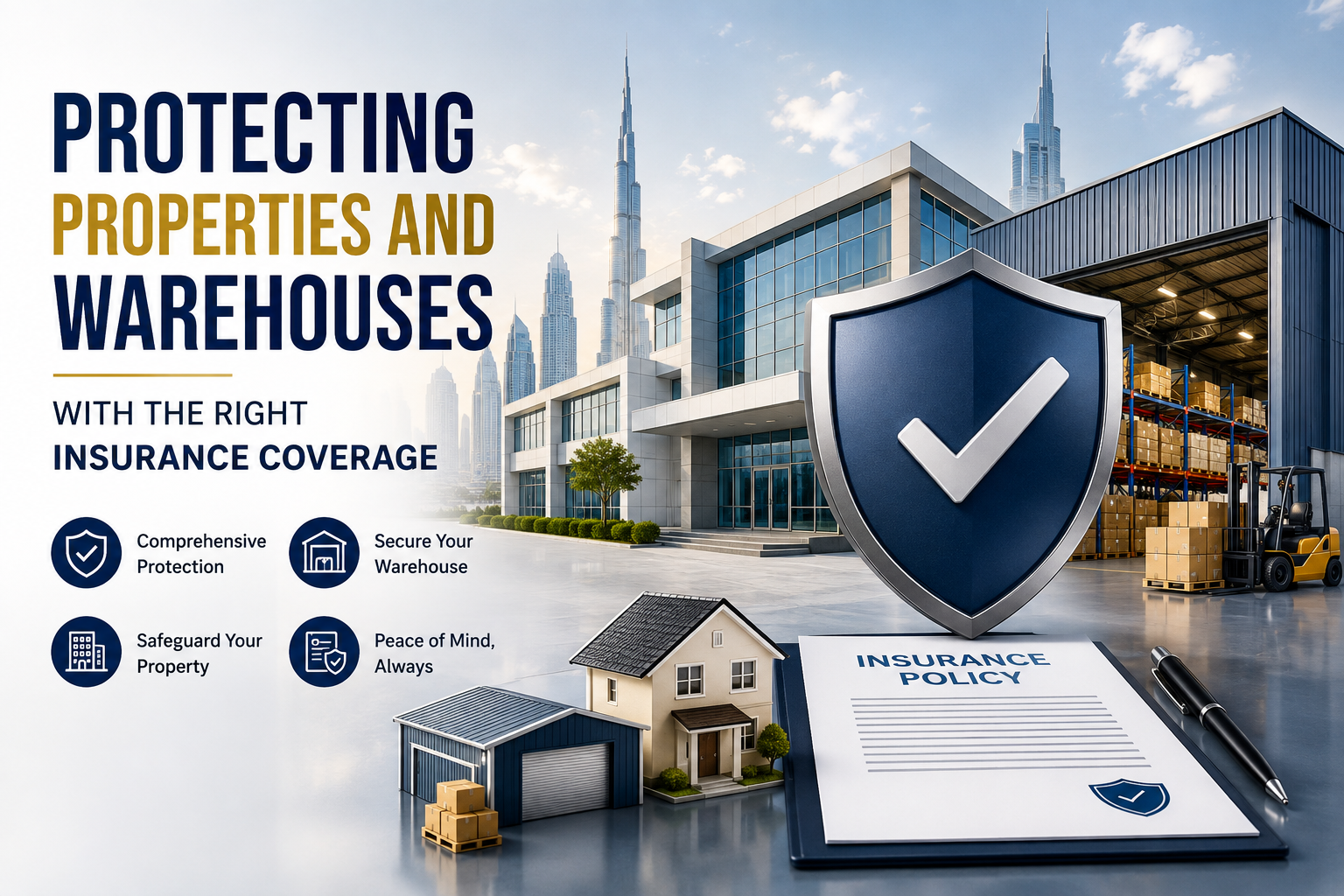
Protecting Properties and Warehouses with the Right Insurance Coverage

Understanding Property and Warehouse Insurance for Businesses in Dubai
Businesses and property owners invest significantly in buildings, equipment, inventory, furniture, and other valuable assets. However, unexpected events such as fire, storms, accidental damage, theft, or other insured risks can create substantial financial challenges. Having appropriate insurance coverage can help property owners and businesses manage these risks and protect their investments.
Property insurance is designed to provide financial protection for physical assets against covered events. Depending on the selected policy, coverage may include buildings, fixtures, fittings, equipment, and other specified property. Choosing suitable coverage requires an understanding of the property's nature, its location, the activities carried out there, and the potential risks involved.
Why Property Insurance Matters in Dubai
Dubai has a diverse commercial and residential property landscape, including offices, retail spaces, villas, apartment buildings, and commercial facilities. Each property can face different risks depending on its construction, usage, occupancy, and surrounding environment. A suitable insurance policy can help property owners prepare financially for unexpected incidents.
Property all risk Insurance Dubai solutions can provide broader protection for eligible property and assets, subject to the terms, conditions, exclusions, and limits of the selected policy. Such coverage may be considered by businesses and property owners looking to protect valuable physical assets against a range of unforeseen events.
The exact scope of protection can vary between insurance providers and policies. Property owners should carefully review what is covered, applicable deductibles, policy limits, exclusions, valuation requirements, and claim conditions before selecting a plan. Proper documentation of insured assets can also make the insurance process more organized.
Protecting Commercial Buildings and Business Assets
Commercial properties often contain valuable equipment, furniture, machinery, electrical systems, office infrastructure, and other assets. Damage to these items can interrupt normal business activities and result in repair or replacement expenses.
A well-structured property insurance policy can help businesses manage eligible financial losses arising from covered incidents. It can also form part of a broader risk-management strategy, particularly for businesses that depend heavily on their physical premises and equipment.
Businesses should assess their property regularly and identify potential risks. Fire safety systems, security measures, maintenance procedures, electrical inspections, and appropriate storage practices can help reduce the likelihood or severity of certain incidents. Insurance should complement these preventive measures rather than replace them.
Understanding Warehouse Insurance Requirements
Warehouses present a different set of insurance considerations because they may store large quantities of products, raw materials, machinery, packaging materials, or other valuable goods. The type and value of stored items can influence the level of coverage required.
Before purchasing insurance, warehouse operators should consider factors such as the nature of the goods stored, storage methods, fire protection systems, security arrangements, building construction, location, and estimated inventory values. Accurate information can help insurers assess the risks and determine appropriate policy terms.
Warehouse operators should also maintain updated inventory records. Regularly documenting stock levels and asset values can support better risk assessment and make it easier to provide relevant information during a claim.
Managing Risks Through Appropriate Coverage
Insurance planning should begin with a careful assessment of potential risks. Property owners and businesses can review their assets, identify possible sources of loss, and determine which areas require financial protection. The policy should then be selected according to the property's specific requirements.
It is also important to understand that insurance policies are subject to exclusions and conditions. Not every type of loss is automatically covered, and certain risks may require additional or specialized coverage. Reading the policy wording and discussing requirements with an experienced insurance professional can help avoid misunderstandings.
Why Businesses Should Review Their Policies Regularly
Property values, warehouse inventories, business operations, and equipment can change over time. A policy that was suitable when initially purchased may not provide adequate protection after significant changes to the business.
Annual policy reviews can help businesses check whether insured values remain accurate and whether the coverage continues to match their current requirements. Any major changes to premises, inventory, equipment, business activities, or storage arrangements should also be communicated to the insurer when required.
For businesses managing large inventories or valuable commercial assets, Warehouse insurance can be an important component of an overall risk-management strategy. Appropriate coverage can help businesses prepare for unexpected insured events while supporting greater financial stability.
Conclusion
Protecting commercial properties and warehouse operations requires careful planning and an understanding of the risks involved. The right insurance coverage can help property owners and businesses manage eligible financial losses arising from covered events. By assessing assets, reviewing policy conditions, maintaining accurate records, and regularly updating coverage, businesses can build a more effective approach to property risk management in Dubai.


