

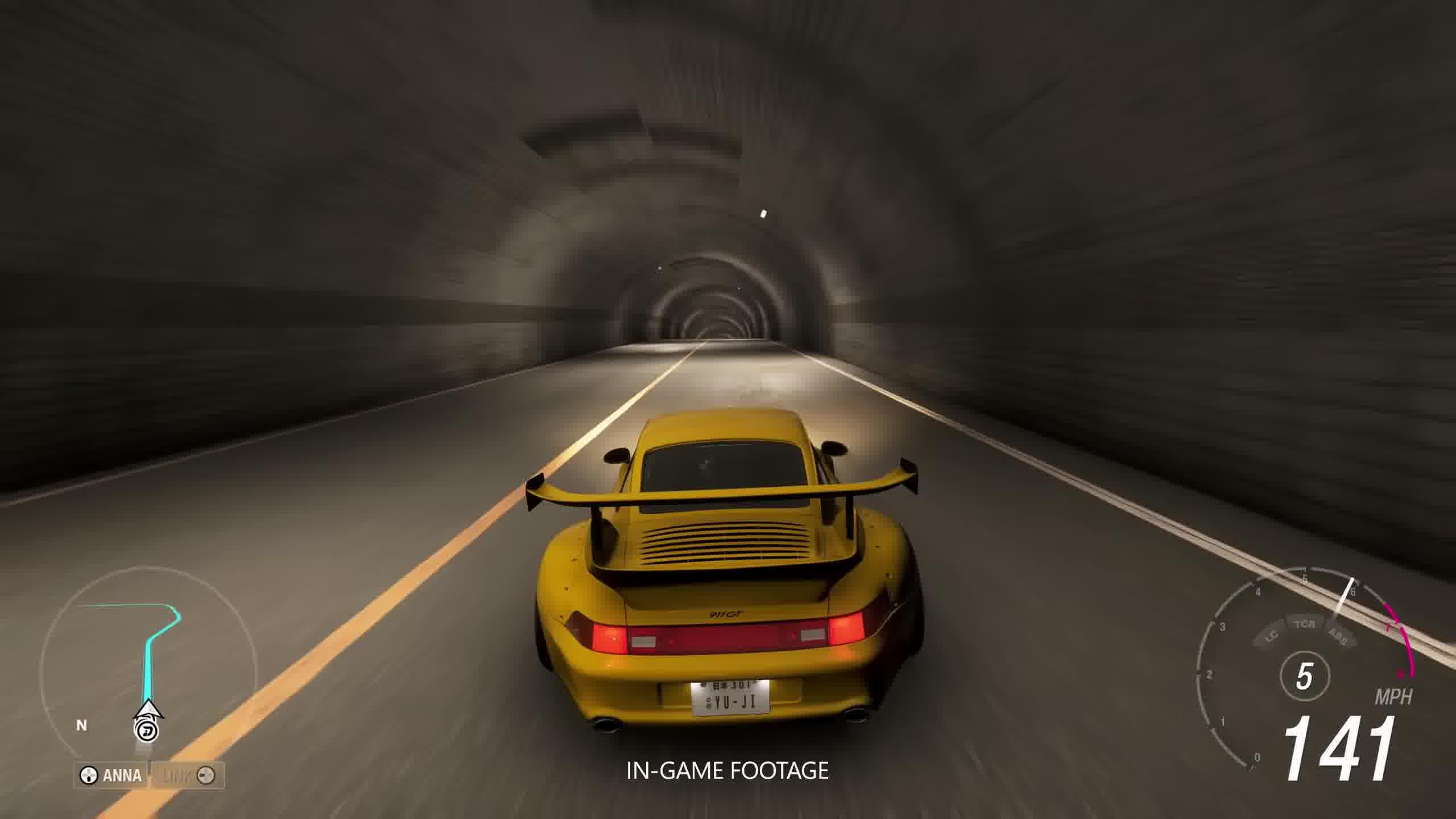
Forza Horizon 6: Master the Best Off-Road Challenge with U4GM

Racing games traditionally reward fast reactions. Forza Horizon 6 still demands those reactions, but its deeper systems encourage players to think analytically as well.
The game treats vehicle behavior as a collection of interacting variables. Tire grip, braking, steering, temperature, weather, suspension, gearing, and surface conditions all influence the outcome of a drive.
That makes engineering knowledge useful.
The handling model is based around the finite grip available at the tires. When braking and steering forces overlap, the tires can exceed their available traction. The player therefore needs to understand not just where to turn but how much force to demand from the vehicle at each moment.
This becomes especially important when assists are disabled.
With simulation steering and fewer electronic interventions, the driver has more direct responsibility for the vehicle. Smooth inputs become valuable because abrupt actions can destabilize the car.
The proximity radar provides additional information by helping drivers maintain awareness of surrounding vehicles.
This combination of physics and awareness transforms racing into an information-management exercise.
Weather adds another variable. The game contains four seasons, and conditions can change the mechanical characteristics of the environment.
Spring rain can affect dirt surfaces. Summer heat can influence road temperatures. Autumn nights can create colder asphalt. Winter introduces snow and ice in mountainous areas.
A driver therefore needs to understand not only the car but also the environment.
The garage allows players to respond through tuning. Suspension alignment, gear ratios, and tire pressure can be adjusted, while telemetry helps evaluate the result.
This is where Forza Horizon 6 Modded Accounts becomes an interesting concept to examine. Players seeking faster progression can approach the game as a race for resources, but the simulation systems encourage another form of acceleration: improving knowledge and execution. A player who understands vehicle dynamics can often make better decisions without relying solely on raw power.
The engineering mindset also appears in EventLab.
Creators can modify terrain, place thousands of props, and use visual scripting to create new rules. Building a good event requires logical thinking because the designer must anticipate how players and vehicles will interact with the environment.
For example, an obstacle course needs to account for vehicle dimensions, momentum, braking, and available space. A time attack requires careful route construction and meaningful checkpoints. A drag event needs to consider straight-line acceleration and timing.
These are design problems as much as racing problems.
Horizon CoLab turns the process into a group activity. Friends can collaborate in real time, distributing creative responsibilities and testing ideas together.
The Estate provides another place for experimentation. Players can build test-track environments and organize their favorite vehicles into personalized displays.
The broader community economy gives these engineering activities additional value.
Custom tunes and liveries can be published through the global storefront. When players download a creator's work, the creator can receive in-game credits.
This means expertise can circulate throughout the community.
A skilled tuner may create a setup that helps another player complete a challenging event. A designer may create a livery that becomes popular. An EventLab creator may design a course that inspires others to build their own.
The game therefore creates multiple forms of knowledge exchange.
One player learns how to tune.
Another learns from that tune.
A third modifies the idea.
A fourth creates an event around it.
The cycle continues.
This is particularly appropriate for the game's fictionalized Japanese setting, where urban density, forests, mountains, and seasonal changes provide a wide range of environments for experimentation.
The world itself becomes a testing laboratory.
Players can compare how vehicles respond to different surfaces and temperatures. They can refine setups, build custom events, and test their designs against friends.
The result is a racing experience that rewards curiosity.
Players do not need an engineering degree to enjoy it. But the more they understand the relationships between inputs and outcomes, the more control they gain over their vehicles.
That is perhaps the defining idea behind Forza Horizon 6: performance is not simply something to purchase.
It is something to understand.
A faster car can provide potential, but the driver still has to manage it. A sophisticated tune can provide an advantage, but the driver must know when and where that advantage applies. A custom event can look spectacular, but its design must account for physics.
By combining open-world freedom with mechanical systems,
Forza Horizon 6 Boosting turns racing into an exercise in experimentation.
For players who enjoy asking "why?" as much as "how fast?", that may be the game's most compelling feature.


