
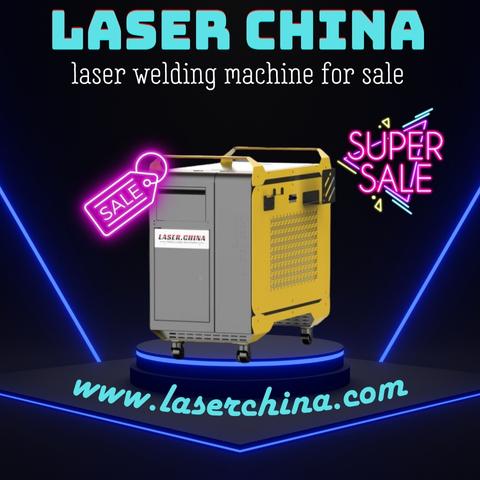
Where Can You Find the Right Laser Welder for Sale for Your Production Needs
Finding the right welding equipment can have a major impact on production quality, workflow, and long-term manufacturing results. If you are searching for a laser welder for sale, it is important to understand how modern laser welding technology can fit into your workshop or industrial operation. Laser welding machines are increasingly used for metal fabrication, automotive components, machinery production, electronics, kitchen equipment, decorative products, and many other applications.
Understanding Laser Welding Technology
Laser welding is a modern joining process that uses concentrated laser energy to heat and fuse metal surfaces. Instead of relying on a traditional welding arc, the laser creates a focused heat source at the welding position. This makes it possible to work with controlled energy and accurate weld placement.
The technology can be applied to materials such as stainless steel, carbon steel, galvanized steel, aluminum, and other commonly used metals. Depending on the machine configuration and material thickness, laser welding can be used for both detailed components and larger fabrication projects.
When looking for a laser welder for sale, understanding your material requirements is an important starting point. The type of metal, thickness, joint design, production volume, and required welding speed can all influence the appropriate machine configuration.
Why Businesses Are Looking for a Laser Welder for Sale
Manufacturing environments are constantly looking for more consistent production methods. Welding is an important part of many fabrication processes, so equipment that provides controlled operation can help create a more organized workflow.
Laser welding is suitable for businesses that need accurate joining of metal components. It is commonly considered for applications where appearance, repeatability, and controlled welding are important.
A suitable machine can be incorporated into workshops producing metal cabinets, doors, machinery parts, automotive components, stainless-steel products, kitchen equipment, advertising structures, and custom fabrication projects.
For businesses expanding production, purchasing a laser welder for sale can also provide an opportunity to establish an in-house welding process rather than depending entirely on external fabrication services.
Choosing the Appropriate Laser Welding Power
Laser welders are available with different power configurations. The appropriate power depends largely on the materials and thicknesses that need to be processed.
Lower-power systems can be suitable for thinner sheet materials and detailed welding applications. Higher-power machines are generally considered when working with thicker materials or demanding production requirements.
Before purchasing a machine, prepare a list of the metals and thickness ranges you commonly work with. This information can help suppliers recommend a suitable laser source and configuration.
It is also useful to consider whether the machine will be used occasionally, regularly, or for continuous production. Your expected workload can influence the type of equipment that makes practical sense for your workshop.
Applications Across Different Industries
Laser welding technology has applications across numerous industries because metal components are used in almost every manufacturing sector.
In automotive production, laser welding can be used for components, brackets, body parts, and various metal assemblies. In kitchen equipment manufacturing, it can be applied to stainless-steel cabinets, counters, sinks, and equipment structures.
Metal furniture manufacturers may use laser welding for frames and decorative structures, while machinery manufacturers can use it for different components and assemblies.
The technology is also useful for customized fabrication. Workshops that produce small batches or specialized metal products can use laser welding equipment for different projects without relying exclusively on conventional welding processes.
Handheld Laser Welders for Flexible Production
For workshops that handle different projects, a handheld laser welding machine can provide a flexible approach to metal joining. The operator can guide the welding head along the required joint, making the equipment suitable for a variety of shapes and fabrication tasks.
Handheld systems are commonly considered by workshops that need equipment for repair work, customized production, metal fabrication, and general manufacturing.
When searching for a laser welder for sale, check whether a handheld configuration matches your production environment. Consider the working area, material thickness, available electrical supply, operator experience, and expected workload before making a purchase.
Important Points to Check Before Buying
Buying welding equipment involves more than comparing the advertised price. A machine should be evaluated according to the requirements of the actual production environment.
Start by checking the laser power and source specifications. Then consider the compatible materials and thickness range. The welding head, cooling system, wire-feeding system, control interface, and machine configuration should also be reviewed.
After-sales support is another important consideration. Reliable technical assistance can be valuable when installing new equipment, training operators, maintaining the system, or troubleshooting operational issues.
Ask the supplier about installation requirements, warranty coverage, spare parts availability, maintenance procedures, and operator training before completing your purchase.
Laser Welding and Production Consistency
Consistent welding is important when manufacturing products in repeated quantities. Variations in welding technique can affect the appearance and structural quality of finished components.
Laser welding provides a controlled energy source, allowing operators to follow established welding parameters for specific materials and applications. Once appropriate settings have been established, the same process can be repeated across similar components.
For production businesses, this can make it easier to develop standardized welding procedures. Operators can work according to defined parameters instead of relying entirely on manual adjustments during every welding operation.
Working With Stainless Steel and Other Metals
Stainless steel is one of the common materials associated with laser welding. It is widely used in kitchen equipment, architectural products, medical equipment, industrial components, and decorative metal products.
Laser welding can also be used with carbon steel and aluminum when the machine is appropriately configured for the application. Different metals require different settings because their thermal properties and surface characteristics vary.
Before purchasing a laser welder for sale, discuss your specific materials with the supplier. Providing accurate information about the metal type and thickness can help determine a suitable configuration.
Supporting Modern Metal Fabrication
Metal fabrication is becoming increasingly focused on precision, repeatability, and efficient workflows. Laser welding fits into this direction by providing a concentrated welding process that can be integrated into different manufacturing environments.
For a small workshop, the machine may be used for custom fabrication and repair projects. For a larger manufacturer, it can become part of a structured production line involving cutting, bending, welding, finishing, and assembly.
The right equipment therefore depends on the scale and type of business. A machine designed for occasional workshop use may not be appropriate for a high-volume manufacturing facility, while a large industrial system may be unnecessary for a small fabrication shop.
Planning Your Investment
Before purchasing welding equipment, establish a realistic budget that includes more than the initial machine price. Installation, transportation, training, accessories, consumables, maintenance, and future spare parts can all contribute to the overall investment.
Compare specifications from reliable manufacturers and request detailed quotations. Make sure the quotation clearly explains what is included with the machine.
It is also worthwhile to ask for information about operating requirements and recommended maintenance schedules. Understanding these factors in advance can help your business plan for long-term equipment use.
Final Thoughts
Choosing a laser welder for sale is an important decision for any business involved in metal fabrication or manufacturing. The right machine should match your materials, production volume, welding requirements, workspace, and budget.


