

How Does a Laser Cleaner Machine Improve Modern Surface Preparation
Modern manufacturing and maintenance require reliable methods for preparing metal surfaces without creating unnecessary waste or damaging the original material. Traditional cleaning processes often involve abrasive blasting, chemical solvents, wire brushes, or other mechanical techniques. While these methods can be useful, industries are increasingly looking for cleaner and more controlled technologies. A laser cleaner machine provides a modern approach by using concentrated laser energy to remove unwanted materials from a surface.
Laser cleaning can be used for removing rust, paint, oil, grease, oxides, carbon deposits, coatings, and other contaminants from many metal components. Because the process can be precisely controlled, it is suitable for applications where surface quality and material preservation are important.
What Is a Laser Cleaner Machine?
A laser cleaner machine is an industrial cleaning system that uses a focused laser beam to remove contaminants from a material's surface. Instead of relying on chemicals or abrasive media, the machine directs controlled laser energy toward the unwanted layer.
When the laser interacts with contaminants, the absorbed energy causes the unwanted material to separate, evaporate, or become loose enough to be removed from the surface. The correct laser parameters depend on the material, contamination type, thickness, and desired cleaning result.
Different systems can be designed for different production requirements. Portable units are particularly useful for maintenance teams and workshops because operators can move the equipment between work areas. Larger systems can be integrated into industrial production environments where repeated cleaning operations are required.
How Laser Cleaning Works
The basic process starts with directing the laser beam toward the contaminated surface. The laser energy interacts primarily with the unwanted layer. By adjusting parameters such as power, pulse characteristics, scanning speed, and beam size, operators can control how the surface is treated.
For example, rust absorbs laser energy differently from many metal substrates. With appropriate settings, the rust can be removed while the underlying metal remains suitable for further processing.
The cleaning head can be moved across the surface using controlled scanning patterns. This allows operators to cover large areas systematically while also reaching specific sections of complex components.
Proper parameter selection is essential. Excessive energy or an unsuitable scanning speed can affect the base material, while insufficient energy may leave contamination behind. For this reason, testing and adjustment are important before beginning large-scale production work.
Removing Rust from Metal Surfaces
Rust removal is one of the most recognized applications for a laser cleaner machine. Metal structures, machinery components, tools, automotive parts, molds, and fabricated products can develop rust when exposed to moisture and environmental conditions.
A laser cleaning system can target oxidized layers and remove them from the surface without requiring large quantities of abrasive material. This makes the technology useful for workshops and industrial maintenance operations where clean metal surfaces are required before painting, welding, coating, or inspection.
The cleaning process can also be controlled according to the condition of the component. Light surface oxidation may require different settings from thick and heavily developed rust.
Paint and Coating Removal
Paint and industrial coatings sometimes need to be removed before repair, refurbishment, welding, inspection, or recoating. Conventional removal methods can generate considerable dust or require chemical stripping agents.
A laser cleaner machine can selectively process unwanted paint and coatings by directing energy across the target area. This makes it possible to prepare specific sections of a component without treating the entire surface unnecessarily.
Industries working with machinery, automotive components, metal structures, and manufacturing equipment can use laser cleaning as part of refurbishment and maintenance processes.
Oil, Grease, and Industrial Contamination
Manufacturing components often collect oil, grease, dirt, carbon, and other deposits during production or operation. Before welding, coating, inspection, or assembly, these contaminants may need to be removed.
Laser cleaning can provide a controlled method for treating contaminated surfaces. The appropriate settings allow operators to process the unwanted layer while maintaining control over the underlying material.
For maintenance departments, this can make the cleaning stage easier to integrate into repair workflows. Components can be cleaned in targeted areas instead of being subjected to an extensive mechanical cleaning process.
Applications in Manufacturing
Manufacturers can use laser cleaning technology at several stages of production. Metal parts may require cleaning before welding, coating, bonding, painting, or quality inspection.
For welding preparation, removing oxidation, dirt, oil, or coatings can help create a cleaner surface. In mold maintenance, laser cleaning can be used to remove deposits and residues that accumulate during repeated production cycles.
Laser cleaning is also useful for restoring industrial components. Instead of replacing a component because of surface contamination, manufacturers can investigate whether controlled cleaning can prepare it for further processing or refurbishment.
Automotive and Transportation Applications
Automotive workshops and component manufacturers work with many metal parts that require surface preparation. Engine components, molds, brake components, fabricated structures, tools, and other parts can accumulate rust, grease, paint, and carbon deposits.
A laser cleaner machine can be used for localized treatment where conventional cleaning may be inconvenient. The operator can direct the cleaning beam toward a specific area and adjust the process according to the material and contamination.
Transportation maintenance operations can also benefit from portable laser cleaning equipment when components cannot easily be moved to a dedicated cleaning station.
Cleaning Before Welding and Painting
Surface preparation is an important stage before welding and painting. Contaminants can interfere with the quality of subsequent processes, so removing unwanted layers can help create a more suitable working surface.
Before welding, operators may clean rust, oxide layers, paint, oil, and other contaminants from the target area. Before painting, laser treatment can help remove old coatings and surface contamination.
The exact cleaning procedure should always be selected according to the substrate and the requirements of the following manufacturing process.
Portable Laser Cleaning Solutions
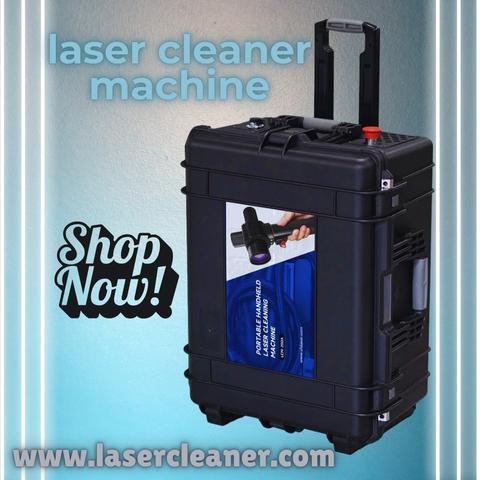
Portable systems have become increasingly useful for workshops, maintenance teams, construction sites, and industrial service providers. A portable laser cleaner machine can be transported to different working locations rather than requiring every component to be taken to a fixed cleaning area.
Handheld cleaning heads allow operators to work across flat surfaces, edges, selected sections, and various industrial components. Depending on the equipment design, portable systems can be configured for different cleaning applications and production environments.
When selecting portable equipment, users should consider the required laser power, cleaning width, operating environment, component materials, and expected workload.
Choosing the Right Laser Cleaning Equipment
Selecting suitable equipment starts with identifying the materials and contaminants that need to be processed. Rust, paint, oil, carbon, oxidation, and other deposits may require different operating parameters.
Users should also consider whether the machine will be used occasionally for maintenance or continuously in a production environment. Portable systems can suit mobile maintenance work, while higher-capacity industrial systems may be appropriate for demanding production schedules.
Laser wavelength, power, pulse configuration, scanning system, cooling method, control interface, and cleaning head design can all influence the working process. Proper operator training is equally important because correct parameter selection helps achieve consistent results.
Workplace Safety and Operating Practices
Laser cleaning equipment must be operated according to the manufacturer's safety instructions. Industrial laser systems can present serious eye and skin hazards if used incorrectly.
Operators should use appropriate protective equipment, establish controlled working areas, follow laser safety procedures, and ensure suitable ventilation or extraction where the cleaning process produces fumes or particles.
Before processing a valuable component, it is also sensible to test the selected parameters on a suitable sample or less critical area. This helps verify that the desired cleaning result can be achieved without unnecessarily affecting the substrate.
The Growing Role of Laser Cleaning
As manufacturers focus more heavily on controlled production, efficient maintenance, and cleaner processing methods, laser cleaning continues to attract attention across multiple industries. Its ability to target unwanted surface layers makes it suitable for many preparation and restoration tasks.
From removing rust from machinery to preparing metal before welding, the technology can be adapted to different industrial requirements. Continued improvements in laser sources, scanning systems, portability, and machine controls are also making the technology more accessible to workshops and production facilities.
Final Thoughts
A laser cleaner machine offers a modern approach to industrial surface preparation by using controlled laser energy to remove unwanted contaminants from materials. Its applications extend from rust and paint removal to cleaning oil, oxidation, carbon deposits, and other surface residues.


