

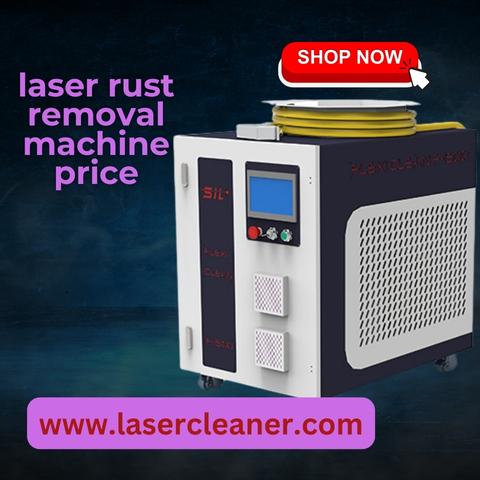
Laser Rust Removal Machine Price: A Smart Investment for Industrial Cleaning
Rust can damage metal surfaces, affect product quality, and increase maintenance costs in industrial environments. Traditional rust removal methods often require chemicals, abrasive materials, or considerable manual effort. Today, laser technology offers a modern solution for removing rust and preparing metal surfaces for further processing. Understanding the laser rust removal machine price helps businesses choose suitable equipment according to their cleaning requirements, production volume, and available budget.
Laser rust removal machines are used in manufacturing plants, automotive workshops, metal fabrication facilities, shipyards, and maintenance departments. By selecting the right system, businesses can improve cleaning consistency and support more efficient metal restoration.
What Is a Laser Rust Removal Machine?
A laser rust removal machine uses concentrated laser energy to remove rust, oxidation, paint residues, and other unwanted contaminants from metal surfaces. The laser interacts with the contaminated layer, helping separate it from the underlying material when the process is configured correctly.
These machines are available in different designs, including handheld, portable, and industrial systems. Handheld models are particularly useful for cleaning metal components with different shapes, while larger industrial systems can support repeated cleaning operations in production environments.
Laser cleaning is a non-contact process, meaning the cleaning tool does not need to scrape the metal surface directly. However, suitable operating parameters are essential to avoid damaging the underlying material.
Factors That Affect Laser Rust Removal Machine Price
The cost of laser cleaning equipment varies according to several important factors. Buyers should evaluate these details before requesting quotations from manufacturers or suppliers.
1. Laser Power
Laser power is one of the primary factors influencing equipment cost. Lower-power systems may be suitable for light rust, small components, and occasional maintenance tasks. Higher-power machines can support more demanding cleaning applications, depending on the material, rust thickness, and required cleaning speed.
Choosing a machine with appropriate power helps businesses avoid paying for unnecessary capacity or purchasing equipment that cannot meet their production needs.
2. Machine Type and Portability
Handheld machines are designed for flexible cleaning tasks and can be useful when operators need to reach different areas of a workpiece. Portable systems are convenient for workshops and maintenance teams that move equipment between workstations.
Industrial cleaning systems may include additional automation, specialized scanning equipment, or integration options. These requirements can increase the overall investment.
3. Laser Source and Components
The laser source, scanning head, control system, cooling arrangement, and other components influence the machine's price and operating performance. Reliable components and appropriate technical support can be important for businesses that depend on consistent equipment availability.
Buyers should compare the specifications of different machines rather than selecting a model based on price alone.
4. Supplier and After-Sales Support
The supplier's experience, warranty terms, technical assistance, spare-parts availability, and operator training can affect the total cost of ownership. A low initial quotation may not represent the best long-term value if maintenance support is limited.
When comparing the laser rust removal machine price, request a detailed quotation that explains what is included, such as accessories, delivery, installation, training, and warranty coverage.
How Much Does a Laser Rust Removal Machine Cost?
There is no single price that applies to every laser rust removal system. Costs depend on laser power, machine configuration, supplier location, and customization requirements.
Entry-level systems generally require a smaller initial investment than high-power industrial machines. Portable handheld equipment may suit small workshops, while advanced systems designed for continuous industrial applications can require a substantially larger budget.
For an accurate quotation, buyers should provide suppliers with information about the materials they clean, the typical dimensions of their workpieces, the thickness of the rust, and their expected daily workload.
It is also useful to ask whether the quoted price includes shipping, taxes, training, warranty services, and any necessary safety equipment. Comparing quotations on the same basis makes purchasing decisions more reliable.
Applications of Laser Rust Removal Machines
Laser cleaning technology serves a wide range of industries where metal surfaces need to be restored or prepared for additional work.
-
Automotive industry: Cleaning rust from metal components, brackets, and selected vehicle parts.
-
Metal fabrication: Preparing steel surfaces before welding, coating, or finishing.
-
Shipbuilding and marine maintenance: Removing localized corrosion from suitable metal surfaces.
-
Manufacturing: Cleaning tools, fixtures, and metal components during maintenance.
-
Restoration workshops: Removing corrosion from compatible metal objects under carefully controlled conditions.
-
Industrial maintenance: Cleaning machinery components and selected structural metal surfaces.
The appropriate cleaning method depends on the base material, contamination level, required finish, and operating environment. Testing on a representative sample is recommended before beginning large-scale production.
How to Choose the Right Machine for Your Budget
Before purchasing equipment, define your cleaning requirements clearly. Consider whether the machine will be used occasionally for maintenance or continuously as part of a manufacturing process.
First, identify the types of metals you need to clean. Steel, stainless steel, and other alloys may require different operating parameters. Next, evaluate the size and shape of your workpieces to determine whether a handheld or automated solution is more appropriate.
You should also compare cleaning speed, available power settings, control options, maintenance requirements, and the supplier's service arrangements. Ask for a demonstration or sample-cleaning test whenever possible.
Businesses researching the laser rust removal machine price should request quotations for comparable specifications from multiple suppliers. This approach helps clarify differences in equipment capability, included accessories, warranty coverage, and ongoing support.
Operating Costs and Safety Considerations
The purchase price is only one part of the overall investment. Electricity consumption, maintenance, replacement components, operator training, and downtime can influence long-term expenses.
Laser cleaning also requires appropriate safety procedures. Industrial cleaning lasers can cause serious eye and skin injuries, while reflected laser radiation may present additional hazards. Operators should use suitable wavelength-rated protective equipment, follow the manufacturer's instructions, and implement the required controlled work area and laser safety measures.
Cleaning certain coatings or contaminants may generate hazardous fumes or particles. Appropriate extraction, ventilation, and exposure controls should be selected according to the materials being processed.
Regular inspections and preventive maintenance can help maintain consistent performance and reduce unexpected interruptions.
Final Thoughts
A laser rust removal machine can provide a modern approach to metal cleaning for workshops, manufacturers, and industrial maintenance teams. The right equipment depends on cleaning requirements, laser power, portability, component quality, and available technical support.
When evaluating the laser rust removal machine price, focus on the complete value of the system rather than the initial purchase cost alone. Compare specifications, request sample tests, review warranty conditions, and confirm safety requirements before making a decision. With careful planning, businesses can select suitable laser cleaning equipment that supports reliable operations and long-term productivity.
#LaserRustRemoval #LaserCleaningMachine #IndustrialCleaning #IndustrialCleaning


