
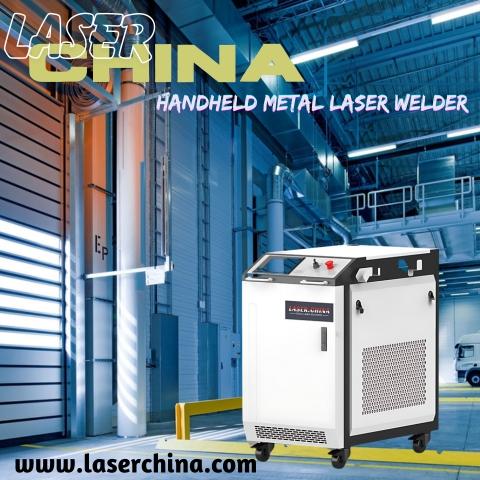
Handheld Metal Laser Welder: Precision Welding for Modern Industries
A handheld metal laser welder is a modern welding solution designed to join metal components with precision, speed, and consistent quality. It uses a concentrated laser beam to heat and fuse metal surfaces, making it suitable for various industrial and commercial applications. Its portable design allows operators to work on different metal parts without relying on large, fixed welding systems.
As manufacturing industries continue to seek efficient production methods, handheld laser welding technology is becoming an increasingly popular option for workshops, fabrication businesses, automotive manufacturers, and metal processing facilities.
How Does Handheld Metal Laser Welding Work?
Laser welding uses a focused beam of light to generate intense heat at a specific point on a metal surface. When the beam reaches the workpiece, it melts the material and creates a weld joint as the molten metal cools and solidifies.
A handheld system typically includes a laser source, a welding gun, a control unit, a cooling system, and a wire-feeding mechanism when filler material is required. Operators guide the welding gun along the joint to connect metal pieces according to the required design.
Depending on the machine's power, configuration, and material compatibility, this process can support different thicknesses and joint types. Proper parameter selection is essential for achieving reliable results.
Metals Suitable for Laser Welding
A handheld metal laser welder can be configured for welding several commonly used metals. Stainless steel is widely processed in food equipment manufacturing, kitchenware production, and industrial fabrication. Carbon steel is another common material used in machinery, structural components, and metal enclosures.
Aluminum welding is also possible with suitable equipment and carefully adjusted parameters. However, its high thermal conductivity and reflective properties require particular attention during setup. Certain systems can also process other compatible alloys, depending on their specifications.
Before purchasing a machine, businesses should confirm its compatibility with their preferred materials, thickness ranges, and production requirements.
Applications Across Different Industries
Handheld laser welding equipment serves a wide range of manufacturing needs.
Automotive Manufacturing
Automotive workshops can use laser welding to join compatible metal panels, brackets, housings, and selected vehicle components. Accurate heat control can help manage distortion when appropriate welding parameters and joint preparation are used.
Metal Fabrication
Fabrication companies can apply laser welding to cabinets, sheet metal enclosures, frames, and custom metal products. The handheld design allows operators to access different joints and work with varied component shapes.
Stainless Steel Products
Manufacturers producing commercial kitchen equipment, storage tanks, metal furniture, and decorative stainless steel products may use laser welding to create clean, consistent joints.
Machinery and Industrial Equipment
Industrial equipment manufacturers can use laser welding for suitable metal assemblies, machine housings, and selected precision components. The process can be integrated into production workflows where repeatable weld quality is important.
Choosing the Right Welding Machine
Selecting a handheld metal laser welder requires careful evaluation of the intended application. Laser power is one of the first considerations because it influences welding speed, penetration, and the thickness range the machine can handle.
Businesses should also examine the laser source, cooling arrangement, welding gun design, control interface, and availability of compatible consumables. Reliable technical support and access to replacement parts can be equally important for long-term operation.
It is advisable to provide suppliers with details about the metal type, material thickness, joint configuration, and expected daily workload. These details help determine whether a particular machine is suitable for the job.
Operating Safety and Maintenance
Laser welding requires strict safety procedures because high-powered laser radiation can cause severe eye and skin injuries. Reflected laser energy can also create hazards, particularly when working with reflective metals.
Operators should use equipment-specific laser safety measures, suitable protective eyewear selected for the laser's wavelength and power, appropriate enclosures or controlled work areas, and required interlocks. General-purpose welding helmets alone should not be assumed to provide adequate protection against direct or reflected laser radiation.
Proper ventilation is necessary to manage welding fumes. Operators should also receive appropriate training and follow the manufacturer's instructions.
Routine maintenance should include inspecting cables, connectors, the welding gun, protective optics, and the cooling system. Keeping the equipment clean and arranging professional servicing when required can help maintain consistent performance.
Why Work With a Reliable Supplier?
Choosing an experienced laser equipment supplier helps businesses select a machine that matches their production goals. A dependable supplier should provide clear technical specifications, application guidance, operating instructions, warranty information, and after-sales support.
Requesting sample welds using your actual materials can also help evaluate joint appearance, penetration, and overall suitability before making a purchasing decision.
Final Thoughts
A handheld metal laser welder can be a valuable addition to modern metal fabrication operations, offering a practical approach to joining compatible metal components with precision and controlled heat input. From stainless steel products to automotive parts and industrial assemblies, its applications extend across many manufacturing sectors.
The best results depend on selecting the correct machine configuration, preparing materials properly, training operators, and maintaining strict laser safety standards. By evaluating these factors before investing, businesses can choose a welding solution that supports their production requirements and long-term manufacturing objectives.
#HandheldMetalLaserWelder #LaserWelding #MetalFabrication


