
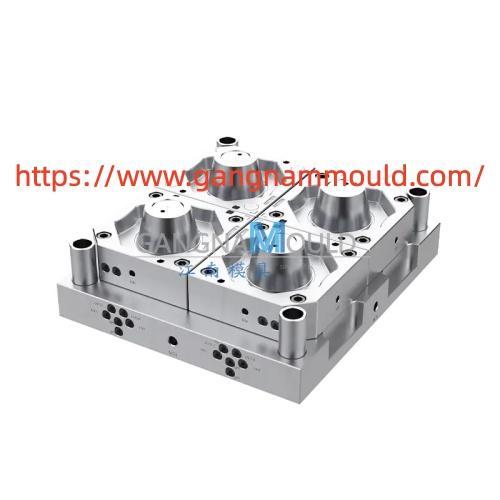
How Does Gangnammould Plastic Kitchenware Mould Support Product Innovation

Plastic Kitchenware Mould development has become an important consideration for manufacturers looking to introduce new household products and respond to changing consumer preferences. From food storage containers and measuring cups to colanders, bowls, and cooking accessories, everyday items require careful attention to shape, functionality, and production requirements. Custom tooling gives manufacturers greater freedom to develop products around specific market needs rather than relying entirely on standard designs. This flexibility is one reason why more businesses are considering customized manufacturing solutions when planning new product collections.
Consumer expectations for household products continue to change. People are interested in items that save storage space, simplify food preparation, and make everyday tasks more convenient. A container with a stackable structure, for example, may appeal to families with limited cabinet space. A measuring cup with a clearly visible scale can make cooking more convenient. Even small details, such as handle angles, edge shapes, and lid connections, can influence how a product is used.
For manufacturers, responding to these preferences requires more than changing the appearance of an existing item. The production process must support the intended structure and dimensions. Customized tooling allows designers to consider these requirements during the early development stage, making it easier to coordinate product concepts with manufacturing conditions.
One important reason businesses choose customized solutions is design flexibility. Standard products may not always match the requirements of a particular retail market or private label project. Some buyers want distinctive shapes, while others need specific dimensions, surface textures, or functional details.
A customized development process gives both parties an opportunity to discuss these elements before manufacturing begins. Engineers can review drawings, product samples, and three dimensional models to identify possible design challenges. They can also evaluate wall thickness, draft angles, parting lines, and ejection arrangements. These details influence how easily a finished item can be released and whether its dimensions remain consistent during repeated production.
Material selection is another consideration. Different resin materials have different flow characteristics, shrinkage rates, and temperature requirements. Polypropylene, polyethylene, and ABS may be considered for different household applications, depending on the intended function and applicable safety requirements.
The selected material should match the product design rather than being chosen only according to its purchase price. For example, a lightweight storage container may have different structural requirements from a utensil designed for repeated handling. Engineers need to consider the expected application, surface finish, flexibility, and dimensional stability before confirming the technical specifications.
Production efficiency also plays an important role in purchasing decisions. Buyers often want to understand how tooling structure affects cycle time, material consumption, and output planning. Cavity quantity is one factor that deserves attention. A single cavity configuration may be suitable for certain projects, while multiple cavities can support larger production requirements.
However, increasing cavity quantity is not automatically the right choice for every project. The injection machine, product dimensions, cooling arrangement, and expected order volume all need to be considered. A balanced design can help manufacturers organize production according to actual business needs.
Cooling system design deserves similar attention. Uneven cooling may contribute to deformation, dimensional variation, or surface defects. Properly arranged cooling channels help manage temperature distribution throughout the production cycle. Engineers should also consider venting and gate positions because these details affect material filling and the appearance of finished items.
Another reason manufacturers are investing in customized tooling is the demand for product differentiation. Retailers and distributors often serve different customer groups, so a single design may not satisfy every market. Some projects require compact storage solutions, while others focus on ergonomic handles, decorative patterns, or coordinated product collections.
These variations create opportunities for manufacturers to develop new product concepts. They can adjust dimensions, add functional details, or modify surface designs to match a particular brand identity. Early communication between the buyer and engineering team helps ensure that creative ideas remain practical for manufacturing.
Quality inspection should also be included throughout the development process. Before production approval, samples can be checked for dimensions, surface appearance, assembly compatibility, and functional performance. Any necessary adjustments can then be discussed before larger manufacturing orders begin.
Regular maintenance is equally important after a tooling system enters production. Cleaning, lubrication, inspection, and timely replacement of worn components can help maintain stable operating conditions. A clear maintenance schedule also makes production planning easier and helps reduce unexpected interruptions.
Choosing a manufacturing partner involves evaluating more than the initial quotation. Buyers should ask about engineering communication, machining capabilities, inspection procedures, project management, and after sales technical support. Reviewing previous project experience can also help customers understand whether a supplier is familiar with similar product structures and manufacturing requirements.
Gangnammould works with customers on customized tooling projects, connecting product ideas with practical engineering and manufacturing considerations. Whether a business is developing a new collection of household accessories or adjusting an existing design for a different market, clear specifications and technical communication can make the development process more organized. Buyers can review the available product range and discuss their project requirements through the Gangnammould website at https://www.gangnammould.com/product/ to identify suitable solutions for their upcoming manufacturing plans.


