
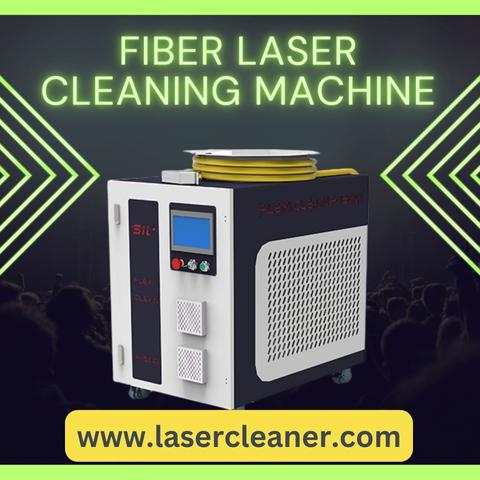
Fiber Laser Cleaning Machine: Precision Technology for Modern Industrial Cleaning
Industrial cleaning has become an essential part of modern manufacturing, metal processing, and equipment maintenance. Businesses need reliable solutions to remove rust, paint, oil, oxidation, and other unwanted materials without damaging the underlying surface. Laser technology offers an advanced approach to these challenges. A fiber laser cleaning machine uses concentrated laser energy to remove contaminants from different materials with accuracy and consistency, making it a valuable investment for industrial applications.
How Does Fiber Laser Cleaning Technology Work?
Laser cleaning operates by directing a focused laser beam onto a contaminated surface. When the laser interacts with unwanted materials, the energy causes them to separate from the base material through a process known as laser ablation.
The cleaning process can be adjusted according to the type of contamination, material, and required cleaning depth. Operators can control parameters such as laser power, scanning speed, frequency, and pulse duration to achieve the desired results.
Unlike traditional cleaning methods that may involve chemicals, abrasive materials, or extensive manual work, laser cleaning offers a controlled and modern alternative for many industrial environments.
Applications Across Different Industries
Laser cleaning technology is suitable for a wide range of industrial applications. In the automotive industry, it helps remove rust, paint, and surface contaminants from metal components before welding, coating, or assembly.
In manufacturing facilities, laser systems are used to clean molds, machinery parts, metal sheets, and production equipment. They can also prepare surfaces before painting or bonding, helping improve the consistency of subsequent manufacturing processes.
The technology is particularly useful in metal fabrication, shipbuilding, aerospace, and restoration projects. Businesses can select suitable cleaning configurations for different materials, including stainless steel, carbon steel, aluminum, and other metals.
Choosing the Right Laser Cleaning Equipment
Selecting suitable equipment requires careful consideration of the cleaning requirements. Laser power is one of the most important factors because different contamination levels require different energy settings. Light surface oxidation may need less power, while thick rust or stubborn coatings can require more intensive cleaning.
Businesses should also consider whether a continuous-wave or pulsed laser system is more appropriate. Continuous-wave systems are commonly selected for applications involving relatively fast cleaning of larger areas. Pulsed systems offer greater control over energy delivery and are often suitable for delicate surfaces or applications requiring precision.
Other considerations include cooling systems, scanning width, operating software, portability, and available technical support. A professional supplier can help determine the appropriate configuration based on the intended application.
Operating and Maintaining Laser Cleaning Systems
Proper operation is essential for achieving consistent cleaning results. Before starting the equipment, operators should inspect the laser head, cables, cooling system, and other important components. The workpiece should be positioned securely, and suitable cleaning parameters should be selected.
Laser safety must always remain a priority. Operators should use appropriate wavelength-rated protective eyewear, follow the manufacturer's safety instructions, and establish controlled working areas. Proper ventilation or fume extraction is also important because removing coatings and contaminants can release hazardous particles and fumes.
Regular maintenance helps maintain equipment performance. Cleaning optical components according to manufacturer instructions, checking cooling arrangements, and inspecting electrical connections can help reduce unexpected interruptions.
Why Businesses Are Investing in Laser Cleaning
Manufacturers are increasingly exploring laser cleaning as part of their efforts to modernize production processes. Its adjustable cleaning parameters, contact-free operation, and ability to handle different surface contaminants make it suitable for various industrial environments.
A fiber laser cleaning machine can also be integrated into production workflows where repeatable surface preparation is important. Depending on the application, businesses can choose handheld equipment for flexible operations or automated configurations for larger production lines.
Working with an experienced manufacturer is equally important. Reliable technical guidance, equipment customization, operator training, and after-sales support can help businesses achieve better results from their investment.
Final Thoughts
Laser cleaning is transforming the way industries approach surface preparation and contamination removal. From rust removal and paint stripping to precision cleaning of manufacturing components, this technology provides a modern solution for many industrial requirements. Choosing the right fiber laser cleaning machine involves understanding the application, material, contamination type, and production goals. With suitable equipment, proper operating procedures, and regular maintenance, businesses can develop more efficient and controlled cleaning processes.


