
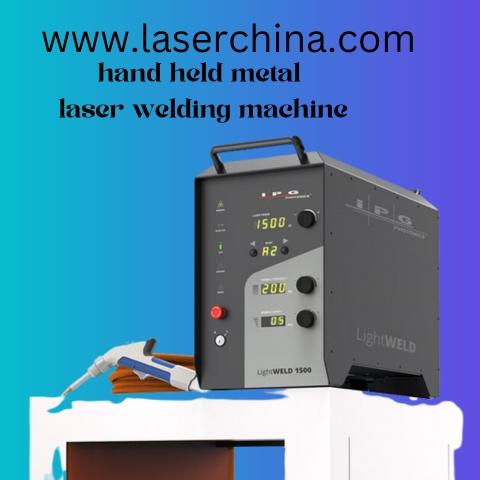
Hand Held Metal Laser: A Modern Tool for Precision Metal Processing
Metal processing has evolved significantly with the introduction of laser technology. Modern laser equipment allows manufacturers, workshops, and metal fabricators to handle different metal-related tasks with greater control and precision. A hand held metal laser is a practical solution for professionals who need a portable tool for metal surface treatment, welding, cleaning, or other laser-based applications, depending on the machine type.
Unlike traditional stationary equipment, handheld laser systems are designed to give operators more flexibility when working on metal components, structures, and surfaces. Their compact design makes them suitable for various industrial environments, including fabrication workshops, repair facilities, and manufacturing operations.
How Handheld Metal Laser Equipment Works
Laser machines use concentrated light energy to interact with metal surfaces. Depending on the machine's purpose, this energy can be used to join metal parts, remove contaminants, or create markings. Handheld systems allow operators to guide the laser head manually, providing greater control over the working area.
The process generally involves a laser source, a control system, and a handheld working head. These components work together to deliver laser energy to the targeted surface. Operators can adjust machine settings according to the material, thickness, application, and desired result.
When selecting a hand held metal laser, understanding its intended application is important because laser welding, laser cleaning, and laser marking require different configurations and operating parameters.
Applications in Metal Fabrication
Handheld laser technology is used in different industries where metal processing is an important part of daily operations. Fabrication workshops may use laser welding systems to join metal sheets, frames, enclosures, and other components. Laser cleaning equipment can help remove rust, paint, oxidation, and certain surface contaminants from metal parts.
These machines are also relevant to maintenance and repair work, where operators may need to process different surfaces or components without moving large equipment. Stainless steel, carbon steel, and other compatible metals may be processed depending on the machine specifications.
The flexibility of handheld laser equipment makes it an interesting option for businesses looking to modernize their metalworking processes.
Choosing the Right Machine for Your Workshop
Before purchasing a laser system, buyers should consider the materials they work with, the nature of their projects, and the working environment. Machine power, cooling requirements, control settings, operating modes, and manufacturer support are all important factors.
A suitable hand held metal laser should match the workshop's actual requirements rather than simply being selected according to its power rating or price. Buyers should also evaluate training requirements, protective equipment, laser safety enclosures or controlled work areas, and compliance with applicable safety regulations.
Proper operator training is essential because industrial lasers can cause serious eye, skin, fire, and other hazards. Using appropriate laser protection and following manufacturer instructions should always be part of the working process.
Final Thoughts
Handheld laser technology continues to expand the possibilities of modern metal fabrication and industrial processing. From joining metal components to cleaning surfaces and performing specialized metalworking tasks, these systems offer manufacturers a new approach to handling a wide range of projects.
Choosing the right equipment, understanding its applications, and maintaining safe operating practices can help businesses make better decisions when investing in laser technology. With the right setup, handheld laser systems can become a valuable part of a modern metalworking workshop.


