
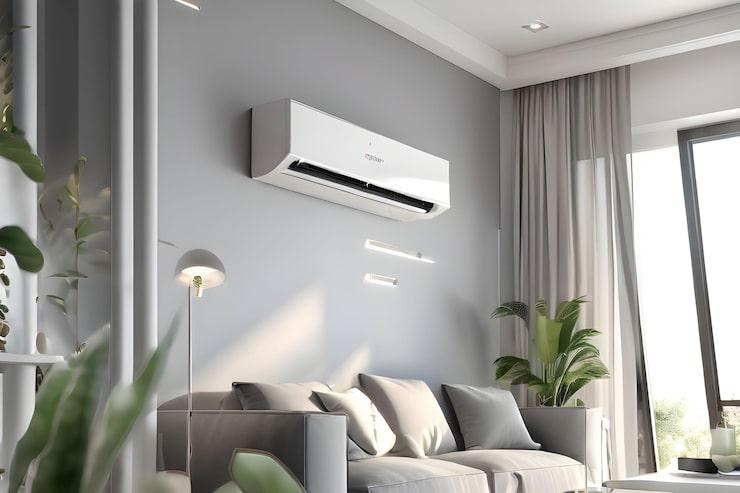
Will Refrigerant Regulations Reshape Europe's Room Air Conditioner Manufacturing Landscape?

Europe's room air conditioning sector is evolving as warmer summers, changing building requirements, and environmental regulations influence household and commercial cooling decisions. Although cooling has traditionally been less central to residential energy consumption in several European countries than in warmer regions, rising indoor comfort expectations are encouraging greater consideration of dedicated cooling systems. At the same time, electricity costs and efficiency requirements are shaping purchasing decisions, making equipment performance an important factor in product selection.
According to a Vyansa Intelligence report, the Europe Room Air Conditioners Market was valued at USD 6.67 Billion in 2025 and is projected to reach USD 8.55 Billion by 2032, registering a CAGR of 3.61% during 2026-2032. This expansion reflects the gradual integration of cooling equipment into residential and commercial environments, alongside demand for systems that balance operating efficiency, comfort, and environmental compliance.
Warmer Summers Are Changing Household Cooling Requirements
Changing temperature conditions are influencing how European households approach indoor comfort. Air conditioning adoption is becoming more relevant in residential properties where conventional ventilation and passive cooling methods may not provide sufficient relief during prolonged periods of high temperatures. Apartments, individual houses, and secondary residences present different installation requirements, encouraging manufacturers to offer equipment suited to varied building layouts.
Commercial applications also contribute to demand. Offices, hospitality establishments, retail premises, healthcare facilities, and educational institutions require controlled indoor environments to support occupant comfort and daily operations. These requirements create opportunities for equipment suppliers to address different cooling capacities, installation formats, and operating conditions.
In established markets, replacement purchases provide another source of demand. Consumers with older systems may consider upgrading to equipment offering improved energy performance, quieter operation, and more convenient controls. First-time installations can also expand as households reassess cooling requirements in response to changing summer conditions.
Building Renovation Creates Opportunities for Efficient Cooling
Europe's existing building stock presents an important opportunity for equipment manufacturers. Older residential and commercial properties may have limited cooling infrastructure, outdated electrical systems, or building designs that were not developed with modern thermal comfort requirements in mind. Renovation activity can encourage property owners to consider more efficient heating and cooling solutions as part of broader building improvements.
The European Commission's revised Energy Performance of Buildings Directive places emphasis on improving building performance through renovation, efficient technical systems, and better energy management. This creates a policy environment in which cooling equipment must be considered alongside insulation, ventilation, shading, and other building measures.
For manufacturers, this creates opportunities to develop compact systems and installation solutions suited to existing buildings. However, equipment selection must account for property characteristics, installation feasibility, electrical capacity, and the relationship between cooling demand and overall building energy performance.
Energy Efficiency Is Becoming a Purchasing Priority
Electricity consumption remains a significant consideration for European households and commercial buyers. Even where cooling requirements are increasing, operating expenses can influence how frequently consumers use air conditioning and which products they purchase. This places greater emphasis on equipment efficiency rather than cooling capacity alone.
Inverter technology, variable-speed compressors, improved heat exchangers, and intelligent temperature controls are becoming important product development priorities. These technologies allow systems to adjust performance according to indoor conditions and cooling requirements. Better controls can also help users manage operating schedules and avoid unnecessary energy consumption.
According to this industry report, manufacturers need to address the relationship between initial purchase costs and long-term operating expenses. Energy labels and product information help buyers compare equipment performance, while efficient product designs can strengthen competitiveness among customers seeking dependable cooling without excessive electricity consumption.
The European Commission's ecodesign framework establishes minimum energy performance, sound-level, and product-information requirements for covered air conditioners. Its energy labelling system also provides information on efficiency, energy consumption, and noise levels, supporting more informed purchasing decisions.
Refrigerant Transition Is Reshaping Product Engineering
Environmental compliance is another defining factor in Europe's cooling equipment landscape. The European Union's F-gas Regulation (EU) 2024/573 strengthens controls on fluorinated greenhouse gases and establishes a tighter phase-down framework for hydrofluorocarbons. These requirements are influencing refrigerant selection, equipment design, manufacturing processes, and servicing practices.
Manufacturers must assess alternative refrigerants while maintaining product safety, cooling performance, and compatibility with installation requirements. This transition also affects component sourcing and technical training across service networks. Installers and maintenance providers need appropriate capabilities to handle new refrigerant technologies, while distributors must ensure access to compatible parts and equipment.
Latest market analysis indicates that regulatory readiness is increasingly connected with product competitiveness. Manufacturers that integrate refrigerant transition planning into product development can better prepare their portfolios for changing European requirements.
Smart Connectivity Is Expanding Product Differentiation
Digital functionality is creating additional opportunities for product differentiation. Wi-Fi-enabled operation, mobile applications, automated scheduling, and remote temperature management allow users to control cooling systems more conveniently. Diagnostic functions can also support maintenance planning and help identify operating issues.
These features are relevant to households seeking greater control over indoor environments and commercial property operators managing multiple cooling units. However, smart functionality must deliver practical value without compromising affordability, reliability, or ease of use.
Industry analysis suggests that manufacturers will need to balance advanced connectivity with core product requirements. Cooling performance, energy efficiency, installation flexibility, and after-sales service remain essential purchasing considerations, particularly among buyers evaluating the total cost of ownership.
Opportunities and Challenges Across the Competitive Landscape
The Europe Room Air Conditioners Market offers opportunities through replacement demand, building renovation, first-time household installations, and the development of efficient connected systems. Manufacturers can strengthen their positioning by offering product portfolios suited to different property configurations, purchasing budgets, and regulatory requirements.
However, the industry faces challenges related to electricity costs, refrigerant transition, compliance complexity, and installation infrastructure. Differences in climate, building characteristics, and consumer purchasing behaviour across European countries also require manufacturers to adapt product and distribution strategies to local requirements.
In this report, the interaction between building renovation, energy efficiency, refrigerant regulation, and changing comfort expectations provides a useful framework for understanding the sector's development. Detailed market insights can help industry participants assess technology priorities, distribution requirements, and product positioning.
What Will Determine Europe's Next Phase of Cooling Adoption?
The European room air conditioning sector is moving toward a more efficiency-focused and regulation-driven operating environment. Cooling demand is gaining relevance across residential and commercial properties, while building renovation and changing comfort expectations create opportunities for new installations and equipment replacement.
Manufacturers that combine efficient performance, refrigerant compliance, connected functionality, and accessible installation services may be better positioned to address evolving requirements. Ultimately, the industry's development will depend on its ability to make indoor cooling more practical, energy-conscious, and compatible with Europe's broader building decarbonisation objectives.