


What Is the Connection Between Ezra Pound and Asian Literature?
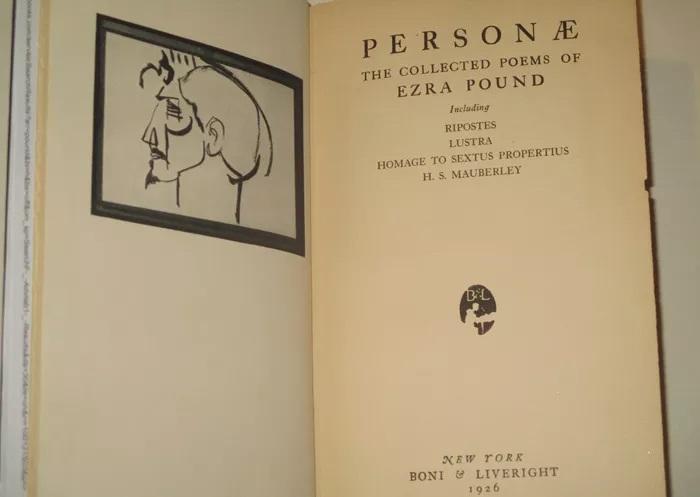
The connection between Ezra Pound and Asian literature is one of the most significant and complex cross-cultural encounters in modern literary history. As a poet and poetry researcher, examining this relationship reveals how literary modernism was shaped not only by Western innovation but also by deep, if sometimes controversial, engagement with non-Western traditions. Ezra Pound’s interaction with Chinese and Japanese literature transformed his poetic style, influenced the development of Imagism, and reshaped how English-language poetry understood concision, image, and musicality. At the same time, his approach raises important questions about translation, interpretation, and cultural authority.
Ezra Pound and the Modernist Search for Renewal
Ezra Pound emerged in the early twentieth century as one of the central figures of literary modernism. Dissatisfied with what he saw as the excesses and stagnation of Victorian poetry, Pound sought new models that could revitalize poetic language. His famous imperative to “make it new” was not merely a stylistic slogan but a call to reimagine the foundations of poetic expression.
Asian literature offered Pound precisely what he believed Western poetry had lost: clarity, economy, and an intimate connection between language and perception. Rather than viewing poetry as ornate decoration, Pound became fascinated with traditions that emphasized precision, suggestiveness, and the power of the image.
The Influence of Chinese Poetry
Ernest Fenollosa and the Chinese Written Character
Pound’s most direct engagement with Chinese literature came through the notes of Ernest Fenollosa, an American scholar of East Asian art and philosophy. After Fenollosa’s death, Pound was entrusted with his manuscripts, including unfinished work on Chinese poetry and the Chinese written character.
Fenollosa’s ideas profoundly influenced Pound’s understanding of language. He believed that Chinese characters conveyed meaning through visual and conceptual relationships rather than abstract grammar. Pound adopted this perspective enthusiastically, seeing it as a model for a more concrete and dynamic poetic language.
Although modern scholarship has challenged Fenollosa’s linguistic claims, their impact on Pound’s poetics was undeniable. Pound believed that Chinese poetry demonstrated how meaning could arise from juxtaposition rather than explanation, a principle that became central to modernist aesthetics.
Cathay and the Art of Transformation
Pound’s most famous engagement with Chinese poetry is the collection Cathay, published in 1915. Based on Fenollosa’s notes rather than direct knowledge of the Chinese language, these poems are not strict translations but imaginative recreations.
Despite this indirect method, Cathay was widely praised for its emotional clarity and vivid imagery. Poems such as those attributed to Li Bai conveyed longing, exile, and transience with striking immediacy. For many English-speaking readers, Cathay became their first meaningful encounter with classical Chinese poetry.
This work demonstrates how Ezra Pound used Asian literature not simply as source material but as a catalyst for reshaping English poetic form. The poems’ spare language and focus on image exemplified the modernist break from elaborate Victorian diction.
Japanese Literature and the Aesthetics of Haiku
The Impact of Haiku on Imagism
Japanese literature, particularly haiku, played a crucial role in shaping Pound’s poetic philosophy. Haiku’s brevity and emphasis on the moment resonated deeply with Pound’s desire for precision and immediacy.
Haiku offered a model of poetry that relied on suggestion rather than explanation. A single image or gesture could evoke a complex emotional landscape. This approach aligned perfectly with Imagism, the movement Pound helped define, which emphasized direct treatment of the “thing” and economy of language.
Pound’s famous two-line poem “In a Station of the Metro” is often cited as an example of haiku influence. Though not a haiku in form, its reliance on juxtaposed images reflects Japanese poetic principles adapted into a modernist context.
Japanese Noh Drama and Musical Structure
Pound’s engagement with Japanese literature extended beyond poetry to include Noh drama. He collaborated with scholar Ernest Fenollosa’s widow to translate and adapt Noh plays, believing they offered a model of poetic drama that integrated music, movement, and language.
Noh’s emphasis on ritual, restraint, and symbolic gesture influenced Pound’s ideas about rhythm and structure. He admired its ability to convey emotional depth through minimal means, reinforcing his belief that art gains power through discipline rather than excess.
Cultural Interpretation and Controversy
Translation Versus Adaptation
One of the most debated aspects of Ezra Pound’s relationship with Asian literature is the question of accuracy. Pound did not read Chinese fluently and relied heavily on secondary materials. As a result, his versions often depart significantly from their sources.
From a scholarly perspective, these departures raise ethical and interpretive concerns. Pound’s work can be seen as appropriation, reshaping Asian texts to fit Western modernist agendas. However, it can also be understood as a form of creative translation that prioritizes poetic truth over literal fidelity.
This tension reflects broader issues in cross-cultural literary exchange. Pound’s work invites readers to consider whether translation should aim for linguistic precision or aesthetic resonance, and whether these goals can ever be fully reconciled.
Orientalism and Modernism
Pound’s fascination with Asian literature also reflects the complexities of Orientalism in early twentieth-century Europe. Asian cultures were often idealized as sources of spiritual or artistic purity, sometimes stripped of historical and cultural specificity.
While Pound genuinely admired Asian literary traditions, his interpretations were filtered through modernist assumptions and personal ideology. This does not negate his influence, but it does require critical awareness of the power dynamics involved in cultural exchange.
Lasting Influence on English-Language Poetry
Despite these controversies, the impact of Ezra Pound’s engagement with Asian literature on modern poetry is profound. His work helped introduce Western poets to alternative models of composition that emphasized image, brevity, and musicality.
Poets influenced by Pound carried these principles forward, shaping movements such as Imagism, Objectivism, and later minimalist poetics. Even poets who rejected Pound’s politics or methods often inherited a poetic vocabulary shaped by his innovations.
Asian literature, as mediated through Pound, became part of the modernist toolkit. It challenged Western poets to rethink their relationship with language, perception, and tradition.
Ezra Pound’s Legacy as a Cultural Mediator
Pound occupies an ambiguous position as both a bridge and a barrier between cultures. He opened doors to Asian literary forms for English-speaking audiences, yet he did so through a lens shaped by his own artistic goals.
His legacy reminds scholars and poets that cultural influence is rarely neutral. It involves interpretation, transformation, and sometimes distortion. Nevertheless, it is through such encounters that literary traditions evolve.
Conclusion: A Transformative but Complicated Connection
The connection between Ezra Pound and Asian literature is a story of transformation, innovation, and controversy. Through his engagement with Chinese poetry, Japanese haiku, and Noh drama, Pound found models that helped redefine modern poetry in English. He demonstrated how cross-cultural dialogue could invigorate literary form, even as his methods raised enduring questions about representation and authority.
As a poet and poetry researcher, one must approach Pound’s work with both appreciation and critical distance. His interaction with Asian literature was neither purely faithful nor purely exploitative; it was a complex artistic exchange that reshaped twentieth-century poetry. Understanding this connection deepens our awareness of how modern literature emerges not in isolation, but through ongoing conversations across languages, cultures, and histories.
 Portuguese (Brazil)
 English
 Arabic
 French
 Spanish
 Portuguese
 Deutsch
 Turkish
 Dutch
Dutch
 Italiano
 Russian
 Romaian
 Greek
Greek