

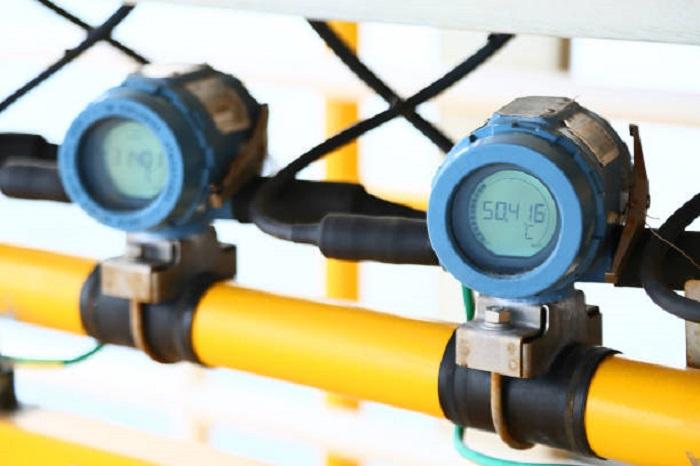
How Do Thermal Mass Flow Meters Improve Process Control Efficiency?

Modern industrial processes depend on precise measurement and responsive control to maintain quality, safety, and cost efficiency. Among the various flow measurement technologies available, thermal mass flow meters have become increasingly important in applications involving gases. Their ability to measure true mass flow directly, rather than relying on inferred calculations, makes them especially valuable in environments where consistency and accuracy are critical. Understanding how thermal mass flow meters improve process control efficiency requires examining their operating principles, their integration into control systems, and the specific advantages they offer over alternative measurement methods.
Understanding Thermal Mass Flow Measurement
Thermal mass flow meters operate on the principle of heat transfer. By measuring how a flowing gas removes heat from a heated sensor, the instrument determines the mass flow rate directly. This approach differs from volumetric flow measurement, which must be corrected for temperature and pressure variations to estimate mass flow.
Because mass flow is directly related to the number of molecules moving through a system, it is the most meaningful parameter for many industrial processes. Combustion control, chemical reactions, and gas blending all depend on precise mass flow rather than volume. Thermal mass flow meters address this requirement at the measurement level, reducing uncertainty and simplifying downstream control logic.
Direct Mass Flow and Process Stability
One of the fundamental ways thermal mass flow meters improve process control efficiency is by eliminating the need for external compensation. Since they measure mass flow directly, changes in temperature or pressure do not introduce the same level of error seen in volumetric systems. This stability allows control loops to operate with greater confidence, reducing oscillations and overcorrection.
Stable input data enables controllers to respond more predictably. When flow feedback is consistent and accurate, control valves and actuators can be tuned more precisely, improving overall system responsiveness and reducing wear on mechanical components.
Improved Accuracy and Repeatability
Accuracy and repeatability are central to effective process control. Thermal mass flow meters excel in both areas, particularly in gas applications where flow rates may fluctuate rapidly.
Sensitivity at Low Flow Rates
Many industrial processes operate at low or variable gas flow rates, where traditional differential pressure or turbine meters struggle to maintain accuracy. Thermal mass flow meters are inherently sensitive to small changes in flow because heat transfer responds directly to molecular movement.
This sensitivity allows for precise control even during startup, shutdown, or low-load conditions. Maintaining accurate measurement during these phases improves efficiency by minimizing waste, reducing off-spec production, and preventing unnecessary process interruptions.
Consistent Measurement Over Time
Thermal mass flow meters are less affected by mechanical wear because they have no moving parts. This contributes to long-term repeatability and reduces the need for frequent recalibration. Consistent measurement performance over extended periods enhances control system reliability and reduces maintenance-related downtime.
Integration with Advanced Process Control Systems
Thermal mass flow meters are well suited for integration into modern automated control environments. Their electronic outputs and fast response times align with the demands of advanced process control strategies.
Fast Response and Real-Time Feedback
Process control efficiency depends on timely feedback. Thermal mass flow meters typically offer rapid response to changes in flow, allowing control systems to adjust in near real time. This capability is especially important in dynamic processes such as gas mixing, combustion air control, and leak detection.
Fast feedback enables tighter control loops. When deviations are detected quickly, corrective actions can be applied before significant inefficiencies or quality issues develop. This proactive control approach improves yield and reduces energy consumption.
Compatibility with Digital Communication Protocols
Modern thermal mass flow meters often support digital communication protocols that integrate seamlessly with distributed control systems and programmable logic controllers. This connectivity allows flow data to be used not only for immediate control but also for monitoring, diagnostics, and optimization.
Access to high-resolution flow data supports advanced analytics, enabling process engineers to identify trends, detect anomalies, and refine control strategies. These capabilities contribute to continuous improvement and long-term efficiency gains.
Energy Efficiency and Resource Optimization
Energy efficiency is a key driver of process optimization. Thermal mass flow meters support energy-conscious operation by providing accurate data that enables precise control of gas consumption.
Optimizing Combustion and Gas Usage
In combustion processes, accurate air and fuel flow control is essential for efficiency and emissions management. Thermal mass flow meters provide the precise mass flow information required to maintain optimal stoichiometric ratios.
By avoiding excess air or fuel, processes operate more efficiently, reducing energy waste and minimizing emissions. Improved combustion control also enhances equipment longevity by preventing conditions that cause thermal stress or incomplete combustion.
Reducing Overconsumption and Waste
In processes involving purge gases, inerting, or blanketing, excessive flow can lead to unnecessary operating costs. Thermal mass flow meters enable tight control of these auxiliary processes by accurately measuring low and moderate flow rates.
Precise control reduces overconsumption without compromising safety or performance. This balance directly improves operational efficiency and supports sustainability objectives.
Reliability in Challenging Process Conditions
Industrial environments often present challenges such as vibration, contamination, and fluctuating operating conditions. Thermal mass flow meters are designed to perform reliably under these conditions.
Resistance to Mechanical Stress
The absence of moving parts makes thermal mass flow meters inherently robust. Vibration and mechanical shock have minimal impact on measurement performance, which is particularly valuable in industrial plants with heavy machinery.
This robustness contributes to consistent process control by reducing measurement drift and minimizing unexpected failures. Reliable instrumentation allows control systems to function without interruption, maintaining steady production.
Performance with Variable Gas Properties
Some processes involve changes in gas composition, either intentionally or as a result of upstream variability. Thermal mass flow meters can be calibrated for specific gases or gas mixtures, providing accurate measurement across a defined range of conditions.
Accurate measurement under variable conditions ensures that control strategies remain effective even as process inputs change. This adaptability enhances overall control efficiency and reduces the risk of off-spec operation.
Simplified Installation and Reduced System Complexity
Process control efficiency is influenced not only by measurement accuracy but also by system design. Thermal mass flow meters can simplify installation and reduce system complexity, contributing to more efficient operation.
Minimal Straight Run Requirements
Compared to some volumetric flow meters, thermal mass flow meters often require shorter straight pipe lengths upstream and downstream. This flexibility simplifies installation in crowded or constrained piping layouts.
Simpler installation reduces engineering time and lowers the risk of installation-related measurement errors. Accurate measurement from the outset improves control performance and reduces the need for corrective modifications.
Fewer Auxiliary Instruments
Because thermal mass flow meters measure mass flow directly, they eliminate the need for additional temperature and pressure sensors used for compensation in volumetric systems. Fewer instruments mean fewer potential points of failure and less maintenance overhead.
Reduced system complexity enhances reliability and simplifies troubleshooting. Control systems benefit from cleaner data paths and fewer dependencies, improving overall efficiency.
Contribution to Predictive Maintenance and Diagnostics
Advanced thermal mass flow meters often include diagnostic features that support predictive maintenance strategies. These capabilities enhance process control efficiency by preventing unplanned downtime.
Early Detection of Process Issues
Changes in flow patterns can indicate developing issues such as leaks, blockages, or equipment degradation. Thermal mass flow meters can detect subtle deviations that may go unnoticed by less sensitive instruments.
Early detection allows maintenance to be scheduled proactively, avoiding disruptions that impact control stability and production efficiency. Predictive insights contribute to smoother operation and better resource allocation.
Enhanced Data for Process Optimization
Continuous, accurate flow data supports long-term process optimization. By analyzing historical trends, engineers can identify opportunities to refine control parameters, improve throughput, or reduce energy consumption.
Thermal mass flow meters provide the data foundation needed for these optimization efforts, reinforcing their role in efficient process control.
Conclusion: A Key Instrument for Efficient Process Control
Thermal mass flow meters improve process control efficiency by delivering accurate, stable, and responsive mass flow measurement. Their direct measurement principle eliminates the need for complex compensation, enabling tighter control loops and more predictable system behavior. High sensitivity, rapid response, and robust performance under challenging conditions make them particularly well suited for gas applications where precision is critical.
By supporting energy efficiency, reducing system complexity, and integrating seamlessly with modern control architectures, thermal mass flow meters contribute to both immediate operational improvements and long-term optimization. In an industrial landscape increasingly focused on efficiency, reliability, and sustainability, these instruments play a vital role in achieving consistent, high-performance process control.