

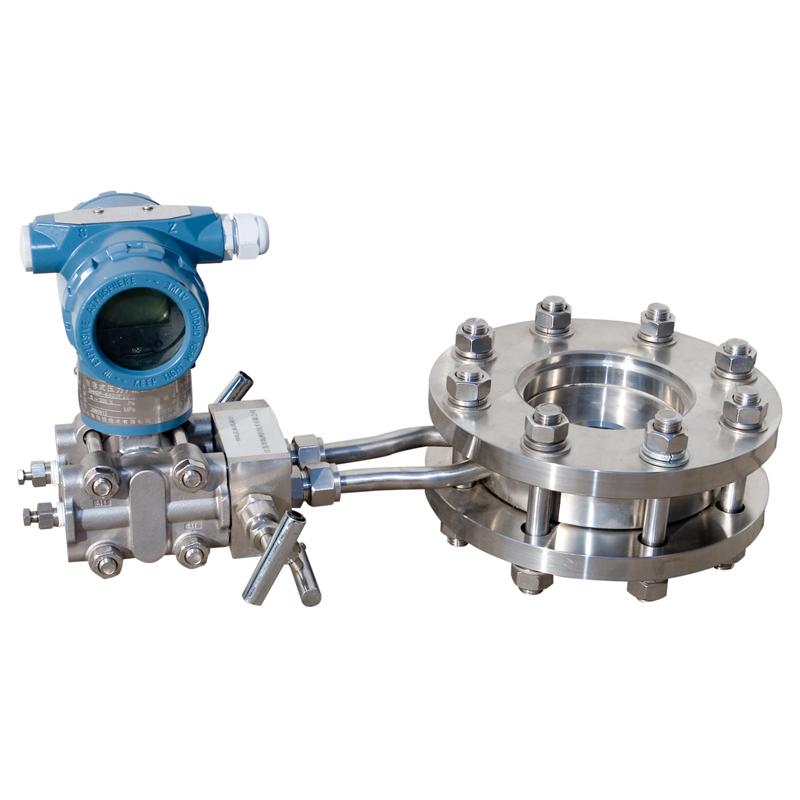
How Do Verify Orifice Plate Flow Meter Accuracy in the Field?

Verifying the accuracy of an orifice plate flow meter in the field is a critical task for maintaining reliable flow measurement in industrial processes. These meters are widely used in oil and gas, power generation, water treatment, chemical processing, and many other industries due to their simplicity, robustness, and well-established standards. However, despite their apparent simplicity, orifice plate flow meters are sensitive to installation conditions, physical wear, and process changes. Field verification ensures that the measured flow remains within acceptable uncertainty limits and that the meter continues to comply with relevant standards such as ISO 5167 and ASME MFC-3M.
Understanding the Purpose of Field Verification
Field verification of an orifice plate flow meter focuses on confirming that the meter is still performing as designed, without necessarily removing it from service for laboratory calibration. Unlike some electronic flow meters, orifice plates rely on a precise relationship between differential pressure and flow rate. Any deviation in geometry, pressure measurement, or fluid properties can lead to significant measurement errors. Verification in the field aims to identify these deviations early and correct them before they impact process efficiency, product quality, or regulatory compliance.
Why Accuracy Degrades Over Time
Accuracy degradation in an orifice plate flow meter can occur due to erosion of the plate edge, corrosion, buildup of deposits, damage during handling, or changes in upstream piping conditions. Even minor rounding of the sharp upstream edge of the orifice can alter the discharge coefficient. In addition, impulse lines connected to the differential pressure transmitter may become partially blocked, leak, or fill with condensate or gas, introducing measurement bias. Field verification addresses these issues systematically.
Key Principles Behind Orifice Plate Flow Measurement
The operating principle of an orifice plate flow meter is based on Bernoulli’s equation and the continuity equation. When fluid flows through the restriction created by the orifice plate, velocity increases and static pressure decreases. The resulting differential pressure is proportional to the square of the flow rate. Accurate measurement depends on precise knowledge of the orifice diameter, pipe diameter, fluid properties, and discharge coefficient.
Understanding these principles is essential during verification because any factor that alters the pressure-flow relationship must be evaluated. Field checks therefore focus not only on the plate itself, but also on the transmitter, piping, and process conditions.
Inspection of Installation Conditions
Verifying Straight Pipe Requirements
One of the most common sources of error in orifice plate flow meter installations is insufficient straight pipe lengths upstream and downstream of the plate. Flow disturbances caused by elbows, valves, reducers, or pumps can distort the velocity profile entering the orifice. Field verification should include checking that the installed straight lengths comply with the original design and applicable standards. If modifications have been made to the piping since commissioning, these changes must be assessed for their impact on measurement accuracy.
Confirming Plate Orientation and Taps
The orifice plate must be correctly oriented, with the sharp edge facing upstream and any bevel on the downstream side. Field verification includes confirming that the plate has not been installed backward and that the pressure tap locations are correct for the plate type, whether flange taps, corner taps, or D and D/2 taps. Incorrect tap locations or damaged tap holes can significantly affect differential pressure readings.
Physical Inspection of the Orifice Plate
Checking Edge Sharpness and Condition
A critical step in verifying an orifice plate flow meter is the physical inspection of the plate itself. Standards require a sharp, square upstream edge with minimal rounding. During a field shutdown or planned maintenance window, the plate should be removed and visually inspected. Any signs of erosion, nicks, corrosion, or buildup indicate that the discharge coefficient may no longer be valid. Even small imperfections can cause measurable errors, especially at higher Reynolds numbers.
Measuring Orifice and Pipe Diameters
Field verification may also involve measuring the orifice bore diameter and confirming the pipe internal diameter. These dimensions directly affect the beta ratio, which is the ratio of orifice diameter to pipe diameter. Changes due to corrosion, scaling, or replacement of pipe sections can alter the beta ratio and invalidate the original flow calculations. Precision measurement tools should be used, and results should be compared with original design data.
Differential Pressure Measurement Verification
Validating the Differential Pressure Transmitter
The differential pressure transmitter is a critical component of the orifice plate flow meter system. Field verification includes checking the transmitter’s zero, span, and linearity. This can be done using a calibrated pressure source to simulate known differential pressures. Any deviation beyond acceptable limits indicates the need for recalibration or replacement. It is also important to verify that the transmitter range is appropriate for the operating flow conditions, as operating too close to zero or full scale can increase uncertainty.
Inspecting Impulse Lines and Manifolds
Impulse lines connecting the pressure taps to the transmitter must be free of leaks, blockages, and trapped fluids. In gas service, liquid accumulation can cause false readings, while in liquid service, trapped gas can introduce errors. Field verification involves checking slope, insulation, heat tracing if applicable, and valve positions on the manifold. Proper impulse line maintenance is essential for accurate differential pressure measurement.
Process Condition Verification
Confirming Fluid Properties
Orifice plate flow meter calculations depend on accurate fluid density, viscosity, and compressibility. Field verification should include checking that the assumed fluid properties used in the flow calculation match actual operating conditions. Changes in temperature, pressure, or composition can significantly affect density, especially in gas and steam applications. Instruments measuring temperature and static pressure should also be verified to ensure their accuracy.
Evaluating Reynolds Number Range
The discharge coefficient used in orifice plate flow meter calculations is valid only within certain Reynolds number ranges. Field verification should confirm that the meter is operating within its intended flow range. Operating far below the design flow can increase uncertainty, while operating above it can cause excessive wear and potential damage.
Comparison With Reference Measurements
Using Portable Flow Measurement Devices
One common field verification method is comparison against a portable reference flow meter, such as an ultrasonic clamp-on meter. While not always more accurate than the orifice plate flow meter, a properly applied reference can provide valuable comparative data. Consistent deviations between the two measurements may indicate a problem with the orifice system that warrants further investigation.
Mass or Volume Balance Checks
In some processes, flow accuracy can be verified through mass or volume balance calculations over a defined period. For example, tank level changes or production totals can be compared with integrated flow readings. Although this method is influenced by other measurement uncertainties, it can still provide useful confirmation of overall system performance.
Documentation and Ongoing Verification Strategy
Field verification of an orifice plate flow meter should always be thoroughly documented. Inspection results, measurements, transmitter test data, and any corrective actions should be recorded and compared with previous verification records. This historical data helps identify trends, such as gradual erosion or recurring impulse line issues, and supports predictive maintenance planning.
Regular verification intervals should be established based on process conditions, fluid characteristics, and criticality of the measurement. High-velocity, abrasive, or corrosive services typically require more frequent checks than clean, low-velocity applications.
Conclusion
Verifying orifice plate flow meter accuracy in the field is a multi-disciplinary task that combines mechanical inspection, instrumentation testing, and process evaluation. By systematically checking installation conditions, plate integrity, differential pressure measurement, and process parameters, it is possible to maintain confidence in flow measurement without unnecessary downtime. A well-executed field verification program not only preserves measurement accuracy but also extends the service life of the orifice plate flow meter and supports safe, efficient, and compliant plant operation.