


How Does Ezra Pound Explore Nationalism in His Writings?
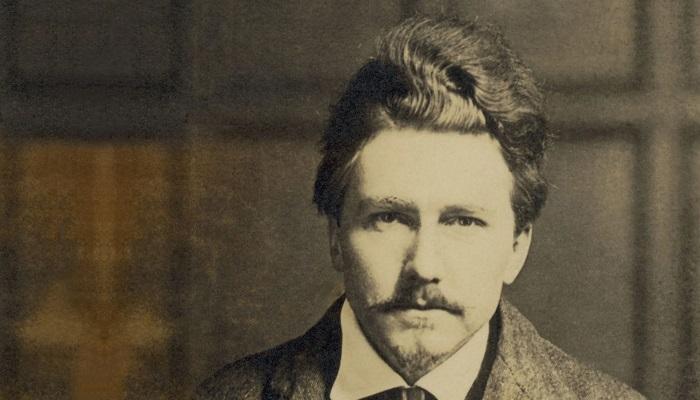
Ezra Pound remains one of the most complex and controversial figures in modern literary history. Celebrated as a pioneering modernist poet and influential editor, he was also deeply entangled with political ideas that shaped both his artistic vision and public legacy. Nationalism, in particular, plays a significant role in his writings, appearing not as a single, consistent doctrine but as a shifting set of cultural, historical, and ideological concerns. By examining Pound’s poetry, prose, and critical essays, it becomes clear that his exploration of nationalism is inseparable from his views on culture, language, economics, and history.
Ezra Pound and the Modernist Context
Modernism emerged during a period of profound social and political upheaval. National identities were being renegotiated in the aftermath of empire, industrialization, and global conflict. Ezra Pound’s engagement with nationalism must be understood within this context of fragmentation and search for cultural renewal.
Pound rejected what he saw as cultural decay in the modern West. His nationalism was less about loyalty to a single nation-state and more about the preservation and revival of what he considered authentic cultural traditions. This perspective shaped his literary ambitions and guided his fascination with the past.
Cultural Nationalism Versus Political Nationalism
Ezra Pound’s nationalism often took the form of cultural nationalism rather than conventional patriotism. He believed that nations were defined by artistic achievement, ethical values, and linguistic precision rather than political borders.
This belief led him to celebrate cultural figures from a wide range of civilizations, including ancient Greece, Renaissance Italy, and classical China. His work suggests that true national identity emerges through cultural excellence rather than military or economic dominance.
Language, Tradition, and National Identity
One of the clearest ways Ezra Pound explores nationalism is through his treatment of language. He believed that language was the foundation of cultural identity and that its corruption signaled national decline.
Pound’s insistence on linguistic clarity and precision reflects his belief that a nation’s health could be measured through its artistic expression. This idea is central to his early poetry and critical essays, where he criticizes vague abstraction and praises concrete imagery.
The Revival of Older Literary Forms
Pound frequently turned to older poetic forms as a way of reconnecting with what he saw as authentic national traditions. His interest in Provençal troubadours, Anglo-Saxon verse, and classical epics reflects an effort to recover lost cultural vitality.
By reworking these forms within a modernist framework, Pound attempted to bridge past and present. This approach suggests that nationalism, for him, was not nostalgic imitation but active renewal through artistic discipline.
Nationalism in The Cantos
A Fragmented Epic of Civilization
The Cantos, Ezra Pound’s lifelong poetic project, is the most ambitious expression of his nationalist ideas. Rather than focusing on a single nation, the poem assembles fragments from multiple cultures, historical periods, and languages.
This global scope may seem to contradict nationalism, but Pound’s intent was to identify exemplary civilizations and moments of cultural integrity. He sought models of governance, economics, and artistic patronage that could inspire contemporary renewal.
Idealized Nations and Moral Order
Within The Cantos, certain societies are presented as ideals. Renaissance Italy, particularly under figures such as Sigismondo Malatesta, is depicted as a space where art, governance, and ethics align.
Ezra Pound uses these historical examples to critique modern nation-states, which he believed had abandoned cultural responsibility. His nationalism here is aspirational, focused on what nations could become rather than what they currently are.
Economic Thought and National Identity
Nationalism and Economic Reform
Ezra Pound’s nationalism cannot be separated from his economic theories. He believed that unjust financial systems corrupted culture and undermined national integrity.
Pound argued that economic exploitation weakened nations from within, making genuine cultural expression impossible. His controversial advocacy for alternative economic models was rooted in a desire to restore what he perceived as national sovereignty and ethical order.
The Dangerous Convergence of Art and Ideology
While Pound’s economic nationalism was motivated by cultural concerns, it also led him into deeply problematic political positions. His failure to distinguish between critique and propaganda resulted in associations that overshadowed his artistic achievements.
This tension highlights the risks inherent in merging artistic nationalism with rigid ideological commitments. Ezra Pound’s writings demonstrate how the pursuit of national renewal can become distorted when it aligns too closely with authoritarian thinking.
Transnational Influences and Contradictions
Cosmopolitanism Within Nationalism
Despite his nationalist rhetoric, Ezra Pound was profoundly cosmopolitan. He lived much of his life outside the United States and drew inspiration from diverse global traditions.
This contradiction reveals a central paradox in his thought. While advocating for cultural rootedness, he embraced international exchange. His nationalism was not isolationist but comparative, seeking excellence wherever it appeared.
Translation as Cultural Exchange
Pound’s translations and adaptations of foreign texts further complicate his nationalist stance. His work with Chinese poetry, for example, reflects admiration rather than appropriation.
By introducing these texts to Western audiences, Ezra Pound contributed to a broader understanding of cultural identity as something shaped through dialogue rather than exclusion. This aspect of his work challenges simplistic interpretations of his nationalism.
American Identity and Literary Independence
Critique of American Cultural Immaturity
Ezra Pound was often critical of American culture, which he viewed as artistically immature and overly commercial. His nationalism involved a call for the United States to develop a more serious literary tradition.
Rather than celebrating American exceptionalism, he demanded greater cultural discipline. This critical stance reflects a form of nationalism rooted in aspiration rather than praise.
Modernism as National Renewal
Pound’s role in shaping modernist literature was part of his broader nationalist project. By promoting writers such as T. S. Eliot and James Joyce, he sought to elevate literary standards and redefine cultural identity.
Modernism, in this sense, became a tool for national regeneration. Innovation was not rejection of tradition but a means of refining it.
Ethical and Aesthetic Implications
Nationalism as Moral Responsibility
For Ezra Pound, nationalism carried ethical implications. Artists, in his view, bore responsibility for preserving cultural integrity and resisting corruption.
This belief placed immense pressure on artistic practice, transforming poetry into a moral act. While this approach produced powerful work, it also narrowed his tolerance for dissenting perspectives.
The Limits of Cultural Absolutism
Pound’s writings reveal the dangers of cultural absolutism. His conviction that certain values were universally correct left little room for pluralism.
This rigidity ultimately undermined his nationalist vision, turning it from a cultural ideal into a source of division. His legacy serves as a cautionary example of how artistic nationalism can become dogmatic.
Conclusion: Ezra Pound’s Complex Nationalist Vision
Ezra Pound’s exploration of nationalism is neither simple nor consistent. It spans cultural renewal, linguistic precision, historical admiration, and economic critique, often blending visionary insight with troubling ideology. His writings reveal a deep concern for the fate of civilization and the role of art in sustaining national identity.
While his political judgments remain deeply flawed, his engagement with nationalism raises enduring questions about culture, tradition, and responsibility. Ezra Pound’s work challenges readers to consider how nations define themselves through art and how easily cultural idealism can slide into exclusion.
Ultimately, his legacy lies not in providing answers but in exposing the tensions between creativity and ideology, reminding modern readers that the pursuit of national identity through literature demands both imagination and humility.
 Deutsch
 English
 Arabic
 French
 Spanish
 Portuguese
 Turkish
 Dutch
Dutch
 Italiano
 Russian
 Romaian
 Portuguese (Brazil)
 Greek
Greek