

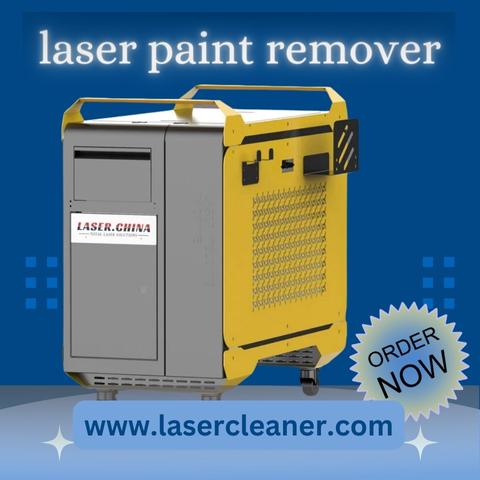
Professional Laser Paint Remover Solutions for Fast, Efficient, and Precise Surface Treatment

Laser paint remover technology has revolutionized the way industries and professionals approach surface preparation and paint removal. From automotive refinishing to industrial maintenance, this cutting-edge solution provides an effective method to clean, restore, and prepare surfaces for further processing. Unlike traditional chemical or mechanical paint removal methods, laser paint removers rely on high-precision laser beams to target and eliminate coatings, delivering unmatched accuracy and consistency in the process.
In manufacturing and repair industries, surface preparation plays a pivotal role in ensuring optimal adhesion, uniform finishes, and overall product quality. Laser paint removers allow operators to carefully control the removal process, focusing on specific areas without compromising the integrity of the underlying material. This precision ensures that surfaces, whether metal, wood, or composite, remain intact and free from damage, enabling superior results in subsequent coating, painting, or finishing stages.
The versatility of laser paint removers makes them suitable for a wide array of applications. Automotive restoration and refinishing is one area where they are extensively used. Old layers of paint, clear coat, or protective coatings can be efficiently removed from car bodies, panels, and intricate components, preparing them for new coatings with a smooth and clean surface. In industrial maintenance, laser paint removers are employed to clean machinery, equipment, and structural components. Removing unwanted coatings or contaminants without using harsh chemicals ensures minimal downtime and reduces environmental impact while maintaining equipment longevity.
In addition to industrial applications, laser paint removers have found a niche in heritage restoration and precision engineering. For delicate surfaces, antique artifacts, or architectural structures, laser-based removal systems provide controlled and repeatable results, ensuring that the original structure is preserved while old paint layers are safely eliminated. Museums, restoration specialists, and conservators rely on this technology to maintain authenticity while achieving effective surface cleaning.
One of the key aspects of laser paint removal lies in its operational efficiency. The speed at which lasers can remove paint layers is notable, especially when compared to traditional abrasive or chemical methods. Operators can adjust parameters such as laser intensity, pulse frequency, and scanning patterns to accommodate different types of coatings and substrate materials. This flexibility allows for consistent removal results across varying thicknesses, colors, and textures of paint layers. Industrial teams benefit from this efficiency by reducing labor time, minimizing waste, and improving overall project timelines.
Safety and environmental considerations are another important aspect of laser paint removers. Traditional paint removal techniques often involve toxic solvents, dust generation, or abrasive debris, creating potential hazards for operators and surrounding environments. Laser systems, on the other hand, produce minimal airborne contaminants and can be equipped with fume extraction and filtration systems to manage residue safely. This approach not only safeguards the health of personnel but also aligns with regulatory and environmental standards for sustainable operations.
The adaptability of laser paint removers extends to their integration into automated and robotic workflows. Modern production lines and large-scale industrial setups often employ robotic arms equipped with laser systems to achieve consistent and precise paint removal across complex geometries. Automation ensures repeatable quality and reduces reliance on manual labor, making it possible to handle high-volume tasks efficiently. Whether in automotive, aerospace, or general manufacturing, integrating laser paint removal into automated processes significantly enhances productivity and ensures consistent results.
Material compatibility is another aspect where laser paint removers demonstrate their versatility. Metals, composites, plastics, and wood surfaces can all be treated effectively, with laser parameters adjusted to match the specific requirements of each material. This capability is especially important in industries where multi-material assemblies are common, allowing for selective removal without damaging sensitive components or finishes.
Moreover, laser paint removers enable precise control over surface texture and preparation. By adjusting laser settings, operators can influence the degree of surface roughness, cleaning depth, and uniformity. This level of control ensures that subsequent processes, such as painting, coating, or bonding, achieve optimal adhesion and aesthetic results. The ability to fine-tune the process provides a strategic advantage in industries where surface quality directly affects product performance and customer satisfaction.
The compact and portable designs of modern laser paint removers also contribute to their widespread adoption. Handheld systems, bench-mounted units, and integrated production-line equipment allow flexibility in operation, enabling use in confined spaces, on-site maintenance, or workshop environments. Portability does not compromise performance; even compact systems are capable of delivering consistent and effective paint removal across various surfaces and coatings.
Laser paint remover technology continues to evolve, with advancements in laser sources, optics, and control systems enhancing precision, efficiency, and usability. As industries seek faster, safer, and more environmentally responsible solutions for paint removal, these systems provide a practical answer to operational demands. By offering a combination of high performance, adaptability, and control, laser paint removers have established themselves as an essential tool in modern surface treatment and preparation practices.
The applications of laser paint removers extend beyond traditional industrial uses. In the art and creative industries, they enable precise removal of layers from sculptures, furniture, and design elements, restoring or modifying finishes without damaging underlying structures. In electronics manufacturing, lasers can clean coatings from delicate components or circuit boards with unmatched precision. Even in aerospace and defense, laser paint removers support maintenance and refurbishment tasks, preparing aircraft components, military vehicles, or equipment for repainting or protective coating applications.
Another key aspect of laser paint removal lies in the level of control offered during the process. Operators can adjust scanning patterns, speed, and laser intensity to match the type of coating being removed and the sensitivity of the underlying material. This precise control ensures minimal material waste, reduces the risk of damage, and achieves consistent results across multiple surfaces. Such predictability is highly valued in industries where quality standards are strict, and rework can be costly.
As technology continues to advance, laser paint removers are becoming more accessible and easier to operate. User-friendly interfaces, programmable settings, and automated scanning systems simplify complex tasks, allowing technicians to achieve high-quality results with minimal training. This ease of use makes laser paint removal systems a practical investment for workshops, factories, and service providers aiming to enhance efficiency while maintaining high-quality output.
In summary, laser paint remover represent a modern solution for surface treatment across diverse industries. They combine precision, efficiency, and adaptability, providing operators with a powerful tool to achieve clean, prepared surfaces for painting, coating, or restoration. Whether for automotive refinishing, industrial maintenance, heritage restoration, or creative applications, laser paint removers deliver performance that meets professional standards while minimizing environmental impact. With continuous technological improvements, these systems are set to remain at the forefront of surface preparation solutions, offering an innovative approach to tackling coatings, paint layers, and surface contaminants with speed, precision, and reliability.


