
What Defines the Artistic Style of French Animated Movies?

French animation has long occupied a distinctive place within global cinema, positioned between fine art traditions and popular storytelling. Rather than pursuing the industrial uniformity often associated with large commercial studios, French Animated Movies are defined by their aesthetic diversity, philosophical depth, and strong authorial voices. Drawing from illustration, painting, literature, and avant-garde cinema, French animated films tend to emphasize mood, symbolism, and emotional resonance over spectacle alone. The artistic style of these films is not governed by a single visual formula but by a shared cultural approach to animation as an expressive and intellectual art form.
A Tradition Rooted in Illustration and Fine Art
The Influence of French Visual Arts
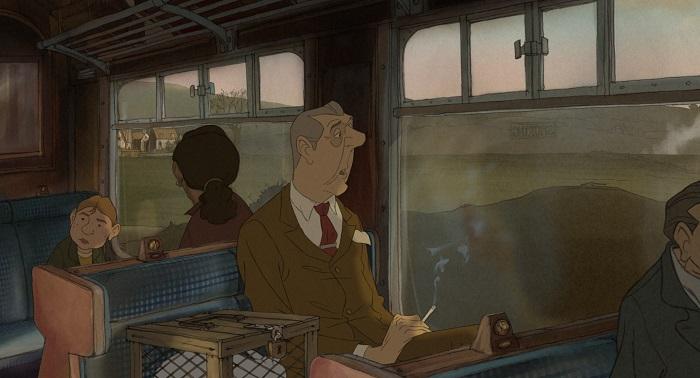
One of the defining characteristics of French animated cinema is its close relationship with traditional visual arts. France has a long history of illustration, comics (bandes dessinées), painting, and graphic design, all of which strongly inform its animation style. Films such as The Illusionist (2010), directed by Sylvain Chomet, demonstrate a visual language that resembles hand-drawn illustration rather than hyper-realistic animation. The backgrounds evoke watercolor paintings, and characters are designed with exaggerated yet delicate proportions, emphasizing gesture and expression.
This painterly approach can also be seen in Ernest & Celestine (2012), whose soft lines and pastel color palette mirror the children’s book illustrations by Gabrielle Vincent on which the film is based. The animation preserves visible pencil strokes and uneven textures, celebrating imperfection as an artistic choice. This aesthetic philosophy distinguishes French animation from more polished, digitally uniform styles and reinforces the idea that animation is a continuation of drawing rather than a replacement for it.
A Resistance to Visual Standardization
Unlike animation industries that prioritize consistent character models and smooth surfaces, French Animated Movies often embrace visual variation. Films such as April and the Extraordinary World (2015) present an alternate-history Paris rendered in dense ink lines and sepia tones, creating an atmosphere that feels historical, mechanical, and lived-in. The visual complexity reflects the film’s thematic interest in industrialization and scientific ethics, demonstrating how style and narrative are inseparable in French animation.
Auteur-Driven Storytelling
The Director as Author
A central feature of French animated cinema is its auteur tradition. Directors are often deeply involved in writing, visual design, and thematic development, resulting in films that feel personal and idiosyncratic. Sylvain Chomet, Michel Ocelot, and Jean-François Laguionie are notable examples of filmmakers whose works are instantly recognizable due to their unique artistic signatures.
Michel Ocelot’s Kirikou and the Sorceress (1998) illustrates how folklore and minimalistic design can coexist with complex moral storytelling. The film’s flat, stylized character designs are inspired by African art and shadow puppetry, while its narrative explores themes of fear, community, and wisdom. The artistic style is deliberately simple, allowing symbolism and storytelling to take precedence over visual excess.
Personal Themes and Philosophical Depth
French Animated Movies frequently address themes such as identity, memory, social alienation, and existential longing. My Life as a Zucchini (2016), directed by Claude Barras, uses deceptively simple stop-motion character designs to explore childhood trauma, neglect, and emotional resilience. The film’s visual softness contrasts with the gravity of its subject matter, reinforcing a recurring French approach: animation as a medium capable of handling serious, even painful, themes with sensitivity.
Narrative Minimalism and Emotional Subtlety
Silence, Gesture, and Atmosphere
Another defining stylistic trait is the use of restraint in dialogue and narrative exposition. French animated films often rely on silence, music, and visual storytelling to convey emotion. The Red Turtle (2016), co-produced with Studio Ghibli but directed by French animator Michaël Dudok de Wit, contains almost no spoken dialogue. Instead, its hand-drawn imagery and natural soundscape guide the viewer through a meditation on life, loss, and coexistence with nature.
This emphasis on visual poetry over verbal explanation aligns with European art cinema traditions. Rather than instructing the audience on how to feel, these films invite contemplation, allowing meaning to emerge gradually through imagery and pacing.
Melancholy as an Aesthetic Choice
Melancholy plays a significant role in the artistic identity of French animation. Films such as The Triplets of Belleville (2003) combine humor with a pervasive sense of nostalgia and quiet sadness. The grotesque character designs and muted color schemes create a world that feels both whimsical and emotionally distant. This tonal complexity reflects a broader cultural acceptance of ambiguity and emotional nuance within French Animated Movies.
Experimentation with Technique and Form
Blending Animation Techniques
French animators frequently experiment with technique, blending 2D, 3D, stop-motion, and mixed media approaches. A Cat in Paris (2010) uses angular character designs and bold color blocking reminiscent of modernist painting, while The Painting (2011) by Jean-François Laguionie constructs an entire narrative around the idea of unfinished artwork, visually distinguishing characters based on whether they are “completed” or merely sketched.
This formal experimentation is not used as a novelty but as a storytelling device. Visual style becomes a metaphor for social hierarchies, emotional states, or philosophical questions, reinforcing the idea that animation in France is a conceptual medium rather than purely entertainment-driven.
Embracing the Handcrafted
Even when digital tools are employed, French Animated Movies often strive to retain a handcrafted appearance. Textured shading, visible brushwork, and irregular motion are intentionally preserved to maintain a sense of human touch. This aesthetic choice reflects a broader cultural value placed on craftsmanship and artistic labor, positioning animation closer to fine art than mass production.
Cultural Identity and European Sensibility
Rooted in French and European Contexts
French animated films frequently draw upon local history, literature, and social realities. Persepolis (2007), co-directed by Marjane Satrapi and Vincent Paronnaud, uses stark black-and-white imagery inspired by graphic novels to recount a personal and political story of exile and identity. While the narrative is global in relevance, its visual language reflects European comic art traditions and a distinctly French approach to autobiographical storytelling.
Animation Beyond Children’s Entertainment
Perhaps the most defining aspect of French Animated Movies is their refusal to confine animation to a young audience. While many films are accessible to children, they are rarely simplistic. Adult themes, moral ambiguity, and emotional complexity are treated as integral components rather than exceptions. This perspective reinforces animation as a legitimate cinematic art form capable of addressing universal human experiences.
Conclusion: A Cinema of Artistic Freedom
The artistic style of French Animated Movies is defined less by uniform aesthetics than by a shared commitment to artistic freedom, emotional depth, and visual experimentation. Rooted in illustration, guided by auteur-driven storytelling, and enriched by philosophical inquiry, French animated cinema consistently challenges conventional expectations of what animation can be. Through films that privilege mood over spectacle and symbolism over realism, France has established animation as a space for poetic expression and cultural reflection. This enduring commitment to artistry ensures that French animated films remain distinct, influential, and deeply resonant within the global cinematic landscape.


