

How Does Edward Lear Balance Chaos with Poetic Structure?

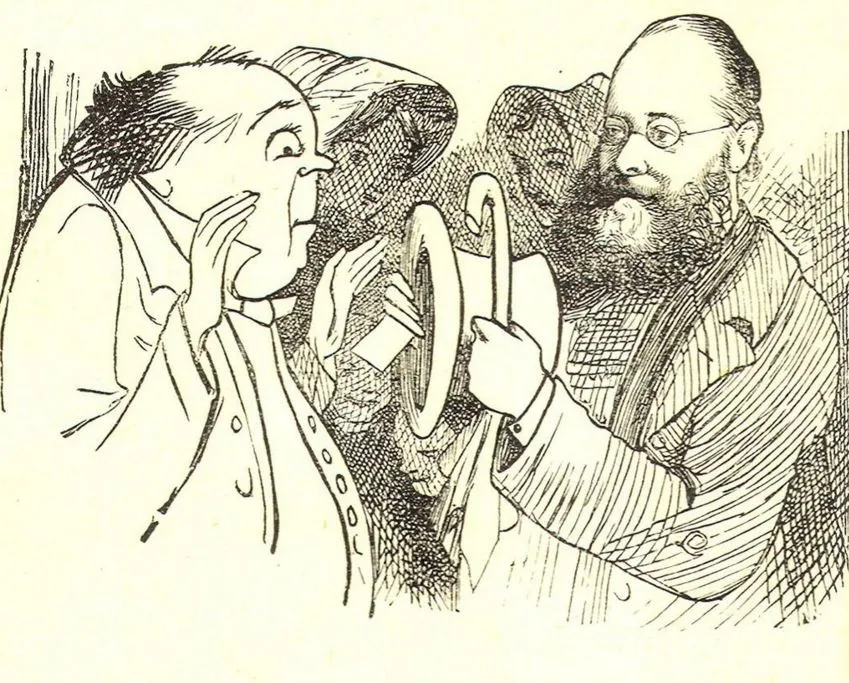
Edward Lear occupies a singular place in the history of English poetry. Best known for popularizing the literary nonsense poem, Lear created verses that seem to revel in absurdity, illogic, and chaos. Yet beneath the surface of his playful language lies a remarkably disciplined poetic intelligence. The apparent disorder of Lear’s poems is carefully framed by rhythm, repetition, and formal consistency. Through this balance, Edward Lear demonstrates how chaos can coexist with structure, producing poetry that is both anarchic and controlled, whimsical and enduring.
Nonsense as an Artistic Strategy
The Illusion of Disorder
At first glance, Edward Lear’s poems appear to abandon meaning altogether. Limericks such as “There was an Old Man with a beard” present strange characters engaged in irrational behavior, often ending in humorous social rejection. These poems seem to follow no logical narrative progression, creating a sense of chaos that defies conventional storytelling.
However, this chaos is strategic rather than accidental. Lear’s nonsense does not eliminate meaning but instead suspends rational expectations. By removing logical causality, he frees the reader to focus on sound, rhythm, and pattern. The resulting disorder becomes a space for imaginative play rather than confusion.
Nonsense and Emotional Resonance
While Lear’s poems are humorous, they often carry subtle emotional undercurrents. The repeated appearance of eccentric, isolated figures suggests themes of alienation and social misunderstanding. The chaotic situations these characters inhabit symbolize a world that does not accommodate difference easily. In this way, Lear’s nonsense becomes a structured emotional language, using absurdity to express genuine human experiences.
Bold Subheading: Formal Discipline Beneath Absurdity
The Limerick as Structural Anchor
The limerick form is central to Edward Lear’s balance between chaos and order. Consisting of five lines with a strict AABBA rhyme scheme and a consistent rhythmic pattern, the limerick provides a rigid framework that contains the poem’s wild content. No matter how strange the narrative becomes, the form remains stable and predictable.
This structural consistency reassures the reader, allowing Lear to push absurdity to greater extremes. The reader understands intuitively that each poem will resolve within the same formal boundaries, even if the resolution itself is nonsensical. The tension between predictable form and unpredictable content generates much of the poem’s humor.
Repetition and Circular Logic
Lear frequently employs repetition, especially of phrases and sounds, to reinforce structure. Many poems begin and end with nearly identical lines, creating a circular effect. This repetition gives the impression that the poem has gone nowhere, reinforcing the sense of chaos while simultaneously imposing order.
In “The Dong with a Luminous Nose,” the repeated emphasis on the glowing nose anchors the poem’s fantastical narrative. The repetition transforms a bizarre image into a stable symbolic center, around which the poem’s emotional chaos revolves.
Sound Patterns as Organizational Tools
Musicality and Rhythm
Sound plays a crucial role in Edward Lear’s poetic structure. His poems rely heavily on alliteration, assonance, and internal rhyme, creating a musical texture that guides the reader through the verse. Even when the words themselves seem illogical, their sonic coherence provides a sense of continuity.
This musicality acts as an organizing force. The ear recognizes patterns even when the mind cannot trace meaning. Lear’s mastery of rhythm ensures that chaos never overwhelms the poem entirely, as the reader is always carried forward by sound.
Invented Words and Phonetic Logic
Lear often invents words that have no semantic meaning but fit perfectly within the poem’s phonetic system. These words follow recognizable sound patterns, making them feel natural despite their absurdity. This technique demonstrates how structure can exist independently of conventional meaning.
By adhering to phonetic logic, Lear ensures that even invented language contributes to the poem’s internal order. Chaos is thus framed within a self-consistent linguistic system.
Character and Structural Stability
Recurring Character Types
The characters in Edward Lear’s poetry often share similar traits: eccentricity, social nonconformity, and exaggerated physical features. These recurring character types function as structural elements within the chaotic narratives. Readers come to expect certain behaviors and outcomes, even if the specific details remain unpredictable.
This repetition creates a stable imaginative world governed by its own rules. While individual events may be illogical, the broader pattern remains consistent, reinforcing structural coherence.
Social Refrains and Closure
Many of Lear’s poems conclude with a social response to the protagonist’s behavior, often involving collective disapproval. This recurring closure provides narrative structure, even when the events leading up to it are chaotic. The predictable ending reinforces the poem’s form, bringing order to the preceding absurdity.
Visual Structure and Illustrative Balance
Illustration as Structural Companion
Edward Lear’s own illustrations often accompany his poems, adding a visual dimension to the balance between chaos and order. The drawings typically depict the poem’s absurd scenarios in a clear, composed style. This visual stability counteracts the verbal chaos, grounding the reader in a recognizable physical space.
The relationship between text and image reinforces the poem’s structure. The illustration acts as an anchor, providing a fixed point of reference amid linguistic play.
Spatial Organization of the Page
Lear’s poems are often visually neat and symmetrical on the page, reflecting their formal discipline. This spatial order contrasts with the imaginative disorder of the content, further emphasizing the balance between chaos and structure.
Victorian Context and Subversive Order
Nonsense as Controlled Rebellion
Writing in the Victorian era, Edward Lear operated within a society that valued order, morality, and rationality. His nonsense poetry can be read as a subversive response to these values. However, rather than rejecting structure entirely, Lear embeds rebellion within strict formal constraints.
This controlled subversion allows his poetry to critique rigidity without descending into formlessness. Chaos becomes a means of questioning authority, while structure ensures artistic legitimacy.
Discipline as Creative Freedom
Lear’s work suggests that structure does not inhibit creativity but enables it. By working within established forms, he gains the freedom to explore imaginative extremes. The discipline of form becomes a protective boundary within which chaos can flourish safely.
Legacy of Structured Nonsense
Influence on Later Writers
Edward Lear’s balance of chaos and structure influenced later nonsense writers and poets, including Lewis Carroll. His demonstration that absurdity could be carefully organized expanded the possibilities of poetic expression. Lear showed that nonsense poetry could be both intellectually rigorous and delightfully anarchic.
Enduring Appeal
The lasting popularity of Lear’s poetry lies in this balance. Readers are drawn to the playful chaos but remain engaged because of the underlying order. The poems feel spontaneous yet secure, surprising yet familiar.
Conclusion: The Harmony of Disorder and Form
Edward Lear’s poetry exemplifies how chaos and structure can coexist in productive tension. Through strict forms, musical language, repetition, and visual organization, he transforms absurdity into a coherent artistic system. The nonsense in his poems is never random; it is carefully shaped by formal discipline and aesthetic intention.
By balancing imaginative chaos with poetic structure, Edward Lear created a body of work that transcends simple humor. His poems reveal that order and disorder are not opposites but complementary forces, each enhancing the other. This delicate equilibrium ensures Lear’s place not only as a master of nonsense but as a sophisticated poet whose work continues to delight, challenge, and inspire.


