
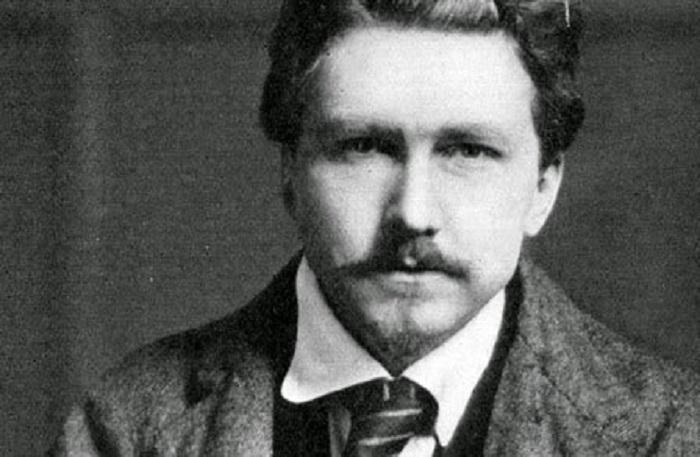
How Does Ezra Pound Explore the Tension Between Tradition and Innovation?

Few literary figures embody the creative tension between inheritance and experimentation as fully as Ezra Pound. Active during a period of profound cultural and artistic upheaval, Pound stood at the crossroads of literary tradition and modernist innovation. His poetry and criticism consistently wrestle with the question of how the past can be preserved, transformed, and revitalized within a rapidly changing modern world. Rather than rejecting tradition outright or adhering to it rigidly, Pound developed a complex artistic philosophy that sought to make tradition newly alive through radical formal and linguistic experimentation. This tension between reverence and rebellion lies at the heart of his poetic achievement.
Ezra Pound’s View of Tradition as a Living Force
Tradition as Energy, Not Ornament
Ezra Pound rejected the idea that tradition should function as decorative imitation. For him, the literary past was not a museum of static forms but a reservoir of living energy. He believed that great works of the past retained vitality precisely because they could speak to new historical moments. Tradition, in Pound’s view, had to be actively engaged rather than passively revered.
This philosophy is evident in his critical writings, particularly in essays such as “Tradition and the Individual Talent” by T.S. Eliot—an essay deeply influenced by Pound’s thinking—even though Pound’s own approach was more aggressive. He argued that poets should study the classics not to reproduce them but to extract their essential techniques and reapply them in new contexts. The tension emerges as Pound insists on innovation that is grounded in deep historical awareness.
The Role of the Educated Poet
Pound believed that modern poets had an obligation to be historically literate. His frequent references to ancient Greek, Latin, Chinese, and Provençal sources demonstrate a commitment to cultural continuity. However, these references are rarely nostalgic. Instead, they are used as tools to critique the present and reimagine poetic form.
In this sense, tradition becomes a framework within which innovation operates. The poet stands in dialogue with the past, neither submitting to it nor discarding it entirely.
Bold Subheading: Make It New—Innovation Rooted in the Past
The Meaning of “Make It New”
Ezra Pound’s famous dictum “Make it new” encapsulates his approach to the tension between tradition and innovation. Often misunderstood as a call for novelty for its own sake, the phrase actually reflects a desire to renew the cultural and artistic value of inherited forms. Innovation, for Pound, was not about severing ties with the past but about revitalizing it.
This principle can be seen in his adaptation of classical meters and themes within modern contexts. Pound’s innovations frequently involve compression, fragmentation, and juxtaposition, techniques that reshape traditional material without erasing its origins.
Imagism as a Case Study
Imagism represents one of Pound’s most influential contributions to modern poetry and a clear example of his balancing act. Imagist principles emphasized clarity, precision, and economy of language, drawing inspiration from ancient Greek lyric poetry and classical Chinese verse. While the movement was revolutionary in its rejection of Victorian verbosity, its roots were firmly planted in older poetic traditions.
In poems such as “In a Station of the Metro,” Pound uses techniques reminiscent of classical epigram while presenting a distinctly modern image. The poem’s brevity and visual immediacy illustrate how innovation can arise from disciplined engagement with tradition.
Formal Experimentation and Historical Allusion
Fragmentation as Modern Form
Ezra Pound’s use of fragmentation reflects his response to modernity’s disjointed realities. Rather than constructing linear narratives, he assembles poetic fragments drawn from multiple historical periods and cultures. This technique allows tradition and innovation to coexist within the same textual space.
Fragmentation does not signal disrespect for the past; instead, it mirrors the way history itself is encountered in the modern world. The poet becomes an editor of civilization’s remnants, arranging them into new configurations that reflect contemporary consciousness.
Allusion as Creative Transformation
Pound’s dense allusiveness often challenges readers, but it serves a crucial function in his exploration of tradition. Allusions are not passive references; they are active participants in the poem’s meaning. By placing ancient voices alongside modern concerns, Pound creates productive tension between continuity and rupture.
In The Cantos, this method reaches its most ambitious expression. The poem weaves together figures from Confucius to Dante to Jefferson, collapsing temporal boundaries. Tradition is neither linear nor hierarchical but fluid, interacting dynamically with modern experience.
The Cantos as a Site of Tension
Epic Tradition Reimagined
The epic is one of the most traditional literary forms, and Ezra Pound’s decision to write an epic poem in the twentieth century is itself an act of tension. The Cantos draw on the structure and ambition of classical epics while rejecting their narrative coherence.
Instead of a single heroic journey, Pound presents a mosaic of historical moments, economic theories, and philosophical reflections. This innovative structure challenges readers’ expectations while asserting the epic’s relevance to modern life. Tradition provides the scale and ambition; innovation reshapes the form itself.
Language as Historical Experiment
Language in The Cantos is deliberately unstable. Pound incorporates multiple languages, archaic diction, and modern slang, reflecting his belief that poetic language should register historical depth. This linguistic diversity embodies the tension between preservation and transformation.
By refusing to standardize language, Pound resists the homogenization of culture. Innovation becomes a means of safeguarding linguistic richness inherited from the past.
Criticism as Creative Practice
Pound’s Polemical Voice
Ezra Pound’s essays and reviews are as important as his poetry in understanding his approach to tradition and innovation. His criticism often attacks what he saw as stagnation and complacency in contemporary literature. Yet his polemics are grounded in a deep respect for historical excellence.
He promoted writers such as James Joyce and T.S. Eliot not because they rejected tradition, but because they transformed it. Pound’s critical advocacy reveals his belief that innovation must be disciplined, informed, and purposeful.
The Ethics of Renewal
For Pound, innovation carried ethical implications. He believed that cultural decay resulted from ignorance of the past and unthinking repetition of worn-out forms. Renewal, therefore, was not optional but necessary for cultural survival.
This ethical dimension intensifies the tension in his work. Innovation becomes an act of responsibility rather than rebellion, while tradition becomes a source of guidance rather than constraint.
Legacy of Tension in Modern Poetry
Influence on Modernist and Postmodernist Writers
Ezra Pound’s exploration of tradition and innovation profoundly influenced later poets. Modernists adopted his techniques of fragmentation and allusion, while postmodern writers expanded his collage-like methods. His insistence that the past must be actively reinterpreted remains a foundational idea in contemporary poetics.
Continuing Relevance of Pound’s Vision
The tension Pound articulated remains central to artistic practice today. Writers continue to grapple with questions of originality, inheritance, and cultural memory. Pound’s work offers a model for engaging tradition without being dominated by it.
Conclusion: Creative Tension as Artistic Engine
Ezra Pound’s exploration of the tension between tradition and innovation defines his enduring significance in literary history. Rather than choosing one over the other, he positioned them in dynamic opposition, allowing each to energize the other. Tradition provides depth, authority, and continuity, while innovation ensures vitality, relevance, and transformation.
Through imagism, formal experimentation, historical allusion, and epic ambition, Ezra Pound demonstrated that the most powerful art emerges from this creative tension. His work challenges readers to see tradition not as a limitation but as a resource, and innovation not as rupture but as renewal. In doing so, he reshaped the possibilities of modern poetry and left a legacy that continues to provoke, inspire, and challenge.


