

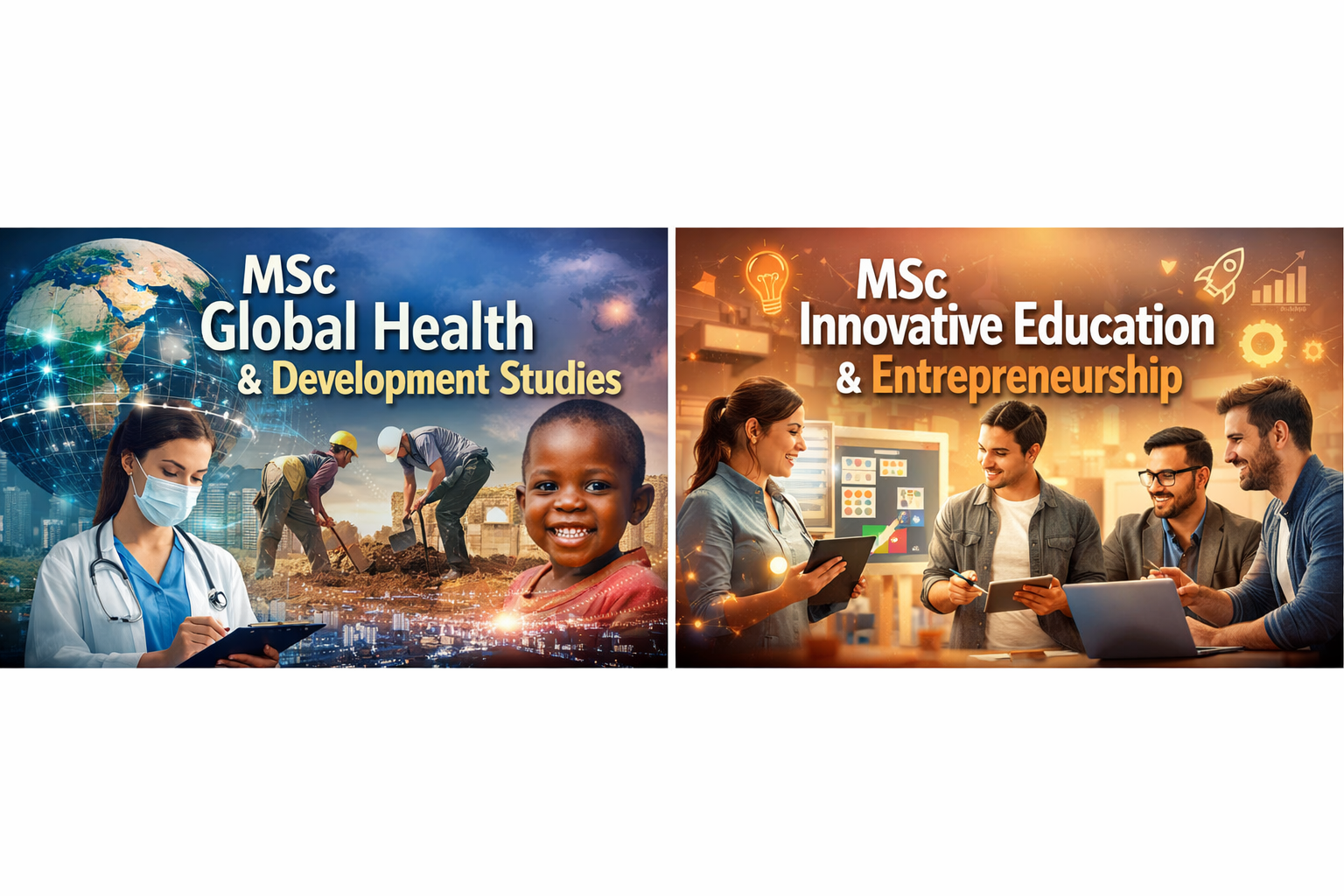

Higher education is evolving rapidly as global challenges demand professionals with advanced skills, critical thinking, and cross-cultural understanding. A Master of Science (MSc) degree has become one of the most effective pathways for individuals seeking specialization, leadership roles, and international career growth. Among the most impactful and future-focused programs today are MSc Global Health, MSc in Development Studies, MSc in Innovative Education, and MSc in Entrepreneurship.
Each of these programs addresses a critical area shaping the modern world. From improving public health systems and promoting social equity to transforming education and driving business innovation, these MSc degrees prepare graduates to contribute meaningfully on a global scale. This article explores how these programs differ, what students learn, and why they are increasingly chosen by ambitious learners worldwide.
MSc Global Health: Strengthening Health Systems Across Borders
Health challenges today extend far beyond national boundaries. Pandemics, lifestyle diseases, mental health concerns, and healthcare access inequalities require globally informed solutions. The MSc Global Health program focuses on understanding health issues from an international and multidisciplinary perspective.
Academic Focus
Students enrolled in an MSc Global Health program gain exposure to:
- Public health principles and disease prevention strategies
- Epidemiology and data analysis for population health assessment
- Health systems management and policy development
- Social, economic, and environmental determinants of health
- Research methods for global health evaluation
The program encourages students to think critically about healthcare delivery in both developed and developing regions. Emphasis is placed on evidence-based decision-making and ethical approaches to public health interventions.
Career Outcomes
Graduates of MSc Global Health are well positioned for roles such as:
- Global health program coordinators
- Public health consultants and analysts
- Health policy advisors
- NGO and humanitarian health officers
- Research associates in public health institutions
This program is particularly suitable for professionals seeking careers that combine science, policy, and social impact.
MSc in Development Studies: Understanding and Advancing Global Progress
Economic growth alone does not define development. Issues such as poverty, inequality, education access, climate change, and governance shape the quality of life worldwide. The MSc in Development Studies program provides a deep understanding of these interconnected challenges.
Learning Scope
An MSc in Development Studies typically includes:
- Theories and models of economic and social development
- Global development policies and institutions
- Poverty reduction and inequality analysis
- Gender, environment, and sustainable development studies
- Project planning, monitoring, and evaluation
Students are encouraged to analyze real-world case studies and evaluate development programs across regions. This builds a strong foundation for designing practical and ethical development solutions.
Professional Opportunities
Graduates can pursue careers in:
- International development agencies
- Government planning and policy departments
- Non-profit organizations and foundations
- Social impact consulting firms
- Research and advocacy organizations
This program appeals to individuals driven by social responsibility and long-term societal transformation.
MSc in Innovative Education: Shaping the Future of Learning
Education systems worldwide are adapting to new technologies, diverse learners, and changing workforce needs. The MSc in Innovative Education program prepares professionals to lead educational change using creativity, research, and modern pedagogical approaches.
Core Areas of Study
Students in this program explore:
- Learning theories and instructional design
- Digital education tools and online learning models
- Curriculum innovation and assessment strategies
- Inclusive and learner-centered education practices
- Educational leadership and policy analysis
The program emphasizes the application of innovation in classrooms, institutions, and learning platforms. Graduates learn how to design educational experiences that are flexible, accessible, and effective.
Career Pathways
An MSc in Innovative Education can lead to roles such as:
- Academic coordinators and education managers
- Curriculum developers and learning designers
- Education consultants and trainers
- EdTech product specialists
- Policy advisors in education departments
This degree is ideal for educators and professionals who want to improve learning outcomes and modernize education systems.
MSc in Entrepreneurship: Turning Ideas Into Impactful Ventures
Innovation and entrepreneurship play a crucial role in economic development, job creation, and technological advancement. The MSc in Entrepreneurship program equips students with the skills needed to identify opportunities, manage risk, and build sustainable businesses.
Program Structure
Students gain practical and strategic knowledge in:
- Entrepreneurial mindset and opportunity recognition
- Business planning and startup development
- Financial management and funding strategies
- Marketing, branding, and customer engagement
- Leadership, negotiation, and organizational growth
Real-world projects, case studies, and mentorship often form an essential part of the learning experience. This helps students bridge the gap between theory and practice.
Career Possibilities
Graduates of MSc in Entrepreneurship can pursue careers as:
- Startup founders and co-founders
- Business development managers
- Innovation consultants
- Product managers
- Investment and venture capital associates
The program is well suited for individuals who want autonomy, creativity, and leadership in their professional lives.
Why These MSc Programs Are Gaining Global Popularity
The growing demand for MSc Global Health, MSc in Development Studies, MSc in Innovative Education, and MSc in Entrepreneurship is driven by several factors:
- Alignment With Global Needs - These programs address real-world challenges such as health crises, social inequality, education reform, and economic sustainability.
- Strong Career Relevance - Graduates gain practical skills that employers value across public, private, and non-profit sectors.
- International Perspective - Many programs emphasize global case studies, cross-cultural collaboration, and international policy frameworks.
- Flexible Learning Options - Universities increasingly offer online and hybrid formats, making these degrees accessible to working professionals.
- Leadership Development - Students develop strategic thinking, communication skills, and ethical decision-making abilities.
Together, these factors make modern MSc programs highly relevant in a competitive global job market.
Choosing the Right MSc Program for Your Goals
Selecting the right MSc degree requires thoughtful consideration. Prospective students should evaluate:
- Long-term career objectives
- Personal interests and strengths
- Curriculum relevance and specialization options
- Faculty expertise and institutional reputation
- Learning format and flexibility
- Financial investment and return on education
Understanding how each program aligns with personal and professional goals ensures a rewarding academic journey.
Conclusion
Pursuing an MSc Global Health, MSc in Development Studies, MSc in Innovative Education, or MSc in Entrepreneurship is a strategic decision for individuals seeking advanced knowledge, global exposure, and meaningful careers. These programs empower students to tackle complex challenges, innovate solutions, and contribute positively to society.
In an era where expertise and adaptability define success, an MSc degree provides both intellectual depth and practical capability. By choosing the right specialization, students can position themselves as leaders in health, development, education, or entrepreneurship, shaping a better future for communities worldwide.


