

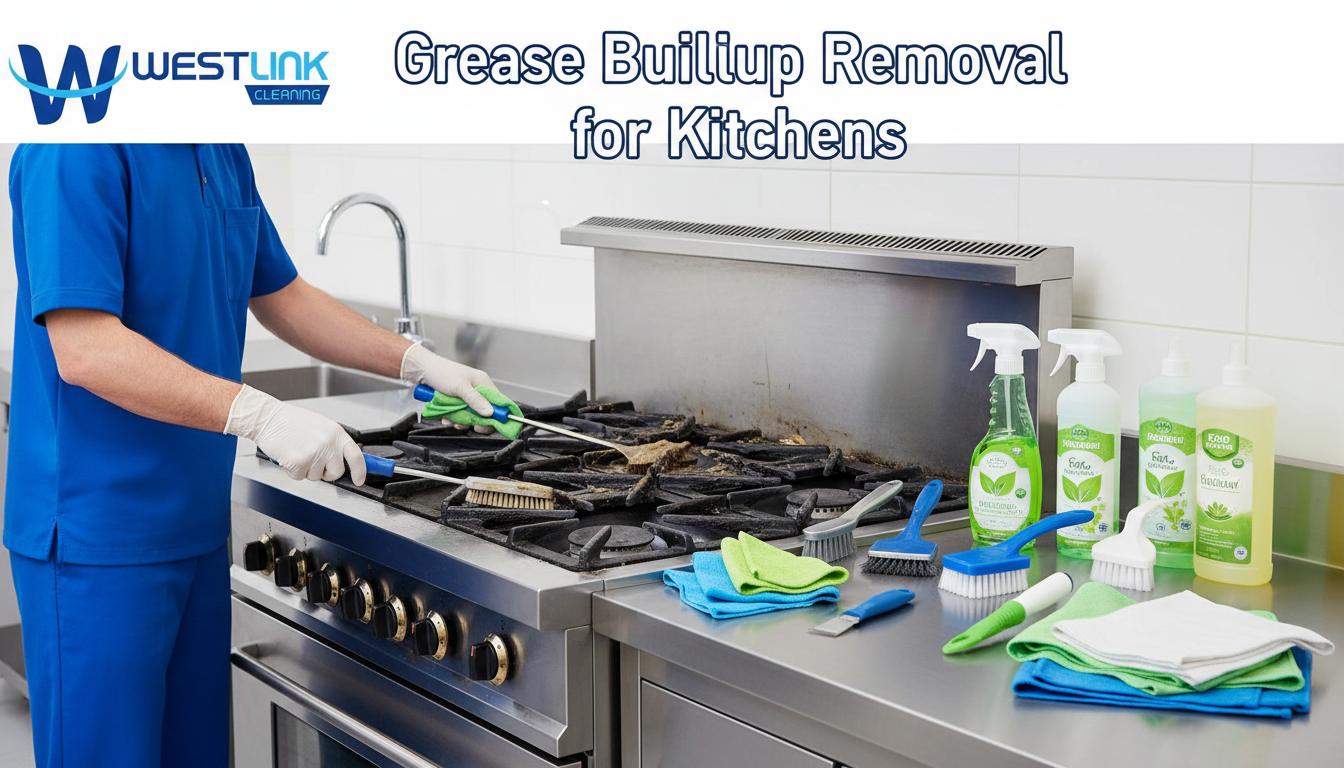
Grease Buildup Removal for Kitchens: Tools, Cleaners, and Expert Advice

Grease Buildup Removal for Kitchens: Tools, Cleaners, and Expert Advice
Introduction: Why Kitchen Grease Is a Bigger Problem Than It Looks
Grease buildup is one of the most common yet overlooked problems in kitchens. It begins subtly with a few oil splatters near the stove, a thin layer on cabinet doors, or a sticky residue on appliances. Over time, this grease spreads across surfaces, hardens, and becomes much more difficult to remove. Even with regular cleaning, many homeowners notice dull countertops, sticky corners, and lingering odors. The reason is that grease behaves differently from ordinary dirt: it bonds with surfaces, attracts dust, and resists standard cleaning methods, making everyday cleaning products often ineffective. Effective grease buildup removal for kitchens requires more than just wiping or scrubbing; it demands a deeper understanding of how grease accumulates and the best ways to tackle it safely.
When grease combines with dust, heat, and moisture, it forms a thick, stubborn layer that simple cleaning cannot eliminate. This is why proper grease buildup removal for kitchens needs the right tools, strong yet safe cleaners, and, often, expert guidance. Professionals know how to target hidden areas like range hoods, vents, and behind appliances, ensuring that grease is removed thoroughly without damaging surfaces. By addressing grease buildup systematically, kitchens not only look cleaner but also become safer, more hygienic, and easier to maintain over time.
Understanding Grease Buildup in Kitchens
How Grease Develops During Daily Cooking
Every time you cook, especially when frying, roasting, or sautéing, oil heats up and turns into tiny airborne particles. These particles float in the air and slowly settle on nearby surfaces. Even if you cannot see them right away, they are there. Cabinets, walls, range hoods, and appliances quietly collect this grease day after day.
For example, you may wipe your stove daily, but the top of your cabinets still feels sticky after a few months. That is because grease travels upward with warm air. Without proper ventilation, it spreads across the entire kitchen. Over time, this thin layer becomes thicker and darker, making cleaning harder.
Why Grease Becomes Sticky and Hard to Remove
Fresh grease is soft and easy to clean. Old grease is different. Heat causes grease to harden and bond with surfaces. Dust sticks to it, moisture traps it, and soon it turns into a stubborn coating. This is why simple soap and water often fail. Proper grease buildup removal for kitchens focuses on breaking this bond safely.
Why Grease Buildup Should Be Taken Seriously
Health and Hygiene Issues
Grease attracts bacteria and food particles. When left uncleaned, it creates an unhealthy environment. Bacteria can spread to food preparation areas, increasing the risk of contamination. This is especially dangerous in homes with children or elderly family members.
Grease also traps odors. You may notice that even after cleaning, your kitchen smells stale. The smell comes back because the grease is still there, holding onto old cooking odors.
Fire Risks in the Kitchen
Grease is flammable. When it builds up near stoves, ovens, and range hoods, it increases the risk of fire. A small flame or overheating can ignite greasy surfaces. Regular and proper grease removal helps reduce this danger significantly.
Damage to Kitchen Surfaces
Grease slowly damages materials. Wooden cabinets can discolor, paint can peel, and metal surfaces can lose their shine. Once this damage happens, it is often permanent. Removing grease early protects your kitchen and saves money on repairs.
Common Areas Where Grease Builds Up
Stoves and Cooktops
These areas face direct oil splatter during cooking. Even with daily wiping, grease can build up around burners and edges. Over time, it hardens and affects performance and appearance.
Range Hoods and Filters
Range hoods pull grease-filled air upward. Filters trap grease, but if not cleaned regularly, they become clogged and stop working properly. This causes grease to spread further into the kitchen.
Cabinets and Walls
Cabinets near the stove collect airborne grease. Walls and backsplashes also trap oil, especially behind cooking areas. These surfaces often look clean but feel sticky when touched.
Appliances and Countertops
Refrigerators, microwaves, and ovens collect grease from hands and air. Countertops may not look greasy, but they often have a thin layer that dulls their finish.
Essential Tools for Grease Buildup Removal
Microfiber Cloths
Microfiber cloths are excellent for grease cleaning because they trap oil instead of spreading it. They work better than paper towels and reduce streaks on surfaces.
Soft Sponges and Scrub Pads
Soft sponges help remove grease without scratching surfaces. Non-abrasive scrub pads are useful for tougher spots, especially on tiles and backsplashes.
Old Toothbrushes and Small Brushes
These tools are perfect for cleaning corners, grout lines, and tight spaces. Grease often hides in these areas, and small brushes make a big difference.
Buckets and Spray Bottles
Using spray bottles helps apply cleaners evenly. Buckets with warm water are useful for rinsing and wiping surfaces clean after degreasing.
Best Cleaners for Kitchen Grease Removal
Dish Soap and Warm Water
Dish soap is designed to break down oil, making it one of the simplest and safest grease cleaners. Mixed with warm water, it works well for fresh and light grease.
Baking Soda
Baking soda is a gentle scrub that lifts grease without damaging surfaces. When mixed with water, it forms a paste that works well on stubborn spots like stove tops and tiles.
Vinegar
Vinegar cuts through grease due to its acidic nature. It works best on light grease and shiny surfaces like glass and stainless steel. It also helps remove odors.
Lemon and Salt
Lemon breaks down grease naturally, while salt adds mild scrubbing power. This combination works well on cutting boards and small greasy areas.
Commercial Degreasers
Commercial degreasers are stronger and designed for heavy grease. They are useful for old buildup on range hoods and ovens. Always read instructions and use gloves when handling these products.
Step-by-Step Grease Buildup Removal Process
Preparation Before Cleaning
Start by removing items from cabinets and countertops. This gives you full access to greasy surfaces. Open windows or turn on ventilation to improve airflow.
Applying the Cleaner
Apply your chosen cleaner directly to greasy areas. Let it sit for a few minutes. This step is important because it allows the cleaner to break down the grease.
Gentle Scrubbing and Wiping
Use a soft sponge or cloth to wipe away grease. Avoid scrubbing too hard, especially on painted or wooden surfaces. Work from top to bottom to prevent grease from spreading.
Rinsing and Drying
After cleaning, wipe surfaces with clean water to remove residue. Dry everything with a clean cloth to prevent streaks and reduce future grease buildup.
Surface-Specific Grease Removal Tips
Stainless Steel Surfaces
Clean stainless steel along the grain to avoid streaks. Use mild cleaners and dry thoroughly to maintain shine.
Wooden Cabinets
Use gentle soap and minimal water. Too much moisture can damage wood. Dry immediately after cleaning.
Tiles and Grout
Grease settles into grout lines. Baking soda paste and a toothbrush work well here. Rinse thoroughly after scrubbing.
Glass and Appliances
Vinegar and water are effective for glass surfaces. For appliances, follow manufacturer guidelines to avoid damage.
Expert Advice for Effective Grease Control
Clean Little and Often
Experts recommend wiping surfaces daily, especially near the stove. This prevents grease from hardening and becoming difficult to remove.
Use Proper Ventilation
Turn on exhaust fans or open windows while cooking. Good airflow reduces the amount of grease settling in the kitchen.
Do Not Mix Cleaners
Mixing cleaners can be dangerous and ineffective. Stick to one cleaner at a time for safe and proper grease removal.
Test Before Deep Cleaning
Always test cleaners on a small area before applying them widely. This helps prevent surface damage
Common Mistakes to Avoid
One common mistake is using harsh scrubbers that scratch surfaces. Another is using too much water on wooden cabinets. Skipping regular cleaning also allows grease to build up faster, making future cleaning harder.
Avoid these mistakes to make grease buildup removal for kitchens easier and safer.
When to Consider Professional Help
If grease buildup is thick, widespread, or has been ignored for years, professional cleaning may be the best option. Professionals use specialized tools and products to remove grease safely and thoroughly.
They also clean hidden areas like cabinet tops and ventilation systems, which are often missed during regular cleaning.
Maintaining a Grease-Free Kitchen Long-Term
After deep cleaning, maintain results with simple habits. Wipe surfaces after cooking, clean spills immediately, and wash range hood filters regularly.
Small daily actions reduce the need for heavy grease removal later and keep your kitchen fresh.
Conclusion
A clean kitchen is not just about looks; it is about safety, hygiene, and comfort. Using the right tools, effective cleaners, and expert advice makes grease buildup removal for kitchens easier and more effective. By understanding how grease forms and following proper cleaning methods, you can protect your kitchen surfaces and enjoy a healthier cooking space. Regular kitchen maintenance and smart grease control habits support long-term cleanliness and make kitchen deep cleaning less stressful and more manageable.
FAQs
1. What is the best cleaner for kitchen grease?
Dish soap and warm water work well for light grease, while degreasers are better for heavy buildup.
2. How often should kitchen grease be removed?
Light cleaning should be done weekly, with deep cleaning every few months.
3. Can vinegar remove old grease?
Vinegar works best on light grease. Old grease may need baking soda or degreasers.
4. Is grease buildup dangerous?
Yes, it can cause fire risks, hygiene problems, and surface damage if ignored.
5. When should I hire a professional cleaner?
If grease is thick, widespread, or hard to remove, professional help is recommended.


