

What Is Achalasia? Why Swallowing Becomes Difficult
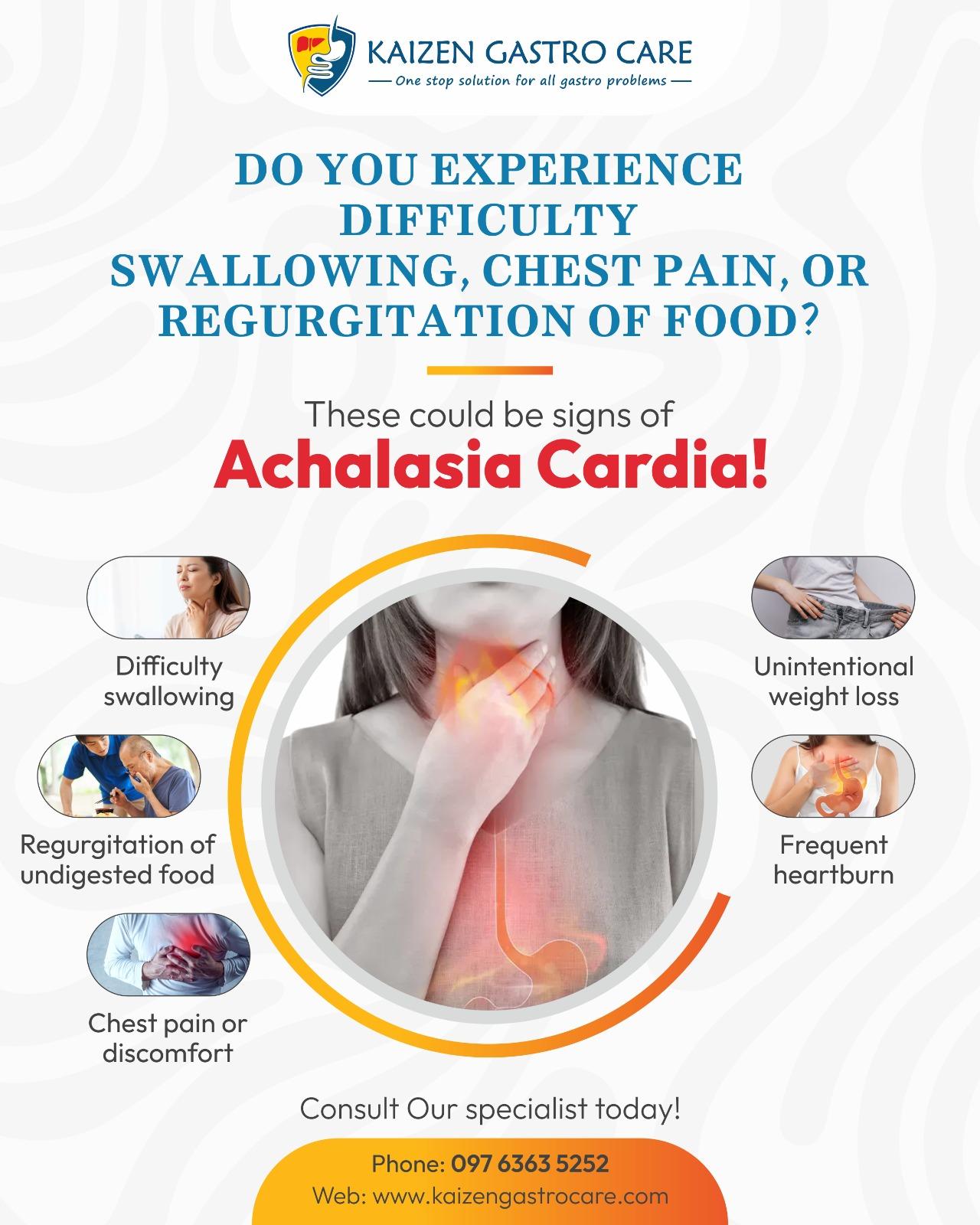
Do you feel food getting stuck while swallowing? Is drinking water the only way to push food down? If yes, this may not be simple acidity. It could be Achalasia, a serious swallowing disorder that causes persistent difficulty swallowing (dysphagia).
According to Dr. Rupali Jankar, GI Motility Specialist at Kaizen Gastro Care, Wakad Pune, swallowing problems should never be ignored, especially when they affect both solids and liquids. Early diagnosis of achalasia can prevent complications and significantly improve quality of life.
What Is Achalasia?
Achalasia is an esophageal motility disorder in which the food pipe does not function properly. The problem occurs in the Lower Esophageal Sphincter (LES), a muscle at the lower end of the esophagus. Normally, this muscle relaxes to allow food to enter the stomach.
In achalasia, the LES fails to relax, and food cannot pass easily into the stomach. As explained by Dr. Rupali Jankar, this condition is not cancer, but proper testing is necessary to rule out serious causes of dysphagia.
How Normal Swallowing Works
Swallowing is a coordinated process between the brain, nerves, and esophageal muscles. The brain sends signals to create wave-like movements (peristalsis) that push food downward. At the same time, the LES relaxes to allow smooth passage of food into the stomach.
In achalasia, the nerves controlling this movement are damaged. The esophagus does not contract properly, and the LES remains tight. This leads to food retention and swallowing difficulty.
Why Swallowing Becomes Difficult in Achalasia
🔹 Why Does Food Feel Stuck?
When the LES does not open properly, food accumulates in the esophagus instead of entering the stomach. Over time, the esophagus stretches and enlarges. Patients often describe a sensation of food being stuck in the chest, along with regurgitation and chest discomfort.
Dr. Rupali Jankar explains that because the muscle coordination is affected, patients typically experience difficulty swallowing both solids and liquids — a key feature that helps differentiate achalasia from other dysphagia causes.
Common Symptoms of Achalasia
The most common achalasia symptoms include persistent difficulty swallowing, regurgitation of undigested food, chest pain after meals, unexplained weight loss, and night-time coughing. Some patients also experience bad breath due to food retention in the esophagus.
According to Dr. Rupali Jankar at Kaizen Gastro Care, recognizing these early symptoms helps patients seek timely Dysphagia Treatment in Pune before complications develop.
What Causes Achalasia?
The exact cause of achalasia is often unknown. It usually results from damage to the nerves of the esophagus. Some cases may be linked to autoimmune mechanisms where the body attacks its own nerve cells. Rarely, infections may play a role. Importantly, lifestyle or spicy food does not cause achalasia.
How Is Achalasia Diagnosed?
Proper diagnosis is very important because treatment depends on accurate testing.
🔹 Upper Endoscopy
This helps rule out cancer, tumors, or blockage.
🔹 Barium Swallow Test
In achalasia, the esophagus shows a classic “bird-beak” appearance.
🔹 Esophageal Manometry (Gold Standard Test)
This test measures pressure and muscle function of the esophagus.
It confirms LES dysfunction and motility problems.
At Kaizen Gastro Care, Wakad Pune, advanced diagnostic tools are available for accurate evaluation.
Treatment Options for Achalasia
Achalasia cannot be permanently cured, but symptoms can be effectively treated.
🔹 Pneumatic Dilatation
A balloon is used to widen the tight LES.
🔹 POEM (Peroral Endoscopic Myotomy)
A minimally invasive endoscopic procedure to cut tight muscle fibers.
🔹 Heller’s Myotomy
Surgical procedure to relax the LES.
🔹 Botox Injection
Temporary relief for selected patients.
If you are looking for expert Achalasia Cardia Treatment in Pune, proper evaluation is the first step.
When Should You See a Specialist?
You should consult a specialist if you experience persistent difficulty swallowing, unexplained weight loss, recurrent regurgitation, or chest pain after eating. Early consultation with a GI motility expert ensures timely management and prevents complications.
Patients in Pune seeking specialized Dysphagia Treatment in Pune can consult Dr. Rupali Jankar for comprehensive evaluation.
Possible Complications If Untreated
If untreated, achalasia can lead to severe weight loss, aspiration pneumonia, megaesophagus, and in rare cases, increased risk of esophageal cancer. Early diagnosis and proper treatment significantly reduce these risks.
Conclusion (Strong Closing)
Achalasia is uncommon but manageable with expert care. Early diagnosis improves quality of life and prevents long-term complications. If swallowing is difficult, do not ignore it.
For accurate diagnosis and advanced Achalasia Cardia Treatment in Pune, consult Dr. Rupali Jankar, GI Motility Specialist at Kaizen Gastro Care, Wakad Pune.


