

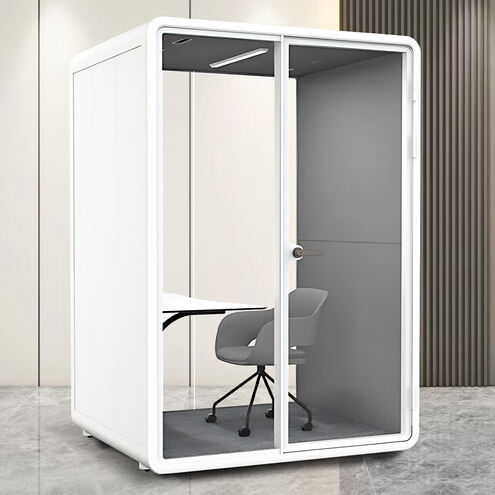
Traditional music practice room and portable X-comfot isolation booth: which is better, music school or training center?
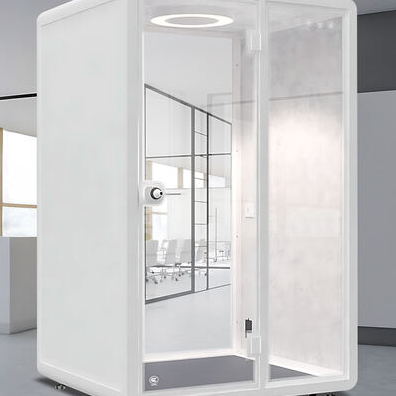
Sound insulation cabin in music education: a new trend
The space of music education around the world is changing. The traditional fixed practice room, once the default choice, is now challenged by the highly flexible and modular sound insulation cabin. For music schools, conservatories, and training centers, these x-comfot isolation booths provide a more stable, economical, and scalable alternative to traditional buildings.
This paper compares these two solutions from the most important aspects for educational institutions:
Construction cost
Acoustic performance
Flexibility and space utilization
Student experience
Long-term investment value
1. Construction cost: fixed rooms and modular cabins.
Traditional music practice room
Building a fixed music practice room will bring inevitable expenses:
architectural design
Construction worker
Acoustic wall treatment
HVAC regulation
Electrical system installation
Long construction period
Once built, there is no flexibility.
A practice room of 8 to 12 square meters costs between 8,000 and 25,000 dollars, depending on the area and acoustic requirements.
Modular x-comfot isolation booth
The modular cabin provides a clear and predictable cost structure.
Unit price based on pod size
No construction permit is required.
Pre-constructed acoustic structure
Integrated power, lighting, and ventilation system
Installation completed within 4 hours.
A four-person music practice cabin usually costs between $2,500 and $4,000, including a full set of acoustic processing facilities.
Comparison of the traditional practice room sound insulation cabin
High and changeable cost structure, fixed price
The construction time is 30 to 90 days, and each cabin takes 4 hours.
The construction complexity is high and extremely low.
Mobility is not completely movable.
Required approvals are usually not needed.
Conclusion: For organizations with limited budgets or rapid deployment needs, the x-comfot isolation booth has obvious financial advantages.
2. Acoustic performance and noise control
Traditional practice room
The acoustic performance varies significantly due to the following factors:
Contractor skills
wall thickness
Material selection
Is the room disconnected?
Construction accuracy
A room with poor construction quality may have the following problems:
Leakage through a gap
Unwanted resonance
Underabsorption of bass
Inconsistent sound field
Modular x-comfot isolation booth
High-quality sound insulation cabin, such as an acoustic compartment, adopts a multi-layer composite wall, internal shock absorption structure, and a well-sealed door system.
Typical features include:
High-density insulating material
Multilayer sandwich or insulating glass
Internal sound absorption board to reduce echo
Seal structural joints to prevent sound leakage.
Average noise reduction: 35 to 40 decibels, suitable for:
piano exercise
Violin Lessons
Vocal music training
acoustic guitar
Recording and monitoring
Pods provide consistent and factory-tested acoustic performance, regardless of the quality of on-site construction.
3. Flexibility and space utilization
The traditional practice room needs to be reformed, which is usually limited by the following:
School building
University library
training center
Leased campus
Shared learning facilities
In contrast, the X-comfot isolation booth can be placed almost anywhere:
Classroom corridor
The atrium of the music building
library
Teacher's office
Rehearsal venue
Dormitory self-study area
These "cabins" can also be reconfigured or expanded. Need a new practice area next semester? Just move the cabin. Need more rooms? Increase the number of cabins.
Flexibility is the primary reason why schools adopt modular acoustic solutions.
4. User experience and security
Modern X-comfot isolation booths not only improve the sound quality, but also enhance the comfot:
The standard configuration includes:
Desk and chair (optional for instrument-based compartments)
electric outlet
led lighting
mobile phone bracket
Fresh air intake and a silent exhaust fan
Durable shockproof floor structure
The Prodec module also includes:
Internal emergency release device
External power-off unlocking system
Ensure the overall safety of students.
Compared with traditional rooms, sleeping cabins can provide a more controllable, well-ventilated, and acoustically balanced environment.
5. Application scenarios in music education
The following are the most common use cases in universities and music training institutions:
Piano and stringed instrument practice
A controlled acoustic environment can eliminate echoes and help students concentrate.
Recording studio for vocal music training
These cabins can also be used as a professional recording studio space for singing, reading aloud, and warm-up exercises.
Recording and portfolio production
Music majors usually need clear audio for:
Homework; Task; Distribution; assign
be screen-tested
Examination recording
University application
The modular X-comfot isolation booth can be used as a small recording studio.
Online examination and interview
Nowadays, more and more schools require students to submit video materials or conduct online tests. Study groups can provide an undisturbed space.
Teacher recording and online teaching
Teachers can enjoy exclusive soundproof areas for preparing lessons or conducting remote tutoring.
Multi-x-comfot isolation booth combined with a classroom
Multiple cabins can be combined into groups to adapt to students of different grades.


