

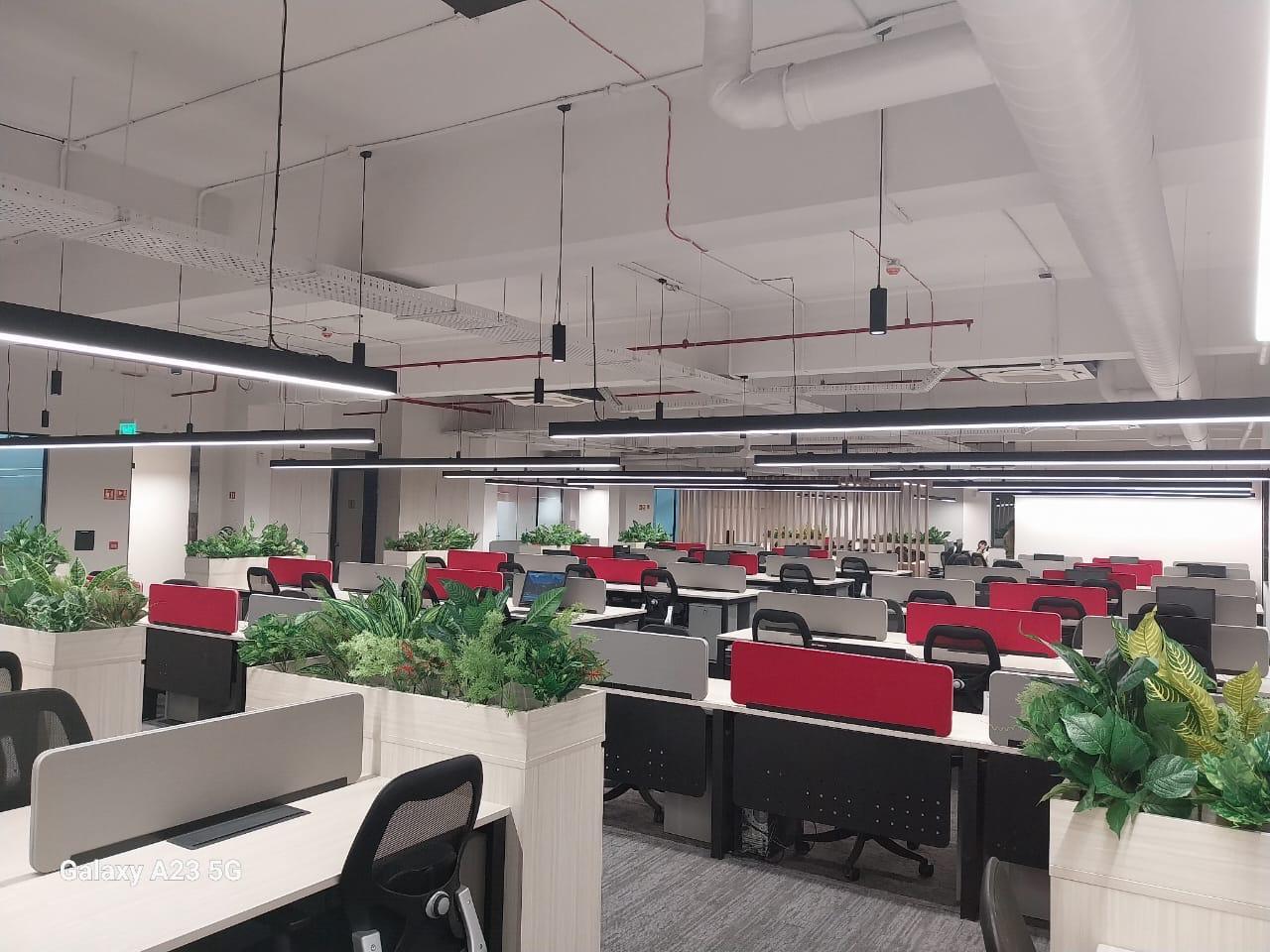
Is Office Interior Design Worth the Investment?

Office interior design has evolved far beyond aesthetics. It is now closely linked with business performance, employee productivity, and brand perception. Many organizations today question whether investing in office interiors is truly worth the cost or just an additional expense.
The answer depends on how the space is planned and executed. When done strategically, office interior design becomes a long-term business asset rather than a one-time expenditure. It directly impacts how efficiently teams work and how a company is perceived in the market.
Businesses across NCR and other major cities are increasingly shifting toward structured workspace planning because of these measurable benefits.
Why Office Interiors Are No Longer Just About Looks
Earlier, office design was mainly focused on appearance. Companies would prioritize furniture, colors, and decor. Today, the approach is completely different.
Modern office design focuses on functionality, efficiency, and adaptability. It considers how employees move, collaborate, and perform tasks throughout the day.
A well-designed office improves workflow. It reduces unnecessary movement and helps teams stay organized. Poor design, on the other hand, creates confusion and reduces efficiency.
This is why many companies now consider interior design an operational decision rather than a decorative one.
Impact of Office Interior Design on Productivity
One of the most important benefits of office interior design is its impact on productivity. A structured and well-planned workspace allows employees to focus better and work more efficiently.
Cluttered or poorly designed spaces often lead to distractions. Employees may waste time navigating inefficient layouts or dealing with uncomfortable environments.
Good design solves these problems. It ensures smooth movement, proper lighting, and ergonomic setups. These small improvements collectively increase overall output.
Workplaces that invest in design improvements often report better task completion rates and improved team coordination.
Role of Office Design in Brand Image and Trust
An office is a physical representation of a business. It reflects professionalism, culture, and attention to detail.
When clients or partners visit an office, they immediately form an impression based on the environment. A well-designed office creates trust and confidence. It signals stability and professionalism.
On the other hand, a poorly designed workspace can negatively impact perception, even if the business itself is strong.
This is why interior design plays an indirect but powerful role in business development and client relationships.
Cost vs Investment: A Common Misunderstanding
Many business owners initially view office interior design as a cost. However, this perspective changes when long-term benefits are considered.
Proper design reduces operational inefficiencies. It minimizes space wastage and avoids frequent redesign or correction work.
Poor planning often leads to higher long-term expenses. This includes maintenance issues, rework, and inefficient space utilization.
A well-executed design may require initial investment, but it pays back through improved performance and reduced future costs.
This is why industry experts often refer to it as a business investment rather than an expense.
Employee Experience and Workplace Environment
Employee satisfaction is directly influenced by the workspace environment. A comfortable and well-designed office improves morale and engagement.
Lighting, ventilation, seating arrangements, and noise control all play a role in employee comfort. When these factors are properly managed, employees feel more motivated and less stressed.
Improved workplace conditions also reduce absenteeism and employee turnover. This leads to long-term cost savings for businesses.
Companies that prioritize employee experience through design often see better retention and performance outcomes.
Office Interior Design in Modern Business Cities
In fast-growing business hubs, office design has become a competitive necessity. Companies are investing in structured and flexible workspaces to stay ahead.
Businesses searching for an Office Interior Designer in Noida often focus on improving efficiency and optimizing available space for better productivity.
Similarly, companies expanding operations in metropolitan regions require scalable designs that can support future growth without major structural changes.
Importance of Scalable and Flexible Workspaces
Modern businesses are constantly evolving. Teams grow, processes change, and technology advances.
Office interiors must be flexible enough to adapt to these changes. Fixed and rigid layouts often become outdated quickly.
Scalable design allows businesses to expand or modify spaces without major disruptions. This includes modular furniture, adjustable layouts, and multi-functional areas.
Flexibility ensures that the office remains relevant for years, reducing the need for frequent redesigns.
Workplace Psychology and Employee Performance
Interior design also has a psychological impact on employees. Environment influences mood, focus, and energy levels.
Natural light, open spaces, and organized layouts contribute to better mental well-being. Employees tend to perform better in environments that feel balanced and comfortable.
On the other hand, poorly designed offices can create stress and reduce motivation over time.
This connection between psychology and design is now widely recognized in corporate workspace planning.
Office Interior Design in Delhi NCR Region
Demand for professional office interiors is growing rapidly in metropolitan areas. Businesses are focusing on efficiency-driven design rather than traditional layouts.
Companies looking for an Office Interior Designer in Delhi usually prioritize modern, scalable, and professional work environments that support business expansion.
The shift is not limited to large corporations. Startups and mid-sized businesses are also investing in better workspace design to improve performance and brand perception.
Design Consistency Across Multiple Locations
As businesses expand across cities, maintaining design consistency becomes important. It helps in building a unified brand identity.
Companies operating in multiple locations often require standardized design guidelines that can be adapted based on space and functionality.
Efficiency Through Professional Execution
Office interior design is not just about planning. Execution quality plays an equally important role.
Even a good design can fail if implementation is not handled properly. Material selection, site coordination, and project management all influence the final outcome.
Professional execution ensures that the design vision is translated accurately into reality without delays or quality issues.
Office Interior Design in Faridabad and Growing Business Needs
As businesses expand, their workspace requirements become more complex. They need environments that support both current operations and future growth.
The goal is to create spaces that support long-term business stability rather than short-term aesthetics.
Final Conclusion: Expense or Investment?
Office interior design should not be viewed as a cosmetic upgrade. It is a strategic business decision with measurable impact.
It improves productivity, strengthens brand image, enhances employee satisfaction, and reduces long-term operational inefficiencies.
When planned correctly, it becomes a business asset that continues to deliver value over time.
The true return is not only financial but also operational and cultural, making office interior design a justified and essential investment for modern businesses.


