


How Does Mary Oliver Address the Divine Through Nature?
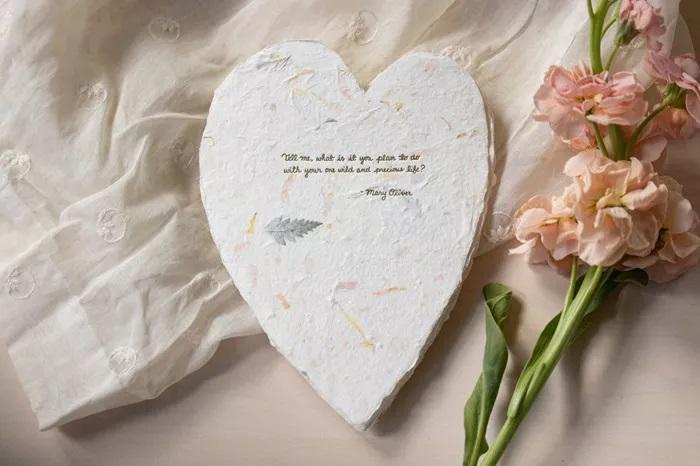
Few contemporary poets have woven the natural world and the spiritual realm together with the grace, clarity, and reverence found in the works of Mary Oliver. Her poetry consistently draws upon landscapes, animals, seasons, and small earthly wonders as entry points into reflections on the divine. While Oliver rarely invokes organized religion or theological doctrine, her poems often move toward a contemplative, luminous awareness of something larger than human experience. She approaches the divine not through abstractions but through keen attention, humble presence, and the profound lessons that nature offers about living fully.
Nature as a Portal to Spiritual Awareness
The Divine Revealed Through Attention
Central to Mary Oliver’s poetic vision is the belief that paying attention is a form of devotion. She famously wrote that “attention is the beginning of devotion,” and this principle echoes throughout her body of work. The divine emerges not through dramatic supernatural events but through everyday observations: the arc of a bird’s flight, the opening of a flower, or the quiet movement of a fox in the snow.
This spiritual sensibility suggests that God—or a transcendent presence—can be encountered in ordinary details when the observer approaches them with curiosity and openness. The world itself becomes a sacred text, inviting readers to slow down, witness, and grow.
The Sacredness of the Natural World
Oliver’s poems often imply that nature is inherently holy. She does not treat the divine as separate from the physical world, nor does she position humanity as above or outside the natural order. Instead, she locates spirituality within the earth’s rhythms and creatures. This approach echoes both pantheistic traditions and the intuitive spirituality found in certain mystic poets.
Through landscapes and living beings, Oliver expresses a reverence that aligns the divine with the tangible. A pond is not simply a body of water, nor is a wild goose merely a bird; each becomes a symbol, a reminder, or a teacher that reflects something sacred.
The Role of Animals in Oliver’s Spiritual Vision
Animals as Teachers of Humility
Animals often serve as guides in Oliver’s poems, turning the poet’s gaze toward humility and wisdom. Whether she writes about owls, geese, dogs, or snakes, Oliver treats these creatures as beings that know how to live freely and authentically. Their instincts and presence model a way of existing that transcends human worry and self-consciousness.
In this sense, divine lessons come not from human institutions but from nature’s creatures. Their simplicity and directness invite readers to consider what it means to live in tune with the world and to trust life’s unfolding.
The Mystery within Animal Encounters
Encounters with animals in Oliver’s poetry often carry a sense of mystery, suggesting a moment of brushing against the divine. When she follows a deer or studies an owl, the scene becomes charged with something beyond the physical. The divine appears through the unexpected, the beautiful, or the quietly powerful moment of recognition between human and creature.
These moments remind readers that the natural world contains wonders that surpass human understanding. The divine arises not as an answer but as a question, a presence that invites contemplation rather than certainty.
Landscapes as Spiritual Metaphor
Forests, Fields, and Waterways
Landscapes in Mary Oliver’s work are more than settings. They function as metaphors for states of being, emotional landscapes, and spiritual discoveries. Forests often represent mystery or introspection, while fields suggest openness and renewal. Waterways—rivers, ponds, and oceans—serve as symbols of change, surrender, and continuity.
Through these landscapes, Oliver expresses the divine as woven into the cycles of growth, decay, and rebirth. The natural world mirrors the spiritual world, teaching lessons about impermanence, resilience, and the quiet persistence of life.
Walking as a Form of Prayer
Many of Oliver’s poems describe walking as a central activity—a simple, repeated motion through which she engages with the divine. Walking becomes a meditative act that clears the mind and awakens the senses. The rhythm of footsteps mirrors the rhythm of thought, and in this gentle motion, clarity often emerges.
For Oliver, prayer is not confined to institutions or formal rituals but unfolds organically in the presence of wind, water, sunlight, and shadow. The landscape itself becomes an open-air sanctuary, where one can ask questions, listen deeply, or simply be.
The Divine as Immanent Rather Than Transcendent
A God Who Dwells Within the World
Unlike poets who depict God as distant or unreachable, Mary Oliver suggests that the divine is immanent. The presence of God—or a spiritual force—is felt in the pulse of living things and the quiet harmony of ecosystems. Oliver’s divine is not removed from the world but suffused throughout it.
This immanence affirms the value of the physical world, urging readers to care for and cherish it. Nature becomes both a spiritual resource and a moral obligation. In this way, Oliver’s poetry bridges spirituality and environmental consciousness.
A Spirituality of Wonder
Wonder is a defining element of Oliver’s approach to the divine. Her poems often begin with simple observation and move toward awe. This transition reflects her belief that wonder opens the heart and mind to spiritual possibility. The divine is encountered not through certainty but through amazement at the world’s complexity and beauty.
Wonder becomes a kind of theology—one grounded not in doctrine but in lived experience. Through wonder, Oliver invites readers to embrace the unknown, recognizing mystery as an essential part of spiritual life.
Human Experience in Relation to the Divine
The Self in Nature
In many of her poems, Oliver positions the human self as part of the natural world rather than above it. By seeing herself as one being among many, she destabilizes the hierarchy that often separates humans from other forms of life. This perspective deepens her spiritual vision, emphasizing interconnectedness.
The divine arises through this sense of belonging. When the self softens its boundaries and joins the larger web of life, spiritual insight becomes possible. Nature teaches humility, interconnectedness, and the value of being present.
Mortality and Eternal Presence
Oliver frequently meditates on death—both human and ecological—yet her reflections are rarely dark or despairing. Instead, she treats mortality as a natural part of the cycle of life. The divine is found in continuity rather than permanence. Death becomes a return to the earth, a merging with the greater whole.
Through this perspective, Oliver presents a spiritual vision that embraces both the fragility and the beauty of existence. The divine is not an escape from mortality but a way of understanding it.
Conclusion
The significance of the divine in Mary Oliver’s poetry lies in her ability to reveal how spirituality can be grounded in attention, presence, and reverence for the natural world. Her poems suggest that the divine is not distant or inaccessible but alive in the landscapes, creatures, and quiet moments of everyday life. By presenting nature as a sacred text, she encourages readers to look closely, listen deeply, and allow wonder to reshape their understanding of the world. Through her gentle yet profound explorations, Oliver offers a spirituality that is both accessible and transformative, rooted in the earth yet reaching toward the infinite.
 Greek
Greek
 English
 Arabic
 French
 Spanish
 Portuguese
 Deutsch
 Turkish
 Dutch
Dutch
 Italiano
 Russian
 Romaian
 Portuguese (Brazil)