


15 Most Visually Stunning British War Movies Ever Made
British cinema has a long and distinguished tradition of war films that balance realism, artistry, and emotional depth. What sets the finest entries apart is not only their historical importance, but their visual power—how landscapes, lighting, cinematography, and production design immerse the viewer in the chaos, heroism, and tragedy of conflict. The greatest British War Movies use imagery as storytelling, transforming battlefields into cinematic canvases and turning history into unforgettable visual experiences.
This article explores fifteen of the most visually stunning British war films ever made, examining how each uses film craft to elevate its narrative and leave a lasting impression.
The Power of Visual Storytelling in British War Cinema
Why Visuals Matter as Much as History
British war films have often prioritized atmosphere over spectacle. Rather than relying solely on explosive action, they use composition, color palettes, and restrained camerawork to convey dread, courage, and endurance. These films demonstrate that war’s emotional impact can be felt just as strongly through silence, shadow, and framing as through combat.
1. Lawrence of Arabia (1962)
Epic Scale and Desert Majesty
David Lean’s Lawrence of Arabia remains one of the most visually breathtaking war films ever made. Shot in Super Panavision 70, the sweeping desert landscapes dominate the screen, making human figures appear both heroic and insignificant. The vastness of the sand dunes reflects the psychological isolation of T.E. Lawrence himself.
The film’s use of natural light and wide compositions set a benchmark for epic filmmaking. Every frame feels meticulously composed, turning the desert into both a battlefield and a character.
2. Dunkirk (2017)
Immersion Through Minimalism
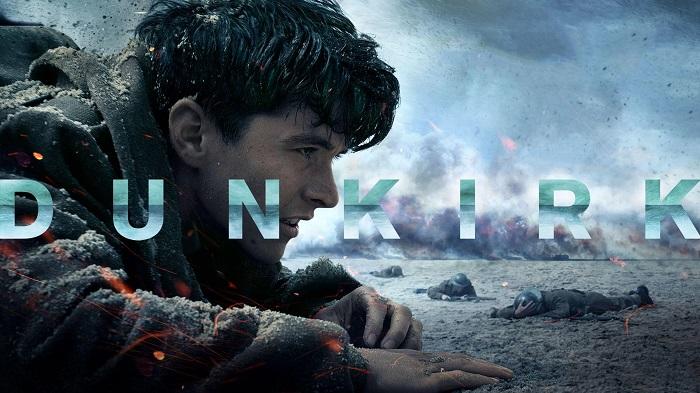
Christopher Nolan’s Dunkirk redefined modern war cinematography. Shot largely on IMAX cameras, the film relies on stark visuals, clean horizons, and relentless forward motion. The beaches of Dunkirk are portrayed not as chaotic cluttered spaces, but as hauntingly empty expanses filled with waiting and dread.
The aerial dogfights, filmed with unprecedented clarity, create a visceral sense of vulnerability. The visual restraint enhances tension, making Dunkirk one of the most immersive British war movies ever produced.
3. 1917 (2019)
The Illusion of a Single Continuous Shot
Sam Mendes’ 1917 is celebrated for its technical bravado and visual elegance. Designed to appear as one unbroken take, the film pulls the audience directly into the trenches and devastated landscapes of World War I.
Roger Deakins’ cinematography transforms ruined villages, flares lighting the night sky, and muddy battlefields into haunting visual poetry. The fluid camera movement creates a sense of urgency while maintaining painterly composition.
4. Atonement (2007)
War as Emotional and Visual Trauma
Although not a traditional war film, Atonement contains one of the most visually astonishing depictions of World War II in British cinema. The Dunkirk beach sequence, captured in a long tracking shot, reveals exhaustion, despair, and surreal chaos.
Director Joe Wright uses imagery to explore memory and guilt, blending romantic visuals with the brutal reality of war. The film’s elegant compositions contrast sharply with its emotional devastation.
5. The Bridge on the River Kwai (1957)
Jungle Warfare and Monumental Engineering
Another David Lean masterpiece, The Bridge on the River Kwai combines lush jungle cinematography with precise framing and scale. The oppressive heat and dense greenery become central visual elements, reinforcing the psychological tension between prisoners and captors.
The climactic destruction of the bridge is staged with classical precision, demonstrating how visual spectacle can serve narrative and thematic depth.
6. Black Hawk Down (2001)
British Craft in a Modern War Setting
Though focused on American soldiers, Black Hawk Down was heavily shaped by British filmmaking talent and craftsmanship. The film’s desaturated color palette, rapid editing, and handheld camerawork create a relentless visual assault.
Urban warfare is portrayed with chaotic realism, immersing the viewer in dust, smoke, and confusion. Its visual intensity influenced a generation of modern war films.
7. The Dam Busters (1955)
Precision, Shadows, and Aerial Grandeur
The Dam Busters is a classic example of British restraint and technical excellence. The night-time aerial sequences are shot with careful lighting and disciplined framing, emphasizing the danger and precision of the mission.
The film’s visuals reflect wartime ingenuity, turning mechanical engineering and flight into cinematic spectacle without exaggeration.
8. Come and See (1985)
A British-Backed Vision of Horror
Though directed by Soviet filmmaker Elem Klimov, Come and See was supported by British distribution and influence. Visually, it is one of the most disturbing war films ever made.
The camera lingers on faces, forests, and ruined villages, using natural light and long takes to create unbearable realism. The imagery leaves scars on the viewer, proving that visual beauty can coexist with absolute horror.
9. The Battle of Britain (1969)
Authentic Skies and Real Aircraft
This film remains unmatched in its use of real aircraft and large-scale aerial photography. The skies become vast battlegrounds, filled with carefully choreographed dogfights.
The clean cinematography allows viewers to appreciate both the elegance and terror of aerial combat, preserving historical authenticity through visuals rather than digital effects.
10. Hope and Glory (1987)
War Through a Child’s Eyes
John Boorman’s Hope and Glory presents World War II from a domestic perspective. The visuals capture bombed-out London streets bathed in warm light, blending nostalgia with destruction.
The contrast between childhood wonder and wartime devastation gives the film its unique visual identity, showing war as both frightening and strangely transformative.
11. Enemy at the Gates (2001)
Ruins as Cinematic Landscapes
Set during the Battle of Stalingrad, this British-influenced production uses ruined architecture as visual metaphor. Snow-covered rubble, smoke-filled streets, and shattered factories dominate the frame.
The film’s color grading emphasizes cold blues and grays, reinforcing the emotional and physical brutality of the setting.
12. The Longest Day (1962)
Grand Scale with Classical Elegance
This epic portrayal of D-Day uses black-and-white cinematography to emphasize scale and historical gravitas. The Normandy beaches are depicted with clarity and compositional discipline.
The visuals feel documentary-like, giving the film a timeless quality that enhances its authenticity.
13. Gallipoli (1981)
Landscape as Destiny
Although centered on Australian soldiers, Gallipoli is deeply rooted in British imperial history. The sweeping desert visuals and sun-drenched battlefields create a tragic sense of inevitability.
The contrast between youthful energy and harsh terrain underscores the futility of war through visual storytelling.
14. Eye in the Sky (2015)
Modern Warfare Through Screens and Shadows
This contemporary British war film uses drones, surveillance imagery, and sterile interiors to create visual tension. The battlefield is often seen through monitors, emphasizing moral distance and ethical complexity.
The restrained visuals mirror the cold precision of modern warfare.
15. Threads (1984)
Apocalyptic Realism
Threads presents nuclear war in stark, unfiltered imagery. Shot with a documentary aesthetic, its visuals are intentionally bleak and unadorned.
The absence of cinematic beauty becomes its strength, forcing the audience to confront the terrifying consequences of conflict.
Conclusion: The Visual Legacy of British War Movies
The most visually stunning British War Movies understand that images are as powerful as dialogue or plot. From epic deserts and ruined cities to intimate domestic spaces, these films use visual language to explore history, memory, and human endurance.
Through careful composition, innovative cinematography, and emotional restraint, British war cinema continues to shape how audiences see conflict—not just as spectacle, but as lived experience etched into landscapes and faces.

 English
 French
 Spanish
 Portuguese
 Deutsch
 Turkish
 Dutch
Dutch
 Italiano
 Russian
 Romaian
 Portuguese (Brazil)
 Greek
Greek