

Custom LMS: How Businesses Can Build Better Learning Platforms
Digital learning has become an important part of education, employee training, professional development, and healthcare workforce programs. Organizations now need learning platforms that can support different types of users, courses, assessments, certifications, and reporting requirements. While ready-made learning management systems can cover common needs, they may not always fit specialized workflows.
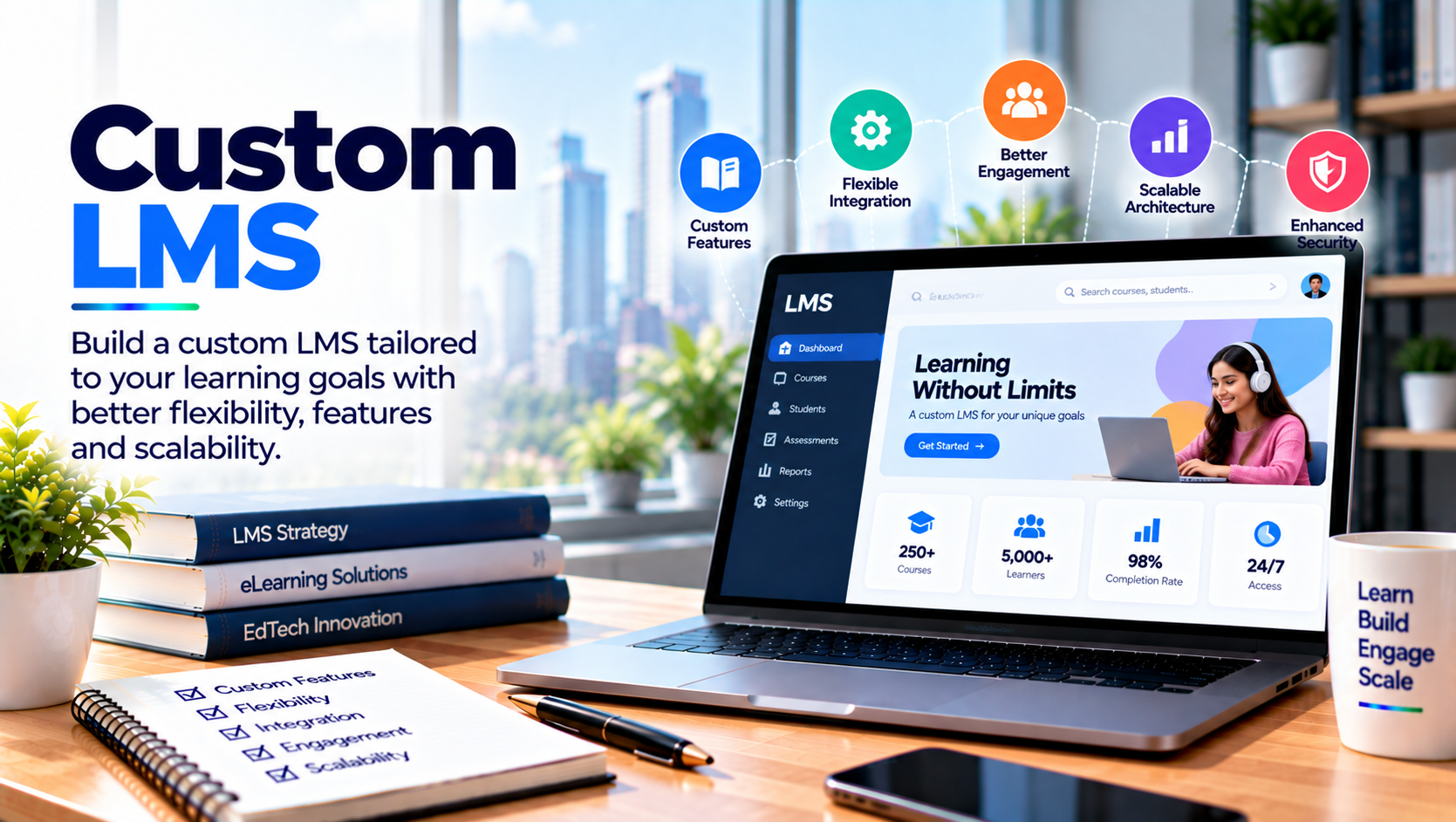
This is where a Custom LMS can provide a different approach. Instead of adapting business processes around an existing platform, organizations can build learning software around their own requirements. This can include unique dashboards, specialized user roles, custom reports, integrations, branding, and learning workflows.
For organizations with complex training needs, understanding how custom learning platforms work can help decision-makers determine whether developing a tailored solution is appropriate for their long-term goals.
What Is a Custom LMS?
A learning management system provides a digital environment for managing courses, learners, assessments, educational materials, and training records. A custom LMS takes this concept further by allowing the platform to be designed around the specific requirements of an organization.
Instead of relying entirely on standard features, businesses can define how users register, access courses, complete assessments, communicate with instructors, and receive certificates. The result is a learning platform that reflects the organization's operational model.
How It Differs From a Ready-Made LMS
Ready-made LMS platforms generally provide predefined features that work for a broad range of organizations. They can be useful when an organization has standard learning requirements and wants to launch quickly.
A custom solution provides more control over functionality and workflows. This makes it particularly useful for organizations with specialized processes that are difficult to manage through plugins, extensions, or configuration settings.
Why Organizations Consider Custom Learning Platforms
Different industries have different training requirements. A university may need student enrollment and academic assessment features, while a healthcare organization may need employee certification tracking and specialized training records.
Businesses may also need learning platforms connected to HR, CRM, payroll, identity management, or other internal systems.
Build Around Actual Business Workflows
A Custom LMS allows organizations to define workflows according to their existing operations. For example, an employee could automatically be enrolled in specific training based on their department or job role.
Managers could receive progress information while administrators maintain control over course content, user permissions, and certification requirements.
Key Features of a Custom LMS
The features included in a custom learning platform depend on the organization's goals. The system can be designed around learners, instructors, administrators, managers, or other user groups.
Common functionality may include course management, user profiles, assessments, certificates, notifications, reporting, content management, and communication tools.
Personalized Dashboards for Different Users
Different users often require different information. Learners may need access to assigned courses and progress information, while administrators may need enrollment data, reports, and platform controls.
Custom dashboards can present relevant information to each user without overwhelming them with unnecessary options.
Custom Integrations Can Connect Business Systems
Organizations often already have several digital systems in place. An LMS may need to communicate with HR platforms, employee directories, payment gateways, video services, CRM systems, or identity providers.
Integration can reduce duplicate data entry and help information move between systems.
APIs Make Integration More Flexible
Application programming interfaces can allow the learning platform to exchange data with external applications. For example, employee information from an HR system could be used to create learner profiles automatically.
A healthcare organization may also connect training information with internal workforce systems while applying appropriate security and access controls.
Healthcare Organizations Can Benefit From Specialized Learning
Healthcare organizations need ongoing training for employees, administrators, and other professionals. Training may cover internal processes, technology, safety procedures, compliance-related subjects, and professional development.
A specialized learning platform can help organizations manage these programs in a structured digital environment.
Manage Training Records More Effectively
A healthcare-focused LMS can provide administrators with information about course completion, assessment results, certifications, and training history.
The exact requirements depend on the organization's activities and applicable regulations. Security and privacy considerations should be incorporated into the platform architecture from the beginning.
Security Should Be Considered During Development
Learning platforms can store personal information, course records, assessment results, certificates, and organizational data. A custom system should therefore be designed with appropriate security controls.
Authentication, authorization, encryption, secure APIs, logging, backups, and role-based permissions can all contribute to a safer application.
Give Users Only the Access They Need
Administrators, instructors, managers, learners, and support personnel may have different responsibilities. Role-based access controls can restrict sensitive functions to authorized users.
This approach can help organizations maintain better control over information and administrative capabilities within the learning platform.
Reporting and Analytics Support Better Decisions
Learning data can help organizations understand how training programs are performing. Administrators may want to know which courses have the highest completion rates, where learners are struggling, or which certifications are approaching expiration.
Standard LMS reports may not always provide the exact information a business needs.
Create Reports Around Specific Requirements
A Custom LMS can include reports designed around an organization's KPIs and training processes. Healthcare organizations, for example, may want to monitor employee training completion across departments.
Managers can use these insights to identify gaps and determine where additional training may be required.
Mobile Learning Can Improve Accessibility
Employees and learners may access training from smartphones, tablets, laptops, or desktop computers. A responsive learning platform can provide a consistent experience across different screen sizes.
Mobile accessibility can be especially useful for organizations with distributed teams or employees who work outside traditional office environments.
Design for Real-World Usage
A mobile-friendly platform should make navigation, course access, assessments, and progress tracking easy on smaller screens.
The design should also consider different connection speeds and device capabilities so users can access appropriate learning materials without unnecessary technical barriers.
Scalability Should Be Part of the Architecture
An organization may begin with a few hundred learners and eventually expand to thousands or more. The platform should therefore be designed with future growth in mind.
Scalability can involve application infrastructure, database performance, storage, content delivery, and system monitoring.
Plan for More Users and More Content
As organizations add courses, departments, instructors, and learners, the amount of data processed by the platform can increase significantly.
A well-planned Custom LMS architecture can provide a foundation for adding users and functionality without requiring the entire system to be redesigned.
How Much Does a Custom LMS Cost?
The cost of developing a custom learning management platform depends on its functionality and technical complexity. Features, integrations, number of user roles, UI/UX requirements, mobile support, security controls, reporting, and infrastructure can all influence the development budget.
A basic learning platform will have different requirements from an enterprise system supporting multiple organizations and complex integrations.
Start With Core Requirements
Organizations can begin by identifying the most important workflows and features. This can help development teams estimate the scope more accurately.
An initial version can focus on essential learning functionality, with additional capabilities introduced later as users provide feedback and business requirements evolve.
When Should You Choose a Custom LMS?
A custom learning platform may be appropriate when an organization's workflows are significantly different from what standard LMS products provide.
It can also make sense when integrations, reporting, branding, security requirements, or user experiences are important parts of the product strategy.
Compare Custom Development With Existing Platforms
Organizations should first document their requirements and compare them with available LMS products. If a ready-made platform meets most requirements with limited customization, it may be the more practical option.
If important workflows require extensive workarounds, a custom solution may offer greater long-term control.
Working With an Experienced Development Partner
Developing an LMS requires more than programming. Product planning, UI/UX design, backend architecture, database development, integrations, security, testing, deployment, and maintenance all contribute to the final platform.
An experienced software development partner can help organizations evaluate their requirements and create an appropriate technical roadmap.
SynergyTop provides software development and digital solutions for businesses across different industries. You can learn more about its services through SynergyTop.
Final Thoughts
A learning management system should support the way an organization actually operates. When standard platforms cannot provide the required flexibility, custom development can give businesses greater control over workflows, integrations, user experiences, reporting, and platform architecture.
A Custom LMS can be particularly useful for organizations with specialized education or healthcare training requirements. However, custom development should begin with clear requirements and a realistic understanding of budget, timelines, security, scalability, and long-term maintenance.
By defining the right features and building around actual user needs, organizations can create a learning platform that supports current training programs while providing room for future growth.


