


How Does Edward Lear Blend Humor and Melancholy in His Work?
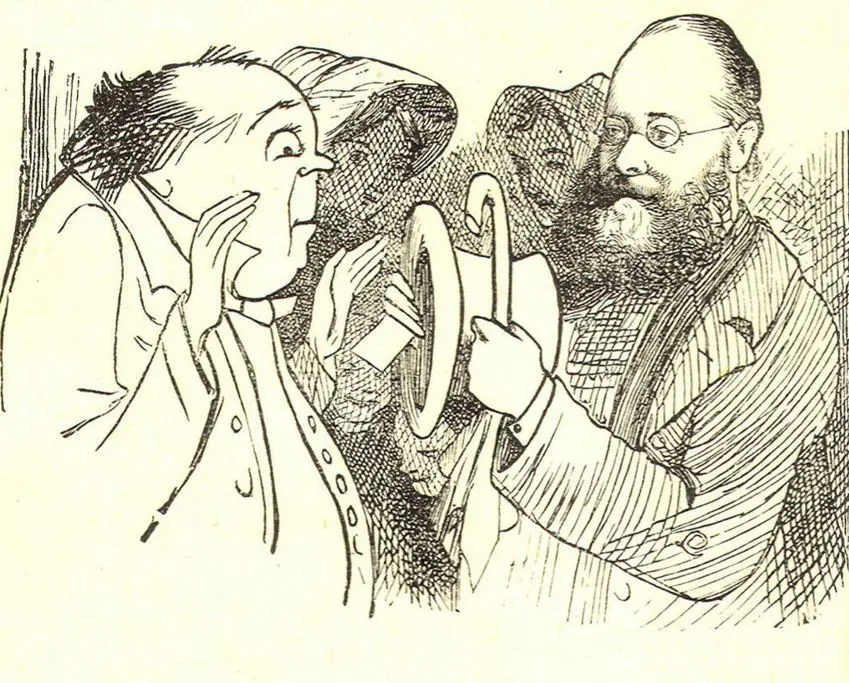
Edward Lear is most commonly remembered as the master of literary nonsense, the creator of limericks and whimsical poems populated by owls, pussycats, and eccentric old men with impossible habits. Yet beneath the playful surfaces of his verse lies a persistent current of sadness, isolation, and emotional vulnerability. What makes Lear’s work enduringly fascinating is not simply its humor, but the way that humor coexists with, and often conceals, deep melancholy. Rather than canceling each other out, comedy and sorrow in Lear’s writing are intricately intertwined, producing a tone that is at once lighthearted and quietly tragic. This essay explores how Edward Lear blends humor and melancholy through language, character, form, biography, and emotional subtext, creating a body of work that resonates far beyond its apparent simplicity.
The Tradition of Nonsense and Its Emotional Depth
Nonsense as a Literary Mode
Nonsense literature is often misunderstood as purely frivolous. In Lear’s hands, nonsense becomes a sophisticated mode that allows emotional truths to surface indirectly. By bending logic, distorting language, and inventing absurd scenarios, Lear creates a space where conventional expectations are suspended. This freedom allows him to express feelings that might otherwise be too raw or socially constrained.
The humor in Lear’s work often arises from exaggerated illogic or playful sound patterns, but the emotional undertone frequently suggests discomfort with the world as it is. Nonsense becomes a way to cope with reality rather than escape it entirely.
Laughter as Emotional Distance
Humor in Lear’s poetry often functions as a buffer. The reader laughs at the absurdity of events or characters, yet that laughter creates distance from the emotional pain embedded in the narrative. This technique allows Lear to address themes of rejection, failure, and exile without overwhelming the reader.
In this sense, humor becomes a protective mechanism, both for the poet and for the audience.
Melancholy Beneath the Comic Surface
Recurring Themes of Exile and Isolation
Many of Lear’s characters are outsiders. They are ridiculed, misunderstood, or driven away from society. Old men with strange habits, solitary animals, and wandering figures populate his verse. While their actions are comical, their social marginalization is unmistakable.
The frequent motif of departure or banishment suggests a deep awareness of loneliness. Characters often leave not because they wish to, but because they cannot fit in. This pattern reflects an emotional landscape marked by displacement.
Endings That Undercut the Joke
Lear’s poems often end abruptly or bleakly. After a buildup of playful absurdity, the final line may introduce exile, death, or resignation. These endings reframe the humor that precedes them, revealing a darker emotional core.
The sudden shift from laughter to sadness is not accidental. It forces the reader to reconsider the poem’s tone and recognize that humor and melancholy are not separate modes, but simultaneous experiences.
Language and Sound as Emotional Tools
Playful Rhythm with Emotional Weight
Lear’s language is musical, filled with internal rhymes, invented words, and rhythmic repetition. These elements generate delight and accessibility. At the same time, the singsong quality can heighten the sense of sadness by contrasting sharply with the content.
The pleasure of sound draws readers in, making the emotional impact more subtle and therefore more enduring. Melancholy arrives not through overt declaration, but through tonal dissonance.
Invented Words and Emotional Ambiguity
Lear’s neologisms often sound cheerful, but they resist precise meaning. This ambiguity allows emotional interpretation to remain open. The reader senses feeling without being directed toward a single conclusion.
Such linguistic play mirrors emotional uncertainty. Just as the words resist definition, the feelings they evoke resist resolution.
Characterization and Emotional Projection
The Eccentric Figure as Self-Representation
Many scholars have noted that Lear’s recurring figures resemble caricatures of the poet himself. These characters are often sensitive, artistic, and ill-suited to social norms. Their exaggerated traits invite laughter, yet their vulnerability invites empathy.
By projecting aspects of himself into comic characters, Lear transforms personal sorrow into shared amusement. The humor invites readers to care for figures they might otherwise dismiss.
Animals as Emotional Surrogates
Lear frequently uses animals to express emotional states. Creatures such as birds and cats are given human desires and disappointments. This anthropomorphism softens emotional expression, making sadness more palatable.
Animals can experience loss and longing without the weight of social judgment. Through them, Lear communicates melancholy in a gentler, more indirect way.
Form and Structure as Emotional Strategy
The Limerick’s Restrictive Frame
The limerick form, with its rigid structure and predictable rhythm, provides a controlled environment for emotional exploration. Lear exploits this structure to heighten contrast. Within a form associated with humor, he introduces emotional instability.
The strict form contains the sadness, preventing it from overwhelming the poem. This containment allows melancholy to exist alongside laughter without disrupting the overall tone.
Circularity and Emotional Stagnation
Many of Lear’s poems end where they begin, emotionally speaking. Characters fail to grow or escape their circumstances. This circularity reflects a sense of emotional stasis, suggesting that change is elusive.
The humor distracts from this bleakness, but does not eliminate it. Instead, it emphasizes the poignancy of unfulfilled desire.
Biographical Context and Emotional Resonance
Lear’s Personal Struggles
Edward Lear’s life was marked by chronic illness, financial instability, and a profound sense of loneliness. He struggled with epilepsy, depression, and a lifelong feeling of social inadequacy. These experiences deeply inform his writing.
Understanding Lear’s biography does not reduce his work to autobiography, but it helps explain why melancholy persists beneath the humor. The poems become a way of transforming pain into art.
Travel, Displacement, and Longing
Lear spent much of his life traveling, often feeling that he belonged nowhere. This sense of rootlessness appears repeatedly in his poetry. Characters are frequently on the move, yet never fully at home.
Humor softens the ache of displacement, but it does not erase it. Instead, it makes the longing more poignant.
The Reader’s Experience of Mixed Emotion
Simultaneous Laughter and Sadness
One of the most remarkable aspects of Lear’s work is its ability to make readers laugh and feel sorrow almost simultaneously. This emotional layering creates a complex reading experience that lingers.
The reader may initially focus on the humor, only to later recognize the sadness beneath. This delayed recognition deepens emotional impact.
Empathy Through Absurdity
By presenting sadness in absurd forms, Lear invites empathy without sentimentality. Readers are moved not because they are told to feel, but because they recognize vulnerability disguised as play.
This subtlety is central to Lear’s lasting appeal.
Legacy of Lear’s Emotional Duality
Influence on Later Writers
Edward Lear’s blending of humor and melancholy has influenced generations of writers who explore sadness through comedy. His work demonstrates that laughter and sorrow are not opposites, but companions.
This legacy can be seen in modern literature, where humor often serves as a vehicle for exploring mental health, alienation, and loss.
Why Lear Still Matters
Lear’s poetry endures because it reflects a fundamental human truth: joy and sadness coexist. His work reassures readers that it is possible to laugh while hurting, and to find beauty in emotional complexity.
Conclusion
Edward Lear’s genius lies not merely in his invention of nonsense, but in his ability to use nonsense as an emotional language. By blending humor and melancholy, he creates poetry that is playful yet profound, whimsical yet deeply human. His comic surfaces invite laughter, while the sadness beneath them invites reflection and empathy.
Through sound, structure, character, and tone, Edward Lear transforms personal sorrow into shared experience. His work reminds readers that humor is not the absence of sadness, but often its most eloquent companion.
 Portuguese (Brazil)
 English
 Arabic
 French
 Spanish
 Portuguese
 Deutsch
 Turkish
 Dutch
Dutch
 Italiano
 Russian
 Romaian
 Greek
Greek