
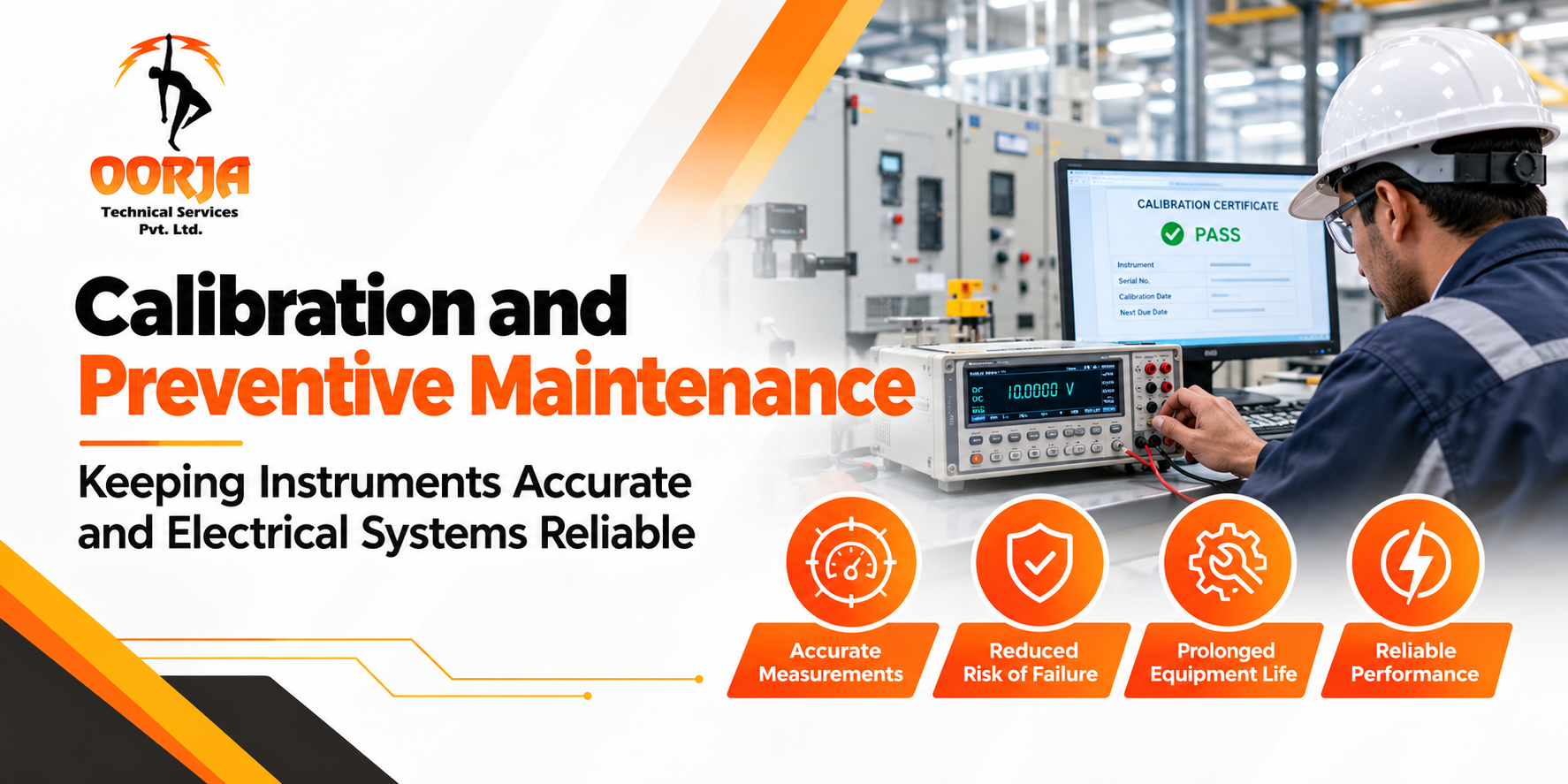
Calibration and Preventive Maintenance –Keeping Instruments Accurate & Electrical Systems Reliable

Every decision in an electrical plant depends on a number: a voltage reading, a current value, an insulation resistance figure, an energy meter reading. If the instrument showing that number is even slightly wrong, the decision built on it is wrong too. A drifting multimeter can hide an overload, an inaccurate energy meter can cost lakhs in billing errors, and an uncalibrated test kit can make a faulty relay look healthy.
That is why calibration and preventive maintenance sit together at the heart of a reliable electrical system. Calibration ensures that you can trust what you measure, and maintenance ensures that what you measure stays within safe limits. In this article, we explain how both work, how often they should be done and what to look for in a service provider.
What Is Calibration and Why Is It Important?
Calibration is the process of comparing an instrument against a more accurate reference standard, recording the error and adjusting the instrument if needed. The reference standard itself must be traceable to national or international standards through an unbroken chain of calibrations. Without this traceability, a calibration certificate has little value.
Regular calibration helps you:
-
Get accurate and repeatable readings
-
Meet the requirements of ISO 9001, ISO/IEC 17025 and customer audits
-
Reduce rework, rejection and warranty claims in production
-
Avoid disputes in energy billing and quality inspection
-
Detect instruments that are drifting before they cause damage
A well-equipped Electrical instrument calibration lab India uses high-accuracy reference standards, a controlled environment and trained technicians, and issues certificates that include measured values, uncertainty and traceability details.
Calibration of Everyday Measuring Tools
The simplest instruments are often the most widely used, and therefore the most likely to drift. Technicians carry multimeters and clamp meters to the field every day. They get dropped, exposed to heat and dust, and used on high-energy circuits. A professional Multimeter and clamp meter calibration service checks voltage, current, resistance and frequency ranges at several points across each range and issues a certificate showing the error at each point.
As a rule of thumb, handheld instruments should be calibrated once a year, or sooner if they have been dropped, overloaded or have given suspicious readings.
Specialised and High-Accuracy Calibration
Beyond everyday tools, a complete laboratory also handles higher-level and special-purpose equipment:
-
Reference Standards Meter Calibration: Precision reference meters, used to calibrate other instruments, need the most accurate calibration of all.
-
Energy meter calibrator calibration India: Meter test benches and portable calibrators must be accurate so that energy meters tested with them are reliable for billing and audits.
-
Oil BDV Kit Calibration: The kit that tests transformer oil must give correct breakdown voltage readings, otherwise a weak oil may be wrongly approved.
-
Fluke instrument calibration NABL certified: Many industries use Fluke multimeters, clamp meters, insulation testers and process calibrators, and their quality systems demand certificates from a NABL-accredited laboratory.
-
Switchgear calibration and maintenance: Protection devices, meters and indicators inside switchgear panels need to be checked and set correctly to keep the system safe.
Choosing complete Electrical equipment calibration services from a single lab saves time, reduces paperwork and gives you one consistent calibration record for all your assets.
The Case for Preventive Maintenance
Many plants still wait for a breakdown before they act. This is called breakdown maintenance, and it is the most expensive way to run any system. Preventive maintenance follows a planned schedule: inspect, test, clean, tighten and replace worn parts before they fail.
A structured programme of Preventive electrical maintenance services typically includes:
-
Cleaning and tightening of panel connections, busbars and terminals
-
Thermographic and visual inspection for hot spots, discolouration and damaged insulation
-
Testing of circuit breakers, relays, contactors and protection settings
-
Insulation and earth resistance measurements
-
Checking of transformer oil level, silica gel, temperature and alarm circuits
-
Lubrication and inspection of moving parts such as breaker mechanisms
-
Documentation of every reading, so that trends can be tracked from year to year
Plants that follow such a schedule usually see fewer emergency calls, longer equipment life and far fewer surprises at the end of the month.
Why an Annual Maintenance Contract Makes Sense
Maintenance works best when it is regular, and regularity is easiest to guarantee with a contract. An AMC for electrical panels and systems fixes the scope, visit frequency, response time and reporting in advance, so nothing is forgotten when the plant gets busy.
The benefits of a good contract include:
-
Predictable yearly maintenance cost instead of random emergency bills
-
Scheduled visits planned around your production calendar
-
Priority attendance when a fault occurs
-
A single point of contact and a complete service history
-
Better planning for spares, shutdowns and upgrades
When you compare proposals, look closely at the scope. A good AMC clearly states which equipment is covered, which tests will be done, how many visits are included and what reports you will receive. Electrical maintenance services for industries should also mention the standards followed and the qualifications of the engineers deputed to your site.
Combining Testing, Calibration and Maintenance
The strongest results come when testing, calibration and maintenance are handled by one partner. Test results can then trigger maintenance actions directly, and calibrated instruments give confidence that the readings are right. With on-site electrical testing and maintenance, your plant avoids the delay and risk of moving heavy equipment to a workshop, and downtime stays short.
Questions to Ask Before You Choose a Service Provider
-
Is the calibration traceable, and do certificates show measurement uncertainty?
-
Does the laboratory handle a wide range of instruments, from basic meters to reference standards?
-
Can the team work on-site and plan around your shutdown windows?
-
Will you get clear, detailed reports with recommendations after every visit?
-
Are the engineers trained, experienced and equipped with calibrated tools of their own?
Conclusion
Accurate measurement and planned maintenance are two sides of the same coin. Calibrate your instruments on schedule, maintain your equipment before it fails and keep records of everything. The result is safer operations, lower costs and a plant that runs the way it was designed to.
To discuss your calibration needs or request a maintenance proposal, contact Oorja Technical Services Pvt Ltd at [email protected], call +91-9907759797 or visit oorjatechnical.in.


