
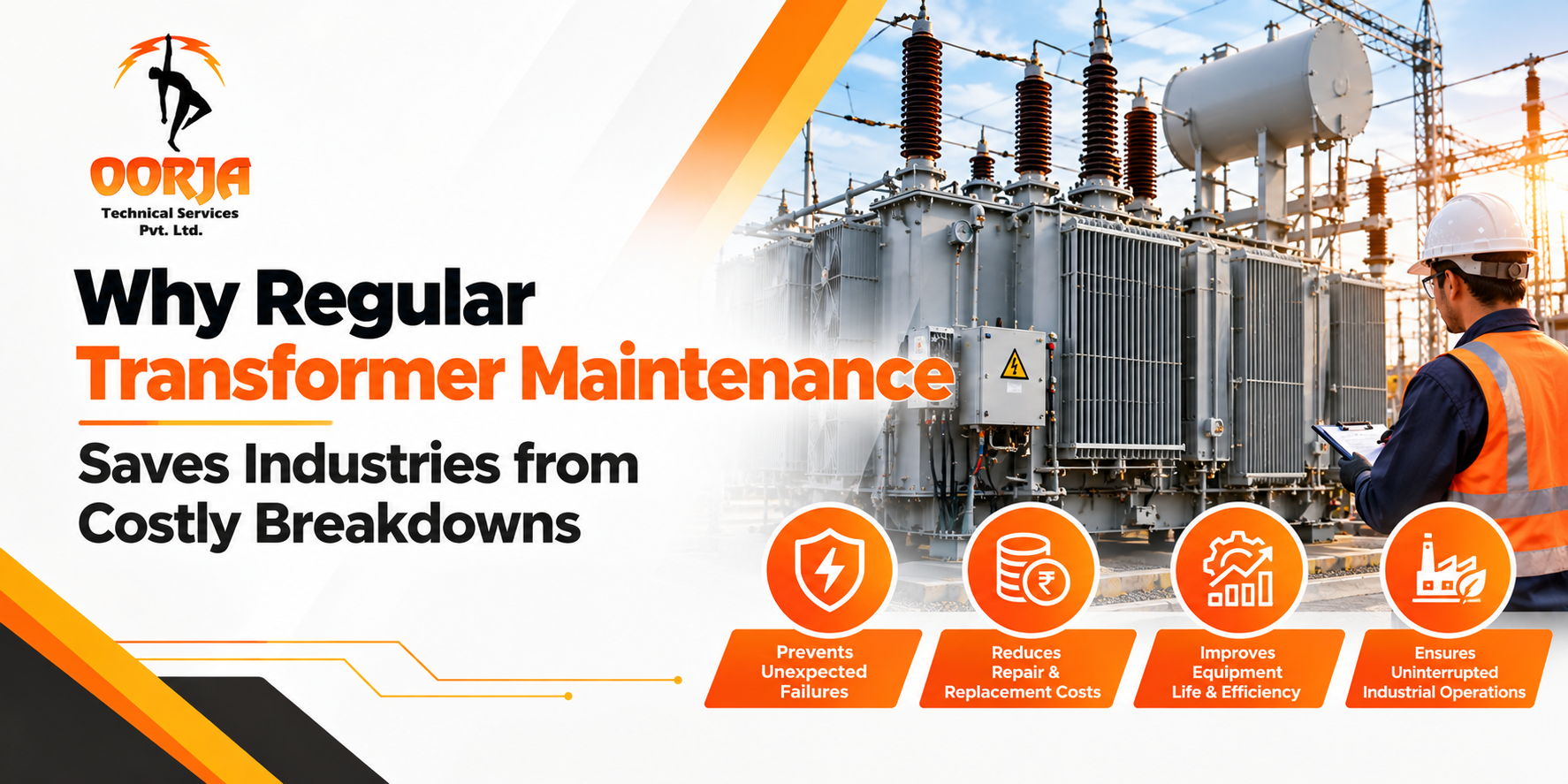
Why Regular Transformer Maintenance Saves Industries from Costly Breakdowns

A transformer rarely fails without warning. Overheating, moisture in the oil, loose connections and ageing insulation build up slowly, and a planned maintenance routine catches these problems long before they turn into a shutdown. For factories, substations, commercial buildings and power distribution networks, the transformer is the heart of the electrical system. When it stops, production, safety and revenue stop with it.
This blog explains why timely care matters, what a good maintenance programme includes, and how a specialist partner like Oorja Technical Services Pvt Ltd helps industries keep their transformers running reliably for decades.
The Real Cost of Ignoring Transformer Health
Many plants follow a run-to-failure approach, repairing a transformer only after it trips. The hidden costs are high: unplanned downtime, emergency repair charges, damage to connected equipment, safety hazards such as fire or oil leaks, and penalties for missed production targets. A major failure can also shorten the life of the transformer permanently, forcing an expensive replacement that could have been delayed for years.
A proactive approach is far cheaper. A small, regular maintenance spend avoids a much larger emergency spend later.
What Preventive Care Actually Looks Like
A structured routine of Preventive maintenance of transformers is built around inspection, cleaning, testing and timely correction. A typical programme covers:
-
Visual inspection of the tank, radiators, bushings, gaskets and cable boxes for leaks, cracks and corrosion
-
Checking and tightening of terminals, earthing connections and protection relays
-
Cleaning of bushings and insulators to remove dust, salt and pollution deposits
-
Verification of the breather, silica gel, oil level gauge, Buchholz relay and temperature indicators
-
Sampling and analysis of insulating oil to detect moisture, acidity and dissolved gases
-
Recording of load, voltage and temperature trends for future comparison
Each of these activities is simple on its own, but together they give a clear picture of the transformer’s health and highlight small defects while they are still cheap to fix.
Choosing the Right Maintenance Partner
Transformers work at high voltage and carry a lot of stored energy, so maintenance must be handled by trained engineers using calibrated instruments and safe work practices. Professional Transformer maintenance services combine field expertise, proper tools and detailed reporting, so that every visit ends with clear findings and practical recommendations rather than guesswork.
When selecting a service provider, look for:
-
Experience with different transformer ratings, makes and voltage classes
-
Ability to work on-site with minimum shutdown time
-
Calibrated testing equipment and written test reports
-
A clear safety process and trained, authorised personnel
-
Support for both routine servicing and emergency attendance
Replacing Worn Components Before They Fail
Even a well-maintained transformer has parts that wear out with time. Gaskets harden, silica gel saturates, bushings crack, cooling fans burn out and temperature indicators lose accuracy. A planned schedule of Preventive Maintenance & Component Replacement replaces these parts on time instead of waiting for a failure. This keeps the protection system dependable and prevents small faults, such as an oil leak from a dried gasket, from becoming major repairs.
When a Transformer Needs Overhauling
Some transformers reach a stage where routine servicing is no longer enough. Signs include a rising oil temperature at normal load, repeated moisture problems, abnormal noise, poor test results or visible internal damage. In such cases, a carefully planned Minor & Major Overhauling Work restores the unit. A minor overhaul usually involves oil treatment, gasket replacement and accessory servicing, while a major overhaul can include opening the tank, inspecting the core and windings, re-tightening, drying out and refilling with treated oil.
A well-executed overhaul can add many years of reliable service and is often a fraction of the cost of buying a new transformer.
Build a Maintenance Calendar That Works
The most effective plants follow a simple calendar:
-
Monthly: visual checks, oil level and temperature readings
-
Every six months: cleaning, terminal tightening and protection checks
-
Yearly: full electrical testing and oil analysis
-
As needed: component replacement and overhauling based on test results
Keeping written records of every inspection makes it easy to spot trends and to justify budgets for corrective work.
Conclusion
Regular care is the most reliable way to protect a transformer, the people who work around it and the production that depends on it. By planning inspections, replacing worn parts on time and overhauling when needed, industries can avoid surprise failures and extend equipment life significantly.
About Oorja Technical Services Pvt Ltd: Oorja Technical Services Pvt Ltd provides professional transformer testing and maintenance support for industrial and commercial customers.
Email: [email protected] | Phone: +91-9907759797 | Website: oorjatechnical.in


