
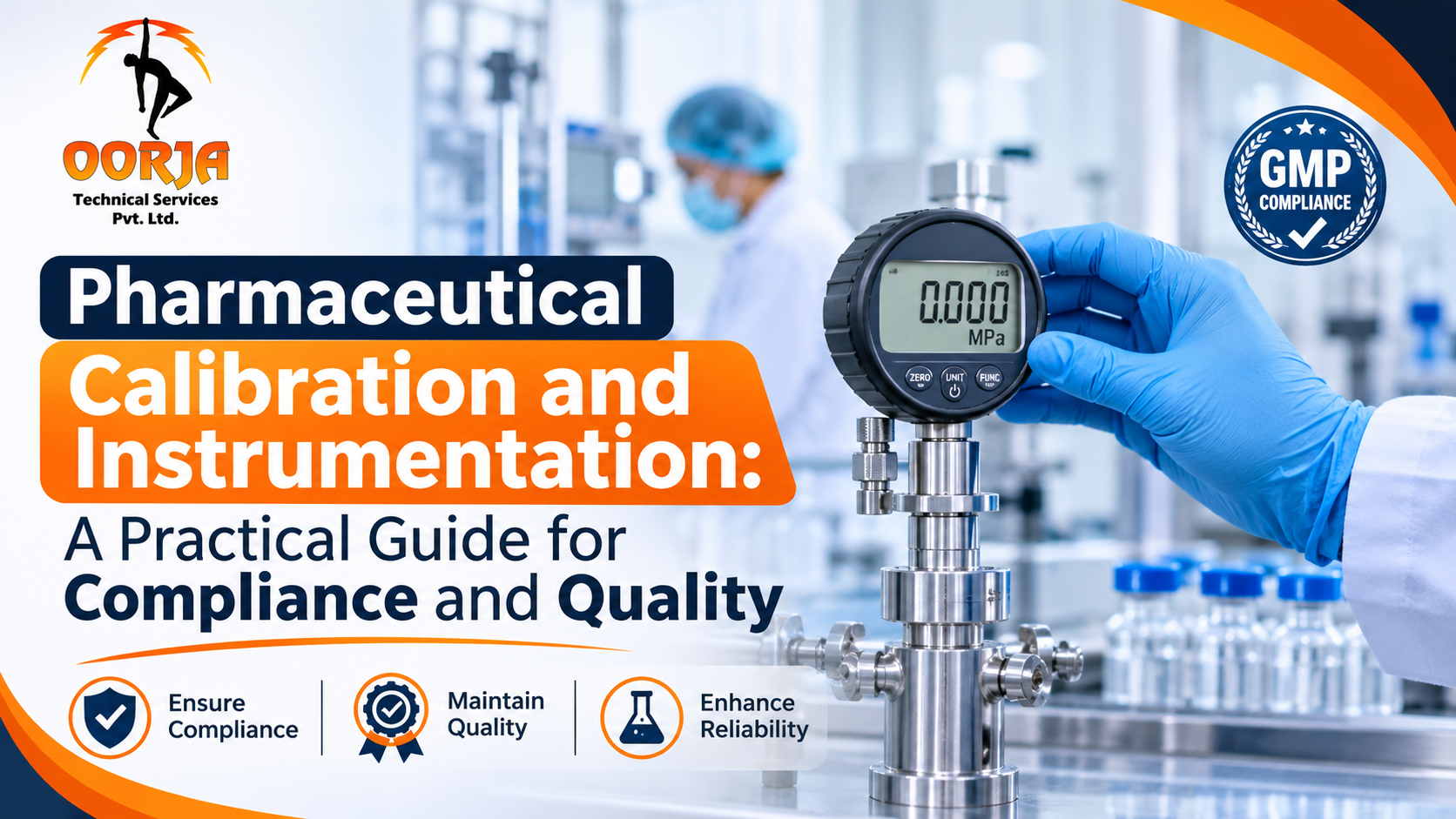
Pharmaceutical Calibration and Instrumentation: A Practical Guide for Compliance and Quality

In the pharmaceutical industry, a measurement is never “close enough”. A balance that reads slightly wrong can change a drug dosage. A temperature probe that drifts can spoil a whole batch of vaccines or injectables. This is why pharmaceutical calibration sits at the heart of Good Manufacturing Practice (GMP) and every regulatory inspection.
This guide explains what pharma companies need to calibrate, how to keep records inspection-ready, and what to look for in a service partner.
Why Calibration Is Critical in Pharma
Pharmaceutical products are made under strict rules. Regulators and auditors expect every critical measurement in manufacturing, packaging, storage and quality control to be accurate and documented. Poorly maintained instruments can lead to:
-
Out-of-specification (OOS) results and batch rejection
-
Observations or warning letters during regulatory audits
-
Product recalls and loss of brand reputation
-
Patient safety risks
-
Costly investigations and repeated testing
Regular calibration of every critical instrument, backed by proper records, is the simplest way to avoid these problems.
Key Pharma Instruments That Need Calibration
A typical pharmaceutical plant or laboratory depends on a long list of instruments. Some of the most common are:
-
Analytical balances and weighing scales used in dispensing and QC
-
Temperature and humidity monitors in cold rooms, stability chambers, incubators, refrigerators and warehouses
-
Autoclaves, ovens and sterilizers, where temperature and pressure must be verified
-
Pressure gauges and differential pressure gauges in cleanrooms and HVAC systems
-
pH meters, conductivity meters and TDS meters in water systems and labs
-
Dissolution testers, disintegration testers and friability testers
-
Pipettes, burettes and volumetric glassware
-
Spectrophotometers, HPLC and other analytical instruments, which need periodic performance verification
Each of these has its own acceptance criteria, usually set by the pharmacopoeia, the manufacturer or your internal SOP.
Understanding Calibration and Instrumentation Together
The field of calibration and instrumentation goes hand in hand. Instrumentation is about the sensors, transmitters, controllers and gauges that measure and control a process. Calibration is what proves those devices are telling the truth. Without calibration, even the most advanced instrumentation system cannot be trusted. Without good instrumentation, there is little to calibrate in the first place.
In pharma, this combination also supports qualification activities such as IQ, OQ and PQ, where instruments used for testing and monitoring must already be in a calibrated state.
Best Practices for Pharma Calibration Programs
A strong calibration program is organised, documented and proactive. Here is a simple framework you can follow:
-
Prepare an instrument master list. Give every instrument a unique ID, location, range, least count and criticality level.
-
Define calibration frequency. Base it on usage, risk, manufacturer guidance and past drift data.
-
Use written procedures. Each instrument type should have an approved SOP with clear acceptance limits.
-
Use traceable standards. Reference instruments must have valid certificates linked to national or international standards.
-
Label every instrument. Show the calibration date, due date and status so operators know what is safe to use.
-
Investigate failures. If an instrument is found out of tolerance, assess the impact on products tested or made since the last good calibration.
-
Keep records secure. Certificates, schedules and deviation reports should be easy to retrieve during audits.
Data Integrity and Documentation
Regulators pay close attention to data integrity. Calibration certificates should clearly show the instrument details, the standards used, as-found and as-left readings, measurement uncertainty, environmental conditions, the date and the signature of the person who performed and reviewed the work. Records should be legible, complete, original and accurate. Any overwriting, missing pages or unexplained gaps can raise questions.
Choosing a Reliable Calibration Company
Selecting the right calibration company is a quality decision, not just a purchasing decision. For a pharmaceutical customer, you should check:
-
Understanding of GMP and pharma documentation expectations
-
Experience with cleanroom, laboratory and utility instruments
-
Traceable standards and well-maintained reference equipment
-
Ability to calibrate on-site without disturbing production
-
Quick turnaround and timely reminders for upcoming due dates
-
Clear communication when an instrument fails calibration
A partner who understands your industry will save you time during audits and help you build a stronger quality system.
Common Mistakes to Avoid
-
Calibrating only before an audit instead of on a regular schedule
-
Using instruments past their due date
-
Ignoring out-of-tolerance results
-
Using a wider tolerance than the process or SOP allows
-
Keeping incomplete or inconsistent records
-
Choosing a provider only on the lowest price
Conclusion
Pharma quality depends on accurate measurement, and accurate measurement depends on disciplined calibration. With the right schedule, procedures, documentation and partner, you can protect your products, pass inspections with confidence and keep your processes under control.
Oorja Technical Services Pvt Ltd supports industrial and laboratory customers in keeping their instruments accurate and audit-ready.
Contact us:
-
Email: [email protected]
-
Phone: +91-9907759797
-
Website: oorjatechnical.in


