
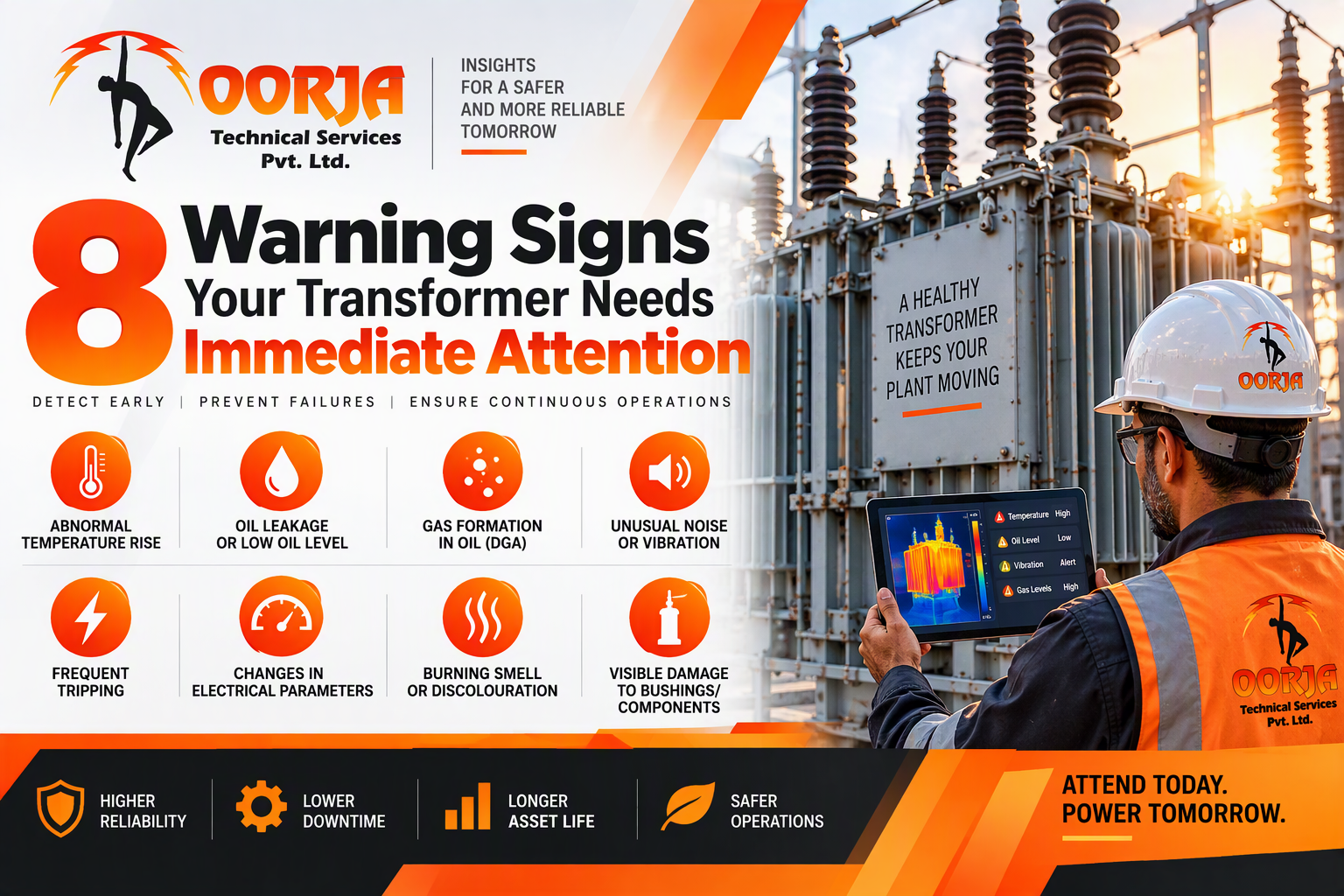

Transformers are built to be quiet, steady workers, which is exactly why problems are so easy to miss. A small change in sound, smell, temperature or oil colour is often the first sign that something inside is going wrong. Plant teams that learn to read these signals can act early, avoid a breakdown and save a great deal of money.
This blog lists the most common warning signs, explains what they usually mean and shows when it is time to call a specialist such as Oorja Technical Services Pvt Ltd.
1. Unusual Humming or Buzzing
Every transformer hums at a steady low level. A louder noise, a change in pitch or a rattling sound can point to loose core laminations, loose fittings or overloading. Persistent noise should always be investigated.
2. Rising Operating Temperature
If the oil or winding temperature keeps climbing at the same load, cooling may be blocked, oil may be degraded or an internal fault may be developing. Heat is the biggest enemy of insulation, so this sign should never be ignored.
3. Oil Leaks and Low Oil Level
Dried gaskets, cracked bushings and damaged radiators can all lead to leaks. Oil on the tank, on the ground or around the valves means the transformer is losing its insulation and cooling medium.
4. Discoloured or Dirty Oil
Oil that has turned dark, cloudy or smelly has probably absorbed moisture, sludge or by-products of overheating. Fresh, clean oil is clear and light in colour.
5. Frequent Tripping of Protection Relays
Repeated operation of the Buchholz relay, overload relay or temperature alarm is a clear call for action. Resetting the device without finding the cause only delays the failure.
6. Falling Insulation Values
When test readings drop from one year to the next, moisture or ageing is usually at work. Catching this trend early gives enough time to treat the oil and dry out the insulation.
7. Silica Gel Changing Colour Too Fast
The breather silica gel normally changes colour slowly as it absorbs moisture. If it saturates within weeks, air is entering the system through a leak or a faulty seal.
8. Burn Marks, Cracks or Corrosion
Visible damage on bushings, terminals and the tank is a sign of tracking, overheating or environmental attack. Even small cracks can allow moisture to enter.
What to Do Next
A routine of Preventive maintenance of transformers helps catch most of these signs before they become faults. Regular inspection, cleaning, tightening and record keeping turn surprises into planned tasks.
If the oil looks poor, a Transformer BDV test service will show whether the oil can still withstand voltage safely. Where the oil is wet or dirty, Transformer Oil Filtration can often restore its quality without replacing it. And when the problem goes beyond oil, a planned Minor & Major Overhauling Work brings the transformer back to dependable condition.
Safety First
Never open covers, touch bushings or attempt repairs on an energised transformer. Always involve trained personnel, follow lock-out and tag-out procedures and ensure the equipment is properly discharged and earthed before any physical work.
Why Small Problems Grow Quickly
Transformer faults tend to feed on themselves. A loose connection creates heat, heat degrades the insulation, degraded insulation allows moisture and partial discharge, and these in turn create more heat. What starts as a minor issue can become a serious fault in a matter of months. This is why the warning signs above should be treated as a chain reaction in progress, not as isolated events.
Quick Daily and Weekly Observation Routine
Operators do not need special instruments to notice early signals. A short routine is enough:
-
Daily: note the oil and winding temperature, load current and any unusual sound or smell
-
Weekly: check oil level, silica gel colour and look for oil traces around gaskets and valves
-
Monthly: inspect bushings, terminals and earthing for damage, discolouration or looseness
-
After every trip: record the relay that operated, time, load and weather conditions
Writing these observations in a simple logbook helps the service engineer understand the history of the transformer when he arrives.
How Environment Affects Transformer Health
Transformers installed near cement plants, chemical units, coastal areas or heavily polluted zones collect conductive dust and salt on their bushings and insulators. High humidity speeds up moisture entry, and high ambient temperature reduces the cooling margin. Units in such conditions need more frequent cleaning, oil checks and inspection than those in clean, air-conditioned substations.
Common Mistakes That Make Things Worse
-
Repeatedly resetting a tripped relay without identifying the cause
-
Topping up oil without checking why the level fell
-
Overloading the transformer for long periods during peak production
-
Ignoring small leaks because the transformer is still running
-
Delaying oil tests because no fault has occurred yet
-
Allowing untrained staff to open covers or handle live parts
When to Call a Specialist
Call a qualified engineer without delay if you notice a sudden temperature rise, oil spraying or heavy leakage, repeated operation of the gas or pressure relay, smoke or a burning smell, or any sign of arcing. These conditions can lead to fire or explosion and require the transformer to be isolated and examined safely.
Conclusion
Your transformer is always giving signals. Learning to notice them and responding quickly is the simplest and cheapest way to protect your plant from unplanned shutdowns.
About Oorja Technical Services Pvt Ltd: Oorja Technical Services Pvt Ltd supports industrial and commercial customers with transformer testing and maintenance solutions.
Email: [email protected] | Phone: +91-9907759797 | Website: oorjatechnical.in


