
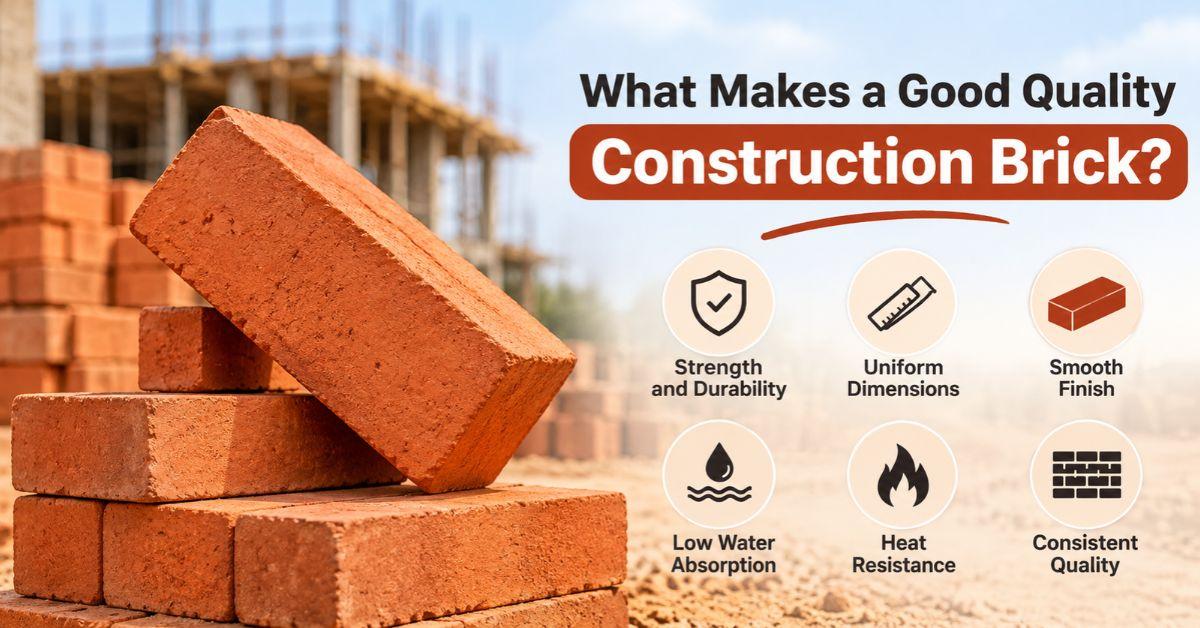

Choosing the right construction materials is essential for building a strong and durable structure. Bricks play an important role in determining the stability, appearance, and long-term performance of walls. When exploring Wire Cut Bricks in Chennai, buyers should understand the qualities that distinguish reliable construction bricks from ordinary ones. Factors such as strength, size, shape, water absorption, surface finish, and manufacturing consistency help determine whether a brick is suitable for a particular building application. Knowing these characteristics makes it easier for homeowners, builders, and contractors to select materials that meet their construction requirements.
1. Compressive Strength and Durability
Strength is one of the most important characteristics to examine when choosing construction bricks. A good-quality brick should be capable of handling the loads expected in its intended application without breaking or developing cracks easily. Compressive strength indicates how much pressure a brick can withstand before failure.
Durability is equally important because building materials remain exposed to environmental conditions for many years. Bricks used in construction should withstand regular weather changes and normal environmental exposure. Poor-quality bricks may deteriorate over time, affecting the condition of walls and increasing maintenance requirements.
Before purchasing, builders should review the manufacturer's specifications and relevant quality test results. Selecting bricks with suitable strength characteristics helps support the structural requirements of a building and contributes to its long-term performance.
2. Uniform Size and Shape
Brick dimensions and shape have a direct influence on masonry work. Bricks with consistent measurements make it easier for masons to maintain straight wall lines, uniform joints, and an organised arrangement. When brick sizes vary significantly, workers may need to spend additional time adjusting individual pieces during construction.
Well-manufactured bricks should have regular edges, consistent dimensions, and a reasonably uniform shape. These characteristics help reduce unnecessary gaps and support better alignment during installation.
Uniformity also helps with quantity estimation. Builders can calculate the number of bricks required for a particular wall area more accurately when the dimensions remain consistent. This makes material planning easier and can help reduce unnecessary wastage at the construction site.
3. Water Absorption Capacity
Water absorption is another important factor when evaluating brick quality. Bricks naturally absorb some moisture, but excessive absorption can create problems in masonry work. Highly absorbent bricks may draw water from the mortar too quickly, potentially affecting the bonding process.
A suitable brick should have water absorption characteristics appropriate for its intended application and relevant quality standards. Buyers can request test reports to understand how the product performs under standard testing conditions.
Proper storage also matters. Bricks should be protected from unnecessary moisture exposure before construction begins. Contractors should follow suitable preparation and installation practices to achieve effective bonding between bricks and mortar.
Understanding water absorption helps builders make better material choices, particularly when planning structures that may experience regular exposure to moisture.
4. Surface Finish and Texture
The appearance and texture of a brick can provide useful information about its manufacturing quality. Good-quality construction bricks generally have a reasonably consistent surface, clearly defined edges, and a uniform appearance.
For projects where exposed brickwork forms part of the architectural design, surface finish becomes particularly important. Variations in colour, texture, and dimensions may affect the overall appearance of completed walls.
Wire-cut bricks are commonly selected for applications where consistent shapes and a relatively uniform finish are preferred. Their manufacturing process uses a cutting method to form bricks from prepared clay material before drying and firing.
However, appearance alone should not determine the purchasing decision. Buyers should also examine strength, dimensional accuracy, and other relevant product specifications before selecting bricks for construction.
5. Proper Firing and Manufacturing Quality
The manufacturing process has a significant influence on the final quality of a brick. In traditional clay brick production, firing plays an important role in developing the required hardness, strength, and durability.
Underfired bricks may remain relatively weak and absorb more moisture than expected. Overfired bricks can develop irregular shapes, excessive hardness, or surface defects depending on the production conditions. Maintaining suitable firing temperatures and production controls helps manufacturers achieve more consistent results.
Buyers should look for bricks that have a uniform appearance and do not show obvious cracks, excessive deformation, or signs of poor manufacturing. Asking about production methods and quality-control procedures can provide additional confidence when evaluating a supplier.
Consistent manufacturing practices also help maintain similar product characteristics across larger orders, which is particularly useful for extensive residential and commercial projects.
6. Soundness and Resistance to Damage
A good construction brick should remain reasonably intact during handling, transportation, and installation. Bricks with visible cracks, broken corners, or excessive surface damage may create difficulties during masonry work.
One traditional method of preliminary inspection involves gently striking two bricks together and listening to the resulting sound. A clear, ringing sound can indicate a well-fired brick, while a dull sound may suggest defects. However, this is only a basic observation and cannot replace proper laboratory testing.
Buyers should inspect a sample batch before confirming large orders. Checking for cracks, chipped edges, irregular shapes, and other visible defects helps identify potential quality concerns.
Careful inspection is especially useful when purchasing materials in bulk because consistent product quality can reduce handling difficulties and unnecessary wastage during construction.
7. Choosing the Right Bricks for Your Construction Project
Not every brick is suitable for every building application. The selection process should consider the type of structure, wall requirements, environmental conditions, construction method, and available budget.
For example, residential buildings may require different brick specifications depending on whether the materials are intended for internal partitions, external walls, or other applications. Commercial developments may also have specific requirements based on architectural plans and engineering recommendations.
Builders should compare different brick varieties instead of making decisions based entirely on price. Product specifications, test results, manufacturing consistency, and supplier reliability all deserve attention.
It is also helpful to calculate the required quantity before ordering. Purchasing the correct amount helps manage storage, transportation, and construction schedules while reducing the possibility of material shortages or excessive leftover stock.
Conclusion
Good-quality construction bricks are identified through a combination of strength, durability, uniform dimensions, controlled water absorption, surface finish, and reliable manufacturing standards. Evaluating these characteristics before purchasing helps builders and homeowners avoid common material-related problems. Requesting product specifications, checking sample bricks, and understanding the intended application can make the selection process more effective. Comparing product quality and manufacturing practices offered by Wire Cut Bricks Manufacturers in Chennai also helps construction professionals make informed decisions when sourcing materials for their building projects.


