
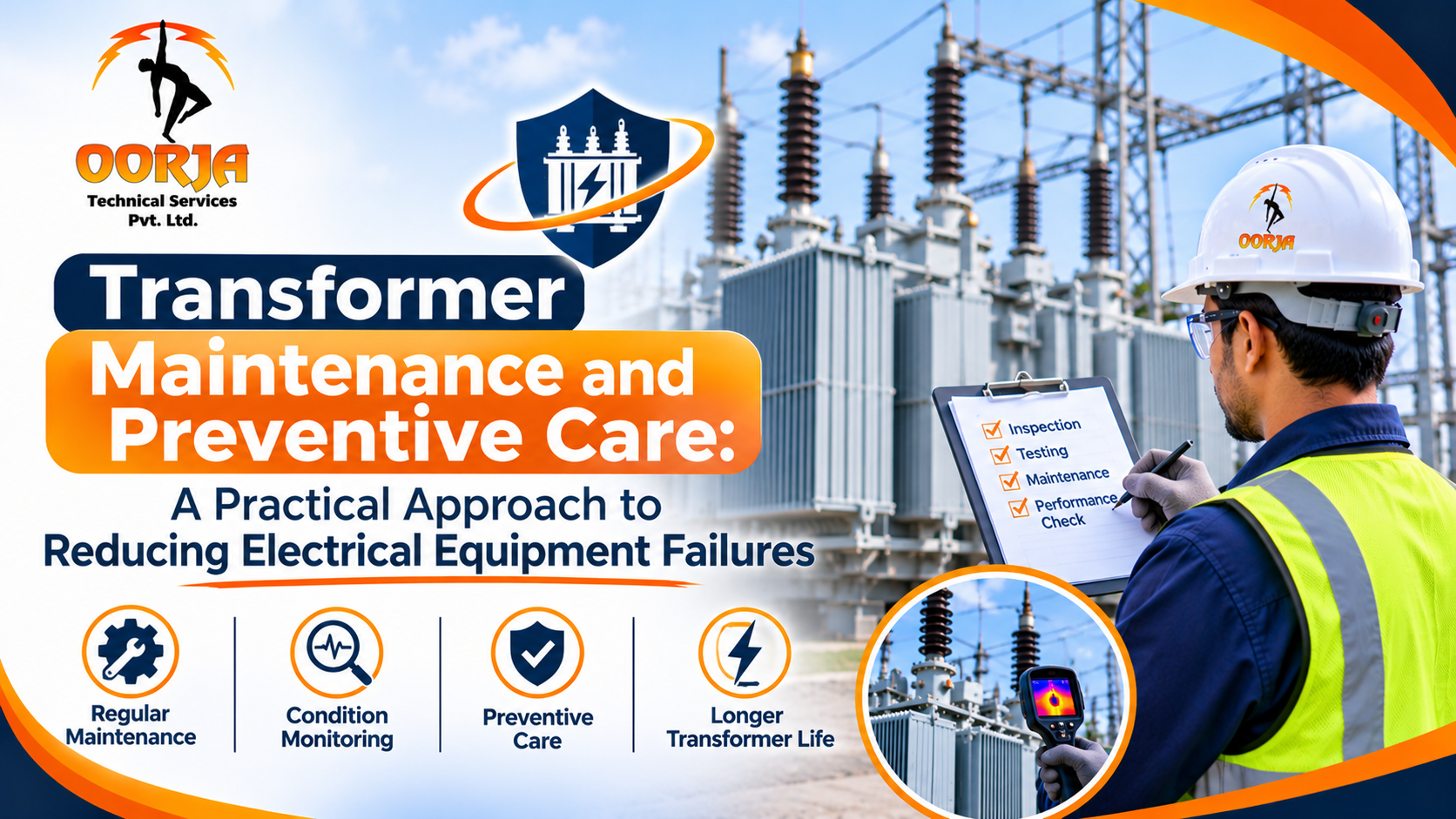
Transformer Maintenance and Preventive Care: A Practical Approach to Reducing Electrical Equipment Failures
Transformers are designed to operate for many years, but their long-term performance depends heavily on maintenance quality and operating conditions. Industrial transformers often work under continuous electrical loads, changing environmental conditions, and varying temperature levels. Without proper maintenance, these factors can gradually affect insulation quality, cooling efficiency, electrical connections, and overall equipment performance.
A transformer failure can lead to unexpected production interruptions, expensive equipment replacement, and operational losses. For this reason, industries should establish a planned maintenance programme that focuses on regular inspection, testing, timely repairs, and component replacement.
Why Transformer Maintenance Is Necessary
Transformers contain several important components, including windings, bushings, insulation systems, cooling equipment, tap changers, protective devices, and transformer oil. Each component performs a specific function and requires periodic attention.
Professional Transformer maintenance services help industries maintain equipment performance through scheduled inspection, diagnostic testing, and corrective maintenance activities.
A properly designed maintenance programme can help:
-
Identify developing electrical and mechanical faults.
-
Reduce the possibility of sudden transformer breakdowns.
-
Improve equipment operating reliability.
-
Maintain insulation and cooling system performance.
-
Reduce long-term repair and replacement expenses.
-
Improve the service life of transformer assets.
Maintenance requirements should be determined according to equipment specifications, operating history, environmental conditions, and manufacturer recommendations.
Understanding Preventive Maintenance of Transformers
Preventive maintenance involves carrying out planned inspection and servicing activities before equipment develops serious operational problems.
Preventive maintenance of transformers includes checking the condition of important components, monitoring oil quality, evaluating insulation performance, inspecting electrical connections, and reviewing the functioning of cooling and protection systems.
Some important preventive maintenance activities include:
1. Visual and Physical Inspection
Maintenance personnel inspect the transformer body, bushings, radiators, conservator, breather, gaskets, and associated accessories. Oil leakage, rust formation, damaged components, and unusual physical conditions should be investigated.
2. Electrical Testing
Electrical tests such as winding resistance, insulation resistance, turns ratio, and other applicable diagnostic tests help identify possible electrical abnormalities.
3. Transformer Oil Inspection
Transformer oil serves as both an insulating and cooling medium in oil-filled transformers. Its condition should be monitored through appropriate testing to identify moisture, contamination, and deterioration.
4. Cooling System Inspection
Cooling fans, pumps, radiators, and other cooling arrangements should be inspected to ensure that heat is being dissipated effectively.
5. Protection System Verification
Protective devices and associated components should be checked according to the equipment design and applicable maintenance procedures.
Preventive Maintenance and Component Replacement
Transformer components experience different levels of wear and ageing during operation. Some parts may require servicing, repair, or replacement depending on their condition.
Preventive Maintenance & Component Replacement is an important part of a long-term transformer maintenance strategy.
Components that may require periodic attention include:
-
Transformer bushings and associated connections.
-
Gaskets and sealing arrangements.
-
Silica gel breathers.
-
Cooling fans and pumps.
-
Oil filtration and associated equipment.
-
Tap changer components.
-
Protective and monitoring accessories.
Component replacement should be based on inspection findings, equipment specifications, and manufacturer recommendations rather than following an unnecessary fixed replacement schedule.
Timely replacement of deteriorated components can help prevent minor defects from developing into major equipment failures.
Transformer Diagnostics and Maintenance: Identifying Problems Before Failure
Modern transformer maintenance involves more than routine cleaning and physical inspection. Diagnostic testing provides valuable information about the internal and external condition of electrical equipment.
Transformer diagnostics and maintenance combines inspection procedures with electrical and condition-based testing to support better maintenance decisions.
Common diagnostic activities include:
-
Insulation resistance and polarization index testing.
-
Winding resistance measurements.
-
Transformer turns ratio testing.
-
Transformer oil testing and BDV analysis.
-
Thermal inspection.
-
Evaluation of abnormal operating conditions.
-
Assessment of historical test reports.
These activities help maintenance teams identify abnormal readings and investigate possible equipment defects.
Minor and Major Transformer Overhauling Work
Depending on transformer condition, operating age, and inspection findings, maintenance requirements may extend beyond routine servicing.
Minor and major overhauling work may involve detailed internal inspection, component servicing, cleaning, repair, replacement, and other corrective activities.
The scope of an overhaul should be established after evaluating the equipment condition and following appropriate safety and technical procedures.
For transformers with significant insulation deterioration, overheating, oil contamination, or mechanical problems, a detailed technical assessment is important before deciding on repair or replacement.
How Industrial Facilities Can Build an Effective Maintenance Schedule
A structured maintenance schedule helps industries manage transformer assets more efficiently.
An effective programme should include:
Routine Monitoring: Observe operating temperature, load conditions, oil levels, unusual sounds, and visible leakage.
Periodic Inspection: Examine bushings, connections, cooling systems, and other critical components.
Scheduled Testing: Perform electrical and oil tests according to equipment requirements.
Maintenance Documentation: Maintain inspection records, test reports, repair details, and component replacement history.
Corrective Action: Investigate abnormal readings and complete the required maintenance activities.
Industries should work with experienced industrial transformer servicing contractors who understand electrical testing requirements, maintenance procedures, and equipment safety.
Supporting Transformer Reliability with Professional Technical Services
Transformer maintenance is a continuous process that requires proper planning, technical knowledge, and accurate condition assessment.
Oorja Technical Services Pvt Ltd supports industrial electrical testing and transformer-related maintenance requirements through technical services designed to help businesses assess equipment conditions and improve operational reliability.
Whether an industry requires routine inspection, diagnostic testing, preventive maintenance, or assistance in evaluating transformer performance, selecting an appropriate technical service partner is essential.
Contact Oorja Technical Services Pvt Ltd
Website:
https://oorjatechnical.in/
Email: [email protected]
Phone: +91-9907759797
A well-maintained transformer is essential for stable power distribution, reduced downtime, and dependable industrial operations.


