
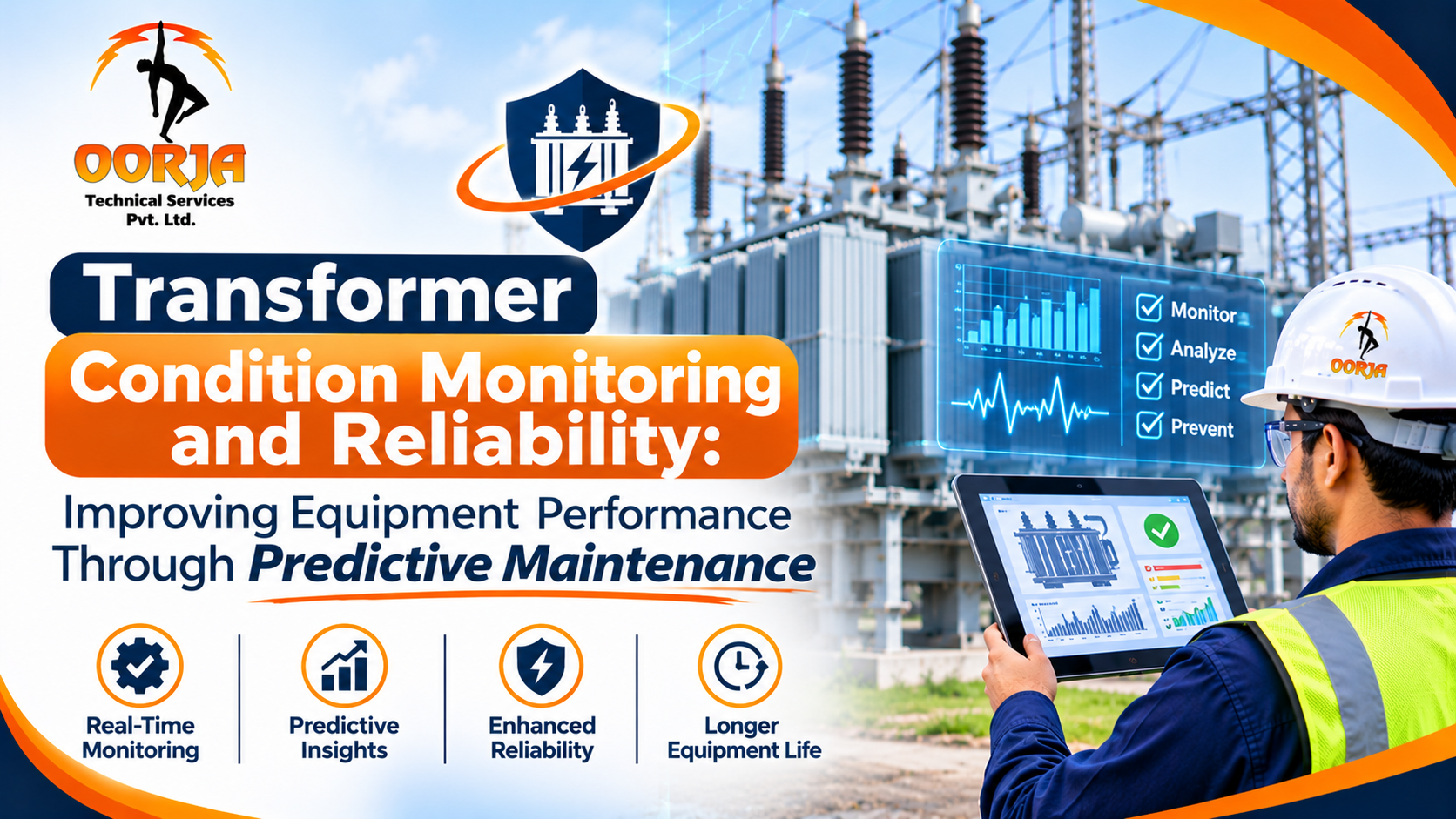
Transformer Condition Monitoring and Reliability: Improving Equipment Performance Through Predictive Maintenance
Transformers are valuable electrical assets that support power distribution across manufacturing facilities, commercial buildings, infrastructure projects, and industrial plants. Their reliability directly affects the continuity of electrical supply and the performance of connected equipment.
However, transformer performance can gradually deteriorate due to insulation ageing, moisture contamination, overheating, excessive loading, oil degradation, and other operating stresses.
Traditional maintenance approaches often depend on fixed inspection schedules or corrective repairs after a problem occurs. Modern industries increasingly focus on condition-based maintenance, where equipment performance is evaluated using inspection data, diagnostic tests, and monitoring techniques.
This approach helps identify potential failures earlier and supports better maintenance planning.
What Is Transformer Condition Monitoring?
Transformer condition monitoring involves regularly evaluating the operational and physical condition of transformer equipment through suitable inspection and diagnostic methods.
A professional Transformer condition monitoring service helps industries identify changes in equipment performance and detect developing problems before they lead to major failures.
Depending on the transformer design and operational requirements, monitoring may include:
-
Operating temperature monitoring.
-
Transformer oil quality assessment.
-
Insulation resistance measurements.
-
Electrical connection inspection.
-
Load and operating condition evaluation.
-
Thermal imaging and thermography.
-
Review of historical diagnostic reports.
Monitoring results can help maintenance teams identify abnormal trends and decide whether additional inspection, testing, or corrective maintenance is necessary.
Transformer Residual Life Estimation: Understanding Equipment Ageing
Every transformer has an expected operational life, but its actual service life depends on operating conditions, maintenance quality, loading patterns, insulation health, and environmental exposure.
Transformer Residual Life Estimation is the process of evaluating the remaining useful service potential of transformer equipment based on its present condition and available historical information.
Several factors influence transformer ageing:
Insulation Deterioration: Paper insulation can gradually lose its strength due to thermal and moisture-related ageing.
Operating Temperature: Continuous operation at elevated temperatures can accelerate insulation degradation.
Moisture Contamination: Moisture can negatively affect the dielectric properties of insulation materials and transformer oil.
Electrical Stress: Overloading, voltage fluctuations, and electrical faults can place additional stress on transformer components.
Maintenance History: Previous repairs, oil treatment, component replacement, and testing records provide useful information about equipment condition.
Residual life estimation can support decisions regarding continued operation, maintenance planning, refurbishment, or replacement. It should be based on suitable technical assessments rather than equipment age alone.
Transformer Oil Filtration and Dehydration: Maintaining Insulation Quality
Transformer oil plays two important roles in oil-filled transformers. It provides electrical insulation and helps dissipate heat generated during operation.
Over time, oil may become contaminated with moisture, suspended particles, and other impurities. These contaminants can affect dielectric performance and reduce the effectiveness of the transformer insulation system.
Transformer Oil Filtration & Dehydration is used to improve transformer oil condition by removing suitable contaminants and reducing moisture content through appropriate processing methods.
Important benefits of oil filtration and dehydration may include:
-
Reduction of moisture contamination.
-
Removal of suspended solid particles.
-
Improvement in oil cleanliness.
-
Support for better dielectric performance.
-
Assistance in maintaining transformer insulation conditions.
-
Reduced risk associated with moisture-related deterioration.
The filtration process should be selected according to oil condition, transformer requirements, and test results.
Oil quality can also be assessed through tests such as the Breakdown Voltage (BDV) test, moisture analysis, and other relevant oil quality evaluations.
It is important to understand that oil filtration does not automatically reverse insulation ageing or resolve every internal transformer defect. A complete condition assessment is necessary to determine the appropriate maintenance action.
Transformer Thermography Testing for Early Fault Detection
Excessive heat is one of the common indicators of electrical and mechanical problems in transformer systems.
Loose connections, overloaded components, poor electrical contacts, and cooling system abnormalities may create abnormal temperature patterns.
Transformer thermography testing service uses infrared thermal imaging equipment to identify temperature variations in accessible transformer components and associated electrical connections.
Thermography can help identify:
-
Abnormally heated electrical connections.
-
Uneven temperature distribution.
-
Potential contact resistance problems.
-
Overheating in accessible components.
-
Possible cooling system abnormalities.
Thermal inspection is particularly useful because it can often be performed while equipment remains in operation, subject to site safety requirements and suitable inspection conditions.
Thermography findings should be evaluated alongside electrical measurements and other diagnostic information before maintenance decisions are made.
Transformer Asset Monitoring and Long-Term Reliability
Transformers represent significant investments for industrial organisations. Managing these assets requires continuous attention to performance, maintenance costs, operating conditions, and expected service life.
Transformer asset monitoring helps organisations maintain equipment records, review test results, identify recurring issues, and plan maintenance activities.
An effective asset management approach should include:
-
Maintaining complete transformer identification and technical records.
-
Recording electrical testing and oil analysis results.
-
Monitoring operating temperature and loading conditions.
-
Tracking maintenance and component replacement history.
-
Identifying equipment with recurring abnormal readings.
-
Planning repairs, overhauling, and replacement activities based on technical findings.
Combining regular inspection with condition monitoring can help industries move towards a more reliable and planned maintenance strategy.
Why Professional Transformer Monitoring and Maintenance Matter
Transformer condition monitoring requires suitable testing instruments, trained technical personnel, correct testing procedures, and the ability to interpret results.
Industrial facilities should select technical service providers who understand transformer operating requirements and can support inspection, testing, and maintenance activities.
Oorja Technical Services Pvt Ltd provides technical services related to electrical testing, transformer inspection, and maintenance requirements. Its services can support industrial facilities in evaluating equipment conditions and identifying appropriate maintenance needs.
A planned approach to transformer testing, oil care, and condition monitoring can help industries reduce unexpected failures and improve the reliability of their electrical infrastructure.
Get in Touch with Oorja Technical Services Pvt Ltd
Website:
https://oorjatechnical.in/
Email: [email protected]
Phone: +91-9907759797
Reliable transformer performance begins with proper inspection, timely testing, and informed maintenance decisions.


