
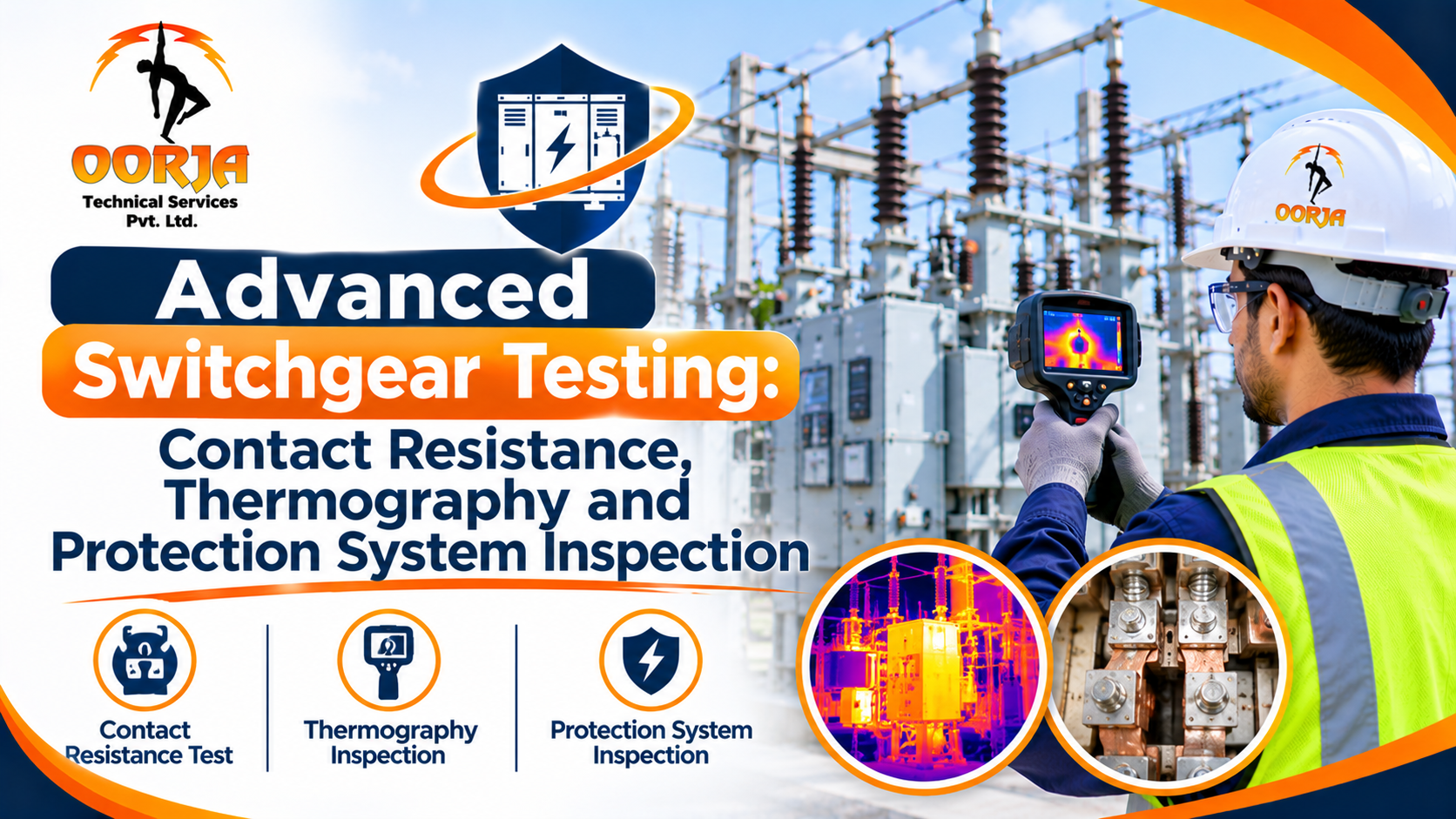
Advanced Switchgear Testing: Contact Resistance, Thermography and Protection System Inspection
Modern electrical distribution systems require reliable protection and monitoring to ensure safe and continuous operation.
Switchgear is designed to control electrical circuits, isolate faulty equipment and protect electrical installations against abnormal operating conditions.
However, electrical components can deteriorate over time because of continuous loading, switching operations, environmental exposure and mechanical wear.
Advanced diagnostic testing helps maintenance professionals understand the condition of switchgear and identify potential problems before they result in serious failures.
Three important areas of switchgear diagnostics include contact resistance measurement, thermographic inspection and protection system testing.
Understanding Contact Resistance Testing
Electrical contacts are essential components of circuit breakers and switchgear assemblies. They allow current to flow through the equipment while maintaining proper electrical connectivity.
Over time, contact surfaces may deteriorate because of repeated switching operations, contamination, corrosion and mechanical wear.
A Switchgear contact resistance test service helps evaluate the resistance of electrical contact paths.
Higher-than-expected resistance may indicate problems such as:
-
Worn contact surfaces.
-
Loose electrical joints.
-
Improper contact pressure.
-
Oxidation or contamination.
-
Damaged conductive connections.
Excessive contact resistance can lead to increased heat generation and affect equipment performance.
Contact resistance measurements should be performed using suitable low-resistance testing instruments. Results should be evaluated against manufacturer recommendations, applicable standards and previous readings.
Importance of Switchgear Thermography Inspection
Electrical overheating is one of the common warning signs of developing problems in electrical distribution systems.
Loose connections, overloaded circuits, unbalanced loads and deteriorating contacts can generate abnormal heat.
A Switchgear thermography inspection service uses thermal imaging technology to identify temperature variations in electrical equipment.
Thermal cameras help maintenance teams inspect electrical components without direct physical contact.
Some common areas where thermographic inspection can be useful include:
-
Circuit breaker connections.
-
Busbar joints.
-
Cable terminations.
-
Electrical distribution panels.
-
Transformer connections.
-
High-current electrical connections.
Thermography can help identify potential hot spots before they develop into serious equipment problems.
However, thermal readings should be interpreted by qualified professionals. Load conditions, ambient temperature, viewing angle and surface characteristics can influence the results.
A detailed inspection report should include equipment identification, thermal observations and recommended corrective actions.
Relay and Switchgear Coordination Testing
Protection relays play a critical role in electrical power distribution systems.
They monitor electrical parameters and detect abnormal conditions such as overcurrent, earth faults and other electrical disturbances.
When a fault occurs, the protection system should operate the appropriate circuit breaker to isolate the affected section.
Relay and switchgear coordination testing helps verify that protective devices and associated switching equipment function according to the intended protection philosophy.
Important testing activities may include:
1. Protection Relay Inspection
Checking relay configurations, protection functions and relevant settings.
2. Secondary Injection Testing
Applying simulated electrical signals to verify relay response and operation.
3. Trip Circuit Verification
Checking whether the relay correctly initiates the intended circuit breaker trip operation.
4. Protection Coordination Review
Verifying that protective devices operate selectively according to the approved coordination study.
5. Functional Testing
Checking the interaction between protection relays, control circuits and circuit breakers.
Proper coordination helps ensure that the protective device closest to a fault operates first, while upstream devices provide suitable backup protection.
This supports system reliability and helps minimise unnecessary interruptions.
Medium Voltage Switchgear Testing and Its Importance
Medium-voltage switchgear is commonly used in industrial facilities, substations, commercial infrastructure and power distribution networks.
It helps control and protect electrical equipment such as transformers, large motors and distribution feeders.
Professional Medium voltage switchgear testing services may include various inspection and testing activities depending on equipment design and operational requirements.
Common testing activities include:
-
Insulation resistance testing.
-
Circuit breaker operation checks.
-
Contact resistance measurement.
-
Mechanical interlock inspection.
-
Protection relay verification.
-
Electrical connection inspection.
-
Control circuit testing.
Testing requirements should be based on manufacturer guidelines, applicable standards, equipment condition and site-specific operating conditions.
Proper electrical isolation and safety precautions are essential before performing maintenance or testing activities.
Benefits of Advanced Switchgear Diagnostics
Advanced diagnostic testing provides several benefits to industrial electrical systems.
Early Fault Identification: Helps identify developing electrical and mechanical problems.
Improved Equipment Reliability: Supports better monitoring of critical switchgear components.
Reduced Maintenance Costs: Early detection may prevent major equipment damage.
Better Electrical Safety: Helps identify conditions that could affect the safe operation of electrical installations.
Improved Maintenance Planning: Provides useful information for scheduling corrective maintenance and equipment replacement.
Why Regular Switchgear Testing Should Not Be Ignored
Ignoring switchgear testing can create serious operational challenges.
Electrical faults may remain undetected until equipment performance is affected. In some cases, a minor connection problem can develop into overheating, insulation damage or unexpected circuit breaker operation.
Regular testing provides maintenance teams with important information about equipment health and helps them make informed decisions.
A combination of visual inspections, electrical measurements, thermographic assessment and protection system verification can provide a more complete understanding of switchgear condition.
Conclusion
Advanced switchgear testing is essential for maintaining reliable industrial electrical distribution systems.
Contact resistance measurements, thermographic inspections, protection relay verification and medium-voltage equipment testing help identify potential problems and support effective maintenance planning.
Oorja Technical Services Pvt. Ltd. provides technical support for electrical testing and maintenance requirements. Industries looking to improve electrical equipment reliability can contact the company for further information.
Contact Details
-
Company: Oorja Technical Services Pvt. Ltd.
-
Website: https://oorjatechnical.in/
-
Email: [email protected]
-
Phone: +91-9907759797


