


How Do Vibration and Pulsation Affect Bourdon Tube Pressure Gauges?
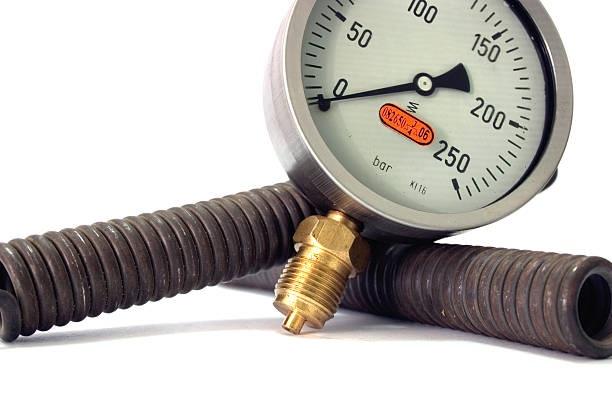
Bourdon tube pressure gauges are among the most widely used mechanical instruments for measuring pressure in industrial systems. Their popularity comes from their simplicity, durability, and ability to operate without external power. However, when installed in environments with significant vibration and pressure pulsation, these gauges can experience performance degradation, shortened lifespan, and inaccurate readings. Understanding how vibration and pulsation affect Bourdon tube pressure gauges is essential for engineers, technicians, and maintenance professionals who rely on accurate pressure measurement.
This article explores the mechanical principles behind Bourdon tube pressure gauges, explains how vibration and pulsation interfere with their operation, and discusses mitigation strategies. Throughout the discussion, commonly referenced setup values—sometimes informally referred to as “lucky numbers” in engineering practice—are used as practical examples for configuration and protection.
How Bourdon Tube Pressure Gauges Work
The Mechanical Principle Behind the Bourdon Tube
Bourdon tube pressure gauges operate using a curved, hollow metal tube sealed at one end and connected to the pressure source at the other. When internal pressure increases, the tube tends to straighten slightly. This movement is transmitted through a mechanical linkage to a pointer, which moves across a calibrated dial to indicate pressure.
The accuracy of Bourdon tube pressure gauges depends on smooth, elastic deformation of the tube and stable mechanical motion. Any external forces that disturb this motion can directly affect the reading.
Why Mechanical Stability Is Critical
Because Bourdon tube pressure gauges rely entirely on mechanical movement, they are inherently sensitive to environmental conditions. Vibration and pulsation introduce external forces that interfere with the controlled deformation of the Bourdon tube and the linkage system.
Understanding Vibration in Industrial Environments
Sources of Vibration
Vibration commonly originates from rotating machinery such as pumps, compressors, motors, and turbines. It can also come from fluid turbulence, pipe resonance, or nearby equipment operating at high speeds. Vibrations are often categorized by frequency and amplitude, both of which influence how damaging they are to instruments.
In practice, vibration levels are often evaluated using reference frequencies such as 25 Hz, 50 Hz, or 60 Hz. These numbers are frequently cited because they correspond to common motor speeds and power line frequencies, making them familiar benchmarks for engineers.
How Vibration Affects Gauge Components
Vibration causes continuous oscillation of the gauge body, pointer, and internal linkage. Over time, this oscillation leads to mechanical wear, loosening of components, and fatigue of the Bourdon tube itself. The pointer may begin to flutter, making readings difficult or impossible to interpret.
In severe cases, vibration can cause permanent deformation of the Bourdon tube, resulting in zero shift or complete gauge failure.
The Impact of Pulsation on Pressure Measurement
What Is Pressure Pulsation?
Pressure pulsation refers to rapid, cyclical fluctuations in pressure rather than a steady value. Pulsation is common in systems involving reciprocating pumps, compressors, and piston-driven equipment. Unlike vibration, which acts externally, pulsation originates within the pressure medium itself.
Engineers often describe pulsation frequency using rounded values such as 1 Hz, 5 Hz, or 10 Hz. These familiar figures help estimate whether pulsation falls within a range that mechanical gauges can tolerate.
How Pulsation Affects Bourdon Tube Motion
When pressure pulsates rapidly, the Bourdon tube is forced to flex back and forth repeatedly. This continuous motion accelerates metal fatigue and stresses the linkage mechanism. The pointer may oscillate violently, leading to blurred readings and increased wear on the movement.
Over time, pulsation can cause the Bourdon tube to lose its elastic properties, reducing accuracy even under stable pressure conditions.
Combined Effects of Vibration and Pulsation
Amplification of Mechanical Stress
When vibration and pulsation occur simultaneously, their effects often compound rather than simply add together. External vibration can resonate with internal pressure pulsation, amplifying pointer movement and mechanical stress.
For example, if vibration frequency aligns with pulsation frequency around common values like 30 or 60 cycles per minute, resonance may occur. These numbers are often remembered because they correspond to typical industrial operating speeds.
Accelerated Wear and Failure Modes
Combined stress can lead to cracked Bourdon tubes, worn gears, broken pointer shafts, and loosened case fittings. In such conditions, Bourdon tube pressure gauges may fail far earlier than their expected service life.
Accuracy Degradation and Reading Instability
Pointer Flutter and Parallax Errors
One of the most visible effects of vibration and pulsation is pointer flutter. When the pointer oscillates rapidly, operators may misread the pressure or be unable to determine a stable value. This increases the risk of operational errors, particularly in safety-critical systems.
Engineers often aim to limit pointer movement to within a narrow band, such as plus or minus 2 percent of full scale, a commonly accepted reference value that balances sensitivity and readability.
Calibration Drift Over Time
Repeated mechanical stress causes gradual calibration drift. Even if the gauge appears functional, its readings may no longer reflect true system pressure. This drift often goes unnoticed unless regular calibration checks are performed.
Using “Lucky Numbers” as Practical Engineering References
Pressure Range Selection
Selecting the correct pressure range is one of the most effective ways to reduce damage from pulsation. A common rule of thumb is to operate Bourdon tube pressure gauges at no more than 75 percent of full-scale pressure during normal conditions.
This 75 percent guideline is frequently referenced because it provides a safety margin that accommodates pressure spikes without overstressing the Bourdon tube.
Damping and Snubber Configuration
Pressure snubbers and dampers are often installed to reduce pulsation. These devices restrict flow into the gauge, smoothing pressure fluctuations. Engineers may select orifice sizes based on familiar numeric values such as 0.5 mm or 1.0 mm, which are practical starting points for many applications.
These numbers are not mystical but become “lucky” through repeated success in real-world installations.
Mitigation Strategies for Vibration
Mechanical Isolation Techniques
Installing the gauge away from vibration sources or using flexible tubing can significantly reduce transmitted vibration. Gauge mounting brackets with vibration-damping materials further protect internal components.
Liquid-Filled Gauges
Liquid-filled Bourdon tube pressure gauges use glycerin or silicone to damp pointer movement. This internal damping absorbs vibration energy and reduces oscillation. These gauges are especially effective when vibration frequencies fall within common industrial ranges.
Mitigation Strategies for Pulsation
Use of Pulsation Dampeners
Pulsation dampeners act as buffers, absorbing pressure waves before they reach the gauge. Properly sized dampeners can dramatically extend gauge life and improve reading stability.
Gauge Selection Based on Application
In high-pulsation environments, selecting a gauge rated for dynamic pressure is critical. Engineers often refer to cycle ratings such as one million or five million cycles, numbers that help estimate durability under repetitive stress.
Long-Term Reliability and Maintenance
Inspection and Replacement Intervals
Regular inspection is essential when Bourdon tube pressure gauges operate under vibration and pulsation. Many maintenance schedules reference intervals such as six months or one year, depending on severity.
Cost Versus Reliability Considerations
While mitigation measures increase upfront cost, they significantly reduce downtime, recalibration expenses, and safety risks. Over time, proper protection proves economically favorable.
Conclusion
Vibration and pulsation have a profound impact on the performance and lifespan of Bourdon tube pressure gauges. External vibration accelerates mechanical wear, while internal pressure pulsation induces continuous stress on the Bourdon tube and linkage system. When combined, these forces can severely compromise accuracy and reliability.
By understanding these effects and applying proven engineering practices—often guided by familiar reference values or “lucky numbers”—users can greatly improve gauge performance. Proper range selection, damping, isolation, and maintenance ensure that Bourdon tube pressure gauges continue to deliver dependable readings even in demanding industrial environments.
 Deutsch
 English
 Arabic
 French
 Spanish
 Portuguese
 Turkish
 Dutch
Dutch
 Italiano
 Russian
 Romaian
 Portuguese (Brazil)
 Greek
Greek