
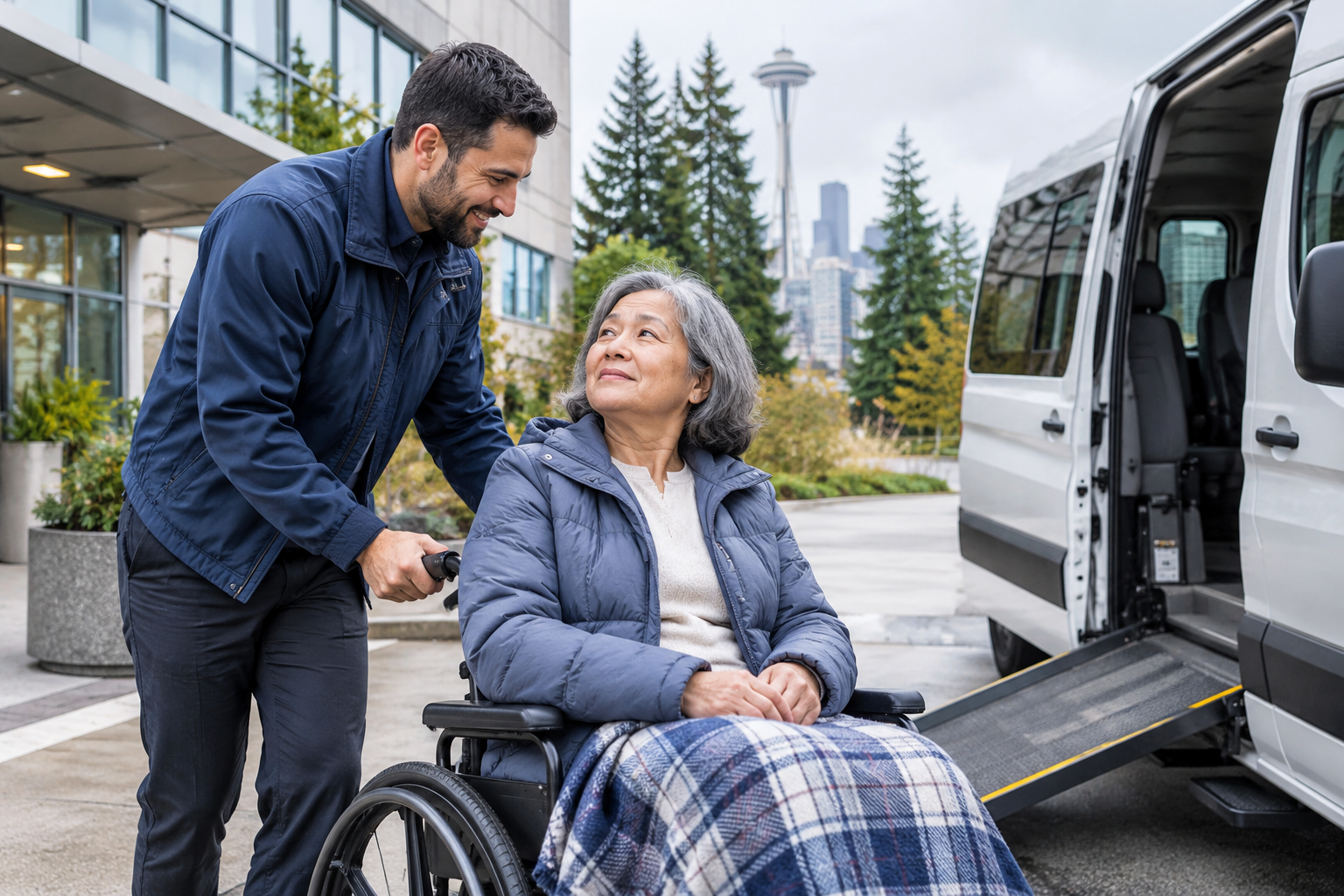
A Complete Guide to Reliable Healthcare Transportation for Everett Residents

Understanding the Importance of Reliable Medical Transportation
Access to healthcare is one of the most important parts of maintaining a healthy, independent, and comfortable lifestyle. However, reaching a medical facility is not always simple for individuals who cannot drive, have limited mobility, or depend on other people for everyday transportation. Older adults may experience difficulty walking long distances, patients recovering from surgery may not be permitted to drive, and individuals living with disabilities may require vehicles with specific accessibility features. Even people who are generally independent can experience transportation challenges when they have recurring medical appointments, unfamiliar destinations, or treatment schedules that make ordinary travel inconvenient. Reliable transportation helps address these challenges by giving patients a practical way to reach doctors, hospitals, outpatient clinics, rehabilitation centers, and other healthcare facilities. It can also help family members organize their responsibilities when they cannot personally provide every ride. A suitable transportation arrangement should consider the passenger's physical condition, mobility equipment, appointment schedule, pickup location, and destination. These details matter because a journey that appears simple for one passenger may require additional planning for another. When transportation is organized carefully, patients can focus more on their appointments, communicate with healthcare professionals, and maintain their treatment routines without constantly worrying about how they will reach their next destination.
How Medical Transportation Supports Everett Residents
People living in Everett have different healthcare requirements depending on their age, medical history, physical abilities, family support, and access to personal vehicles. Some residents may only need an occasional ride to a doctor's office, while others require transportation several times each week for ongoing treatments, rehabilitation sessions, or specialist consultations. Medical transportation in Everett can help individuals who cannot comfortably drive themselves or who find ordinary transportation options difficult to use. A well-planned trip involves more than arranging a vehicle; it requires confirming the passenger's complete pickup address, appointment location, expected travel time, accessibility requirements, and return arrangements. For example, a senior who can walk independently may need a different vehicle and level of assistance from a patient who uses a power wheelchair. Similarly, someone attending a routine examination may have different travel requirements from a person returning home after a medical procedure. Families should explain these circumstances before confirming a reservation so the transportation provider can determine whether its services are appropriate. It is also useful to consider the distance between the vehicle and the healthcare facility entrance, especially when a passenger has difficulty walking. By discussing these details early, patients and caregivers can create a more organized transportation routine for appointments throughout Everett and surrounding Snohomish County communities.
Transportation for Routine Doctor Appointments
Routine doctor appointments are an essential part of preventive healthcare because they allow medical professionals to review symptoms, monitor existing conditions, discuss medication concerns, and recommend further examinations when necessary. These visits may appear simple, but maintaining a consistent schedule can become difficult for patients who do not have a personal vehicle or cannot drive independently. A missed appointment may delay a conversation with a healthcare professional or interrupt a patient's established care routine. Arranging transportation before the appointment day gives passengers more time to prepare and reduces the uncertainty associated with finding a ride at the last minute. Patients should confirm the clinic's complete address, appointment time, pickup location, and expected return arrangements when organizing the journey. They should also consider whether the medical office is located inside a large healthcare complex with multiple buildings or entrances. Bringing identification, insurance information, appointment confirmations, and a current medication list can help make the visit more productive. If the appointment includes laboratory work or additional examinations, the passenger should ask the clinic whether extra time should be allowed. Family members can assist by keeping a calendar of upcoming visits and checking that transportation details remain accurate. A consistent plan helps patients attend regular examinations with greater confidence and makes it easier to manage their healthcare responsibilities throughout the year.
Reliable Transportation for Senior Citizens
Older adults may experience physical changes that make everyday travel more difficult than it was earlier in life. Reduced balance, joint discomfort, limited walking ability, vision changes, and difficulty entering ordinary vehicles can affect a senior's ability to travel independently. Some older passengers can still walk short distances but become tired when they need to cross large parking areas or move through unfamiliar buildings. Others may use canes, walkers, or wheelchairs and require additional space during transportation. A suitable ride can provide another option when seniors cannot comfortably drive or use ordinary public transportation. Families should consider the passenger's actual abilities rather than assuming that every older adult has the same requirements. One senior may need only a convenient pickup location, while another may require a wheelchair-accessible vehicle and assistance from a caregiver. It is also important to discuss whether the passenger can enter and exit the vehicle independently, whether someone will accompany them, and whether the destination has an accessible entrance. Seniors who attend recurring medical appointments may benefit from keeping their transportation information in one place, including provider contact details, pickup times, and appointment addresses. These arrangements can help older adults remain connected with healthcare professionals while preserving as much independence as possible. They can also reduce some of the pressure on relatives who balance employment, family commitments, and caregiving responsibilities.
Wheelchair-Accessible Transportation for Patients
Passengers who use wheelchairs need transportation arrangements that account for the size of their mobility equipment, the way they transfer, and the accessibility features of the vehicle. An ordinary passenger car may not provide sufficient space for a wheelchair, especially when someone uses a larger power model. Some passengers can transfer independently into a regular vehicle seat, while others need to remain in their wheelchair throughout the journey. These differences should be discussed before a reservation is confirmed because they determine which type of vehicle may be suitable. Families can ask whether the provider has an appropriate ramp or lift, wheelchair securement equipment, and enough interior space for the passenger and necessary belongings. They should explain whether the wheelchair is manual or powered and mention any additional equipment that will accompany the passenger. It is also important to clarify whether the driver can provide assistance entering or leaving the vehicle and what type of help is included in the service. A transportation provider should receive accurate information rather than discovering the passenger's requirements when the vehicle arrives. Passengers should also consider the pickup environment, including stairs, narrow pathways, steep driveways, and building entrances. These details can affect the overall journey even when the vehicle itself is accessible. Confirming everything in advance helps families avoid unnecessary delays and choose transportation that reflects the passenger's actual mobility needs.
Transportation for Specialist Medical Appointments
Many patients need to visit specialists for evaluations, diagnostic procedures, treatment recommendations, and follow-up care that goes beyond the services offered during an ordinary primary care appointment. Depending on their medical needs, individuals may visit cardiologists, neurologists, orthopedic specialists, oncologists, dermatologists, or other healthcare professionals. Specialist appointments can take place at different medical facilities, which may create additional transportation challenges for patients who are unfamiliar with the area. Before arranging a ride, passengers should confirm the specialist's complete address, building name, department, and appointment time. Large medical complexes sometimes contain several separate clinics, imaging departments, and outpatient entrances, so providing only the name of the hospital may not identify the exact destination. Patients should also ask whether they need to arrive early, bring previous medical documents, or complete paperwork before the consultation. If an appointment includes testing, the passenger should consider that the visit may take longer than expected. Return transportation should be arranged with enough flexibility to account for possible delays. People who attend specialist appointments regularly can maintain a record of their preferred destinations and appointment schedules, making future arrangements easier to organize. Family caregivers may also help by checking directions and keeping the specialist's contact information available. Careful preparation can make unfamiliar medical journeys more manageable and reduce the possibility of confusion on an important appointment day.
Consistent Transportation for Dialysis Treatment
Dialysis treatment often follows a recurring schedule, which means transportation can become a major part of a patient's weekly routine. People receiving dialysis may need to travel to a treatment center several times each week, and their physical condition can make independent driving difficult. Some patients experience fatigue or discomfort after treatment, while others have mobility limitations that require additional planning before and after each session. Medical transportation in Everett may be considered by individuals who need planned rides and cannot comfortably use their own vehicles or ordinary public transportation. Patients and caregivers should discuss recurring appointment times, pickup arrangements, treatment locations, mobility equipment, and return-trip expectations with the transportation provider. It is particularly important to explain whether the passenger uses a wheelchair, walker, or other mobility aid. Families should also ask how schedule changes are handled if a treatment session is moved or takes longer than expected. A regular transportation arrangement may reduce the work involved in organizing every trip separately, provided the provider offers recurring scheduling and can accommodate the passenger's needs. Patients should follow their medical team's guidance about travel and should not assume that an ordinary transportation service provides clinical monitoring or medical care during the journey. Keeping appointment details organized and communicating changes promptly can help make repeated treatment travel more predictable for patients and caregivers.
Getting to Physical Therapy and Rehabilitation
Physical therapy and rehabilitation appointments can help individuals work toward improved strength, flexibility, balance, coordination, and everyday movement after an injury, operation, illness, or other medical condition. Patients may need to attend multiple sessions over several weeks, depending on the treatment plan established by their healthcare professionals. Although these appointments can be important for recovery, reaching the therapy facility may be difficult for people experiencing pain, weakness, limited movement, or temporary restrictions. A suitable transportation arrangement can reduce the burden of organizing every journey and make it easier to attend appointments according to the recommended schedule. Patients should consider the distance from their home to the pickup point, the amount of walking required at the destination, and whether they need space for a walker, wheelchair, or other mobility equipment. Some individuals may feel more comfortable traveling with a family member or caregiver, particularly during the early stages of recovery. Before booking a ride, passengers should explain any movement restrictions and confirm whether the provider can accommodate their requirements. It is also helpful to ask the therapy clinic how long sessions usually take so that return transportation can be planned appropriately. Rehabilitation schedules may change as patients progress, making communication important throughout the treatment period. A well-organized travel routine allows individuals to focus more attention on their recovery activities and less on the practical difficulties of reaching the facility.
Planning Transportation After Hospital Discharge
Hospital discharge is an important stage of recovery, and transportation should be considered before the patient is ready to leave the facility. Some individuals can travel home in a regular passenger vehicle, while others may require additional assistance because of weakness, limited movement, medical equipment, or instructions provided by their healthcare team. Families should speak with hospital staff about the patient's condition and ask what type of transportation is appropriate. It is important to understand whether the patient can sit comfortably, enter and exit a vehicle, and travel without medical monitoring. A standard transportation service may be suitable for some discharged patients, but it is not a replacement for an ambulance or medically staffed transport when those services are necessary. Patients should also confirm the home address, building entrance, and availability of someone to receive them after arrival. If the patient lives in an apartment building, families should consider stairs, elevators, access doors, and the distance between the vehicle and the residence. Discharge arrangements may involve personal belongings, mobility aids, prescriptions, and follow-up instructions, so these should be organized before departure. The passenger's condition may also change during the discharge process, making it important to communicate any new requirements. Clear coordination between the patient, caregiver, hospital staff, and transportation provider can help make the transition from hospital to home more organized and less stressful.
Transportation Following Surgery or Medical Procedures
Recovering from surgery can temporarily change a person's ability to drive, walk, lift belongings, or enter and leave a vehicle. Even when a procedure does not require an extended hospital stay, the patient may experience discomfort, weakness, dizziness, or movement restrictions that make independent travel unsuitable. Medical transportation in Everett may be an option for planned journeys when the patient has been cleared to use that type of service and does not require emergency or medically supervised transport. Before making a reservation, families should review the discharge instructions and ask the healthcare team whether an ordinary passenger vehicle or a specialized transportation arrangement is appropriate. They should explain whether the patient can sit upright, needs additional space, uses mobility equipment, or requires help entering and leaving the vehicle. Some procedures require a responsible adult to accompany the patient, so transportation arrangements should account for that requirement. Patients should not assume that a driver can provide clinical assistance, lift someone with significant medical limitations, or manage medical equipment unless those services have been specifically confirmed. It is also useful to prepare the home environment before the passenger arrives, particularly when stairs or long indoor walking distances may create difficulties. Planning transportation before the procedure can reduce last-minute confusion and help the patient concentrate on following recovery instructions provided by medical professionals.
Understanding Non-Emergency Medical Transportation
Non-emergency medical transportation, commonly known as NEMT, is designed for healthcare journeys that do not require an emergency ambulance response. The available transportation option may depend on the passenger's medical needs, eligibility, location, and the services offered by the transportation program. In Washington, eligible Apple Health members may receive assistance for covered medical appointments when they have no other way to reach the healthcare service. Depending on individual circumstances, transportation options can include public buses, taxis, wheelchair vans, gas vouchers, ferry tickets, mileage reimbursement, or other approved arrangements. The Washington State Health Care Authority explains that transportation is coordinated through county brokers, which arrange an appropriate option for qualifying clients. Patients should understand that eligibility rules apply and that not every appointment or transportation request automatically qualifies for assistance. They should also distinguish between a non-emergency ride and an ambulance service. Someone experiencing a medical emergency should contact emergency services rather than attempting to arrange an ordinary passenger ride. Understanding these differences helps families select an appropriate transportation option and avoid expecting a non-emergency provider to perform medical duties outside its service. Patients should review current program requirements and confirm whether their appointment is covered before relying on public transportation assistance. <Link url="https://www.hca.wa.gov/free-or-low-cost-health-care/i-need-medical-dental-or-vision-care/transportation-services-nonemergency" title="Washington State Health Care Authority transportation information"/>. <Cite refs={["turn567400search0","turn567400search8"]}/>
Why Advance Booking Makes a Difference
Arranging transportation before the appointment day gives passengers, caregivers, and transportation providers more time to confirm important details. Last-minute requests can be difficult when an accessible vehicle is needed, when several appointments take place at similar times, or when the passenger has special mobility requirements. Patients should provide their complete pickup address, destination, appointment time, contact number, and information about any mobility equipment. Medical transportation in Everett is easier to coordinate when the provider receives accurate details early instead of having to clarify essential information shortly before pickup. Advance planning also gives families time to ask about vehicle accessibility, waiting arrangements, payment requirements, and return-trip scheduling. For recurring treatment, patients can ask whether a regular schedule is available and what procedure should be followed if an appointment changes. The Washington State Health Care Authority recommends contacting the county transportation broker well before an appointment, while Hopelink advises eligible clients to submit requests at least two business days in advance. Families should check the latest requirements directly because the timing and available options can depend on the trip. Keeping confirmation details in an accessible place makes it easier to review arrangements when needed. If the clinic changes the appointment time or location, the transportation provider should be informed promptly. Planning early cannot guarantee that every requested vehicle or time will be available, but it provides a better opportunity to identify suitable arrangements and resolve questions before the journey begins. <Cite refs={["turn567400search0","turn567400search1"]}/>
Transportation for People With Limited Mobility
Limited mobility can affect many parts of a journey that other passengers may take for granted. A person may find it difficult to walk from the front door to a pickup point, step into a vehicle, remain seated comfortably, or move through a large medical facility. These challenges can result from a temporary injury, a recent operation, a disability, or an ongoing health condition. Families should explain the passenger's actual abilities instead of simply saying that the person needs assistance. For example, one passenger may be able to walk a short distance with a cane but may not be able to manage stairs or stand for long periods. Another passenger may use a wheelchair and require a vehicle with a ramp or lift. The transportation provider should know whether the person can transfer independently, whether someone will accompany them, and whether additional space is required for mobility equipment. It is also useful to consider the pickup environment, including narrow driveways, steps, uneven paths, and building access. A careful assessment of these details helps families choose an arrangement that reflects the passenger's needs rather than relying on assumptions that could create difficulties during the trip. Passengers should also ask what kind of physical assistance the driver is permitted to provide. If someone requires lifting, clinical monitoring, or specialized medical support, the family should discuss appropriate arrangements with the healthcare team rather than assuming an ordinary ride will meet those needs.
Understanding Door-to-Door Transportation Services
Door-to-door transportation can be valuable for passengers who have difficulty walking long distances between their homes, pickup locations, parking areas, and medical entrances. However, the exact meaning of door-to-door assistance can vary between transportation providers, so passengers should ask for a clear explanation before making a reservation. One provider may offer pickup at a designated entrance, while another may provide additional assistance getting from the residence to the vehicle. Some services may not include assistance inside a home, climbing stairs, carrying heavy belongings, or accompanying a passenger through a medical facility. Families should never assume that every type of assistance is automatically included in the ride. Instead, they should explain the passenger's mobility limitations and ask what the driver is permitted and trained to do. If a passenger needs help beyond the provider's service boundaries, a caregiver or another qualified support person may need to be present. Patients should also clarify where the vehicle will wait and how the driver will contact them upon arrival. Everett Paratransit, for example, describes itself as a door-to-door transit option for qualifying riders, but it has its own eligibility and application process. Private transportation providers may have different service descriptions and limitations. Understanding these details before the appointment can prevent misunderstandings and help passengers prepare for each stage of the journey. <Cite refs={["turn567400search3","turn567400search5"]}/>
Transportation for Regular Medical Checkups
Regular medical checkups allow healthcare professionals to monitor changes in a patient's condition, review treatment progress, and discuss concerns that may require further evaluation. These visits are particularly important for individuals managing long-term health conditions and older adults who may need periodic examinations throughout the year. Maintaining a regular appointment schedule can become difficult when a patient does not drive or has limited access to family transportation. Arranging rides ahead of time can make it easier to organize checkups around work schedules, household responsibilities, and other daily activities. Patients should keep a calendar containing appointment dates, clinic addresses, contact information, and pickup arrangements. They may also want to prepare a list of questions for their doctor and organize their medication information before leaving home. If a checkup includes laboratory testing or additional procedures, the patient should confirm whether the transportation arrangement needs to account for a longer visit. Caregivers can help by checking appointment reminders and making sure that transportation details remain accurate. Some patients may benefit from arranging a recurring ride if the provider offers that option and the appointment schedule remains consistent. It is also important to update transportation details whenever the medical office changes its location or appointment time. A consistent travel routine can support better organization and help patients remain connected with healthcare professionals without making every appointment day a separate transportation challenge.
How Transportation Can Help Family Caregivers
Family caregivers often manage several responsibilities at the same time, including employment, household tasks, appointment scheduling, medication reminders, and personal support for relatives. Personally driving a family member to every medical appointment may become difficult when the caregiver has limited availability, lives some distance away, or has other family responsibilities. Medical transportation in Everett can provide another option for organizing healthcare journeys when the passenger's requirements match the services available. This does not mean caregivers need to step away from the patient's healthcare routine. They can remain involved by helping select an appropriate provider, sharing mobility information, confirming appointment details, and preparing the passenger before pickup. Caregivers should also ask whether they can accompany the passenger and whether an additional seat is available when needed. For older adults or people with memory difficulties, having a trusted person involved in the arrangements may be particularly helpful. Families should establish a clear communication plan so the passenger knows who to contact if the pickup time changes or the appointment runs late. It may also be useful to keep a written list of transportation details, medical facility contacts, and important instructions where authorized family members can find them. When responsibilities are organized properly, caregivers may find it easier to balance their own schedules while continuing to support the healthcare needs of their relatives. The most suitable arrangement should always reflect the passenger's actual needs and the assistance available from the transportation provider.
Washington Apple Health Transportation Assistance
Washington Apple Health, the state's Medicaid program, includes non-emergency transportation assistance for eligible members who need help reaching covered medical services and have no other way to get there. The program uses transportation brokers to review requests and arrange an appropriate option based on eligibility and individual circumstances. In Snohomish County, including Everett, Hopelink coordinates Medicaid transportation. Eligible members may be asked to provide their ProviderOne information, pickup address, healthcare provider's name, facility address, appointment date, appointment time, and the type of medical service they need to attend. The Washington State Health Care Authority recommends contacting the county transportation broker well before the appointment, while Hopelink publishes its own reservation requirements and contact information. The Snohomish County reservation number listed by Hopelink is 1-855-766-7433, and its published reservation hours are Monday through Friday, 8 a.m. to 5 p.m. Patients should verify current hours, eligibility, covered services, and scheduling requirements directly with the broker rather than assuming that every journey is automatically approved. They should also ask about interpreter services if communication support is needed. These public program arrangements are separate from private transportation services, and families should understand which option applies to their particular circumstances before scheduling a ride. Keeping ProviderOne information and appointment details ready can make the request process easier. <Cite refs={["turn567400search0","turn567400search1","turn567400search4"]}/>
Preparing Before the Scheduled Pickup
Preparing for a medical ride involves more than simply waiting near the door when the vehicle arrives. Passengers should organize the information and belongings they may need during the appointment, including identification, insurance details, appointment confirmation, medical documents, contact numbers, and necessary personal items. Anyone using a wheelchair, walker, cane, or other mobility device should make sure the transportation provider has already received accurate information about that equipment. It is also helpful to confirm the pickup time, destination, and return arrangements before the scheduled day. Patients should consider the time needed to reach the vehicle, especially when their residence has stairs, a long driveway, or a building entrance that is difficult to access. If a caregiver is accompanying the passenger, both individuals should understand the planned schedule and know how to contact the provider if a problem occurs. Weather conditions may also affect travel comfort, so passengers should dress appropriately and keep essential belongings protected. If the appointment involves special preparation, the patient should follow the instructions provided by the medical facility rather than relying on the driver for medical guidance. It is useful to keep medications and important documents organized, but passengers should avoid bringing unnecessary items that make boarding or movement more difficult. A little preparation before pickup can reduce unnecessary stress, prevent forgotten documents, and help the journey proceed more smoothly from the residence to the healthcare facility.
Choosing a Transportation Provider Carefully
Selecting a transportation provider requires more consideration than simply finding a vehicle available at the requested time. Patients should first determine what kind of service they need, including whether they can use a regular passenger vehicle or require wheelchair accessibility and additional assistance. They should ask about the provider's service area, booking process, operating hours, vehicle features, payment arrangements, cancellation policies, and return-trip options. It is also important to explain the passenger's mobility requirements honestly because the provider needs accurate information to determine whether it can accommodate the journey. Families may want to ask how pickup confirmations are communicated and what procedure should be followed if the vehicle is delayed. They should also clarify whether the driver can assist with mobility equipment and whether a caregiver can travel with the passenger. A provider's service description should be reviewed carefully rather than relying on assumptions about what a medical transportation service includes. Patients should distinguish between ordinary transportation assistance and medical care during travel. If someone requires monitoring, clinical support, or emergency medical attention, they should discuss the appropriate level of transport with their healthcare team. Families can also ask about vehicle maintenance, driver qualifications, insurance, and the procedure for handling passenger concerns. Comparing these details can help people make a more informed decision and reduce the risk of selecting a service that does not match the passenger's requirements.
Reaching Hospitals, Clinics, and Healthcare Facilities
Healthcare appointments may take place at hospitals, outpatient centers, specialist offices, imaging facilities, rehabilitation clinics, and independent medical practices throughout Everett and nearby communities. Each destination may have different entrance arrangements, parking areas, passenger drop-off points, and building layouts. A large medical complex may contain several departments, so providing only the facility name may not be enough to identify the exact destination. Patients should share the complete address and, when possible, the name of the building, clinic, or department where the appointment will take place. Medical transportation in Everett can be coordinated more effectively when the pickup and destination information is accurate and easy to understand. Patients should also consider whether the facility has a designated entrance for passengers with mobility limitations or wheelchair users. If the appointment location changes, the transportation provider should be informed as soon as possible. Families may want to keep the clinic's phone number available in case they need to confirm directions or explain a delay. For recurring visits, saving the exact destination details can make future scheduling easier and reduce the chance of confusion. Patients who travel to multiple facilities should avoid assuming that every appointment takes place at the same address, even when the providers belong to one healthcare network. These simple details can make a significant difference when traveling to unfamiliar locations and help reduce confusion during an already busy appointment day.
Making Healthcare Journeys More Comfortable
Comfort during a medical journey depends on the passenger's physical condition, the type of vehicle, the distance traveled, and the amount of assistance available. Someone recovering from surgery may need a comfortable seating position, while a wheelchair user may require sufficient space and appropriate securement equipment. Passengers who experience fatigue or discomfort should explain their concerns before the ride is confirmed. Families can ask about vehicle accessibility, seating arrangements, available space for mobility devices, and whether a caregiver can accompany the passenger. They should also consider the journey's timing and whether the passenger may need additional time to reach the pickup location. A transportation provider should be informed about any special requirements that affect the suitability of the vehicle. Medical transportation in Everett can be easier to manage when the passenger, caregiver, and provider have discussed these matters before the appointment day. Patients should remember that comfort and medical safety are not the same thing: a vehicle that feels comfortable may still be unsuitable for someone who needs clinical monitoring or specialized medical equipment. When there is uncertainty, the passenger or caregiver should consult the healthcare team about the appropriate transportation arrangement. It may also be helpful to plan for mobility aids, personal belongings, and any assistance required at the destination. Clear expectations make it easier for everyone involved to understand what will happen during the journey and what support may need to be arranged separately.
Organizing Recurring Medical Transportation
Some patients need transportation several times each week because of dialysis, rehabilitation, recurring specialist visits, or other ongoing healthcare services. Arranging each ride separately can create extra work for patients and caregivers, particularly when appointment times remain consistent over several weeks. If a transportation provider offers recurring scheduling, families can ask whether a regular arrangement is available and what information is required to establish it. They should keep a record of treatment dates, pickup times, destinations, provider contact details, and any special passenger requirements. If a clinic changes its schedule, the transportation provider should be notified promptly so that arrangements can be updated. Patients should also understand what happens when a treatment session takes longer than expected and whether the return journey needs to be rescheduled. A recurring transportation plan should be reviewed whenever the passenger's mobility, equipment, or appointment requirements change. Families may find it useful to maintain a shared calendar so everyone involved can see upcoming trips and important changes. They should also identify who is responsible for confirming appointments and contacting the provider if a ride needs to be modified. For passengers who attend treatment multiple times each week, consistent communication can prevent repeated scheduling problems. A well-maintained routine does not remove every possible delay, but it can make transportation easier to manage and give patients and caregivers a clearer understanding of their responsibilities.
Important Questions to Ask Before Booking
Before confirming a ride, passengers and caregivers should ask questions that help them understand exactly what the transportation provider can offer. They should confirm whether the provider serves the pickup and destination locations, whether an appropriate vehicle is available, and whether mobility equipment can be accommodated. It is important to ask whether the driver provides assistance entering or leaving the vehicle, whether a caregiver can accompany the passenger, and whether the service includes any support beyond the actual journey. Families should also clarify the total cost, payment methods, cancellation requirements, waiting policies, and procedures for arranging a return trip. If the passenger needs wheelchair access, they should ask about the vehicle's lift or ramp and the equipment used to secure the wheelchair. Patients should explain any restrictions provided by their healthcare team rather than expecting the driver to determine whether a journey is medically appropriate. They may also ask how the provider communicates pickup confirmations, handles delays, and responds if the passenger's condition changes before the appointment. It is helpful to understand whether the quoted price covers the complete journey or whether additional charges may apply for waiting time, extra stops, or special requirements. Medical transportation in Everett should be arranged only after the passenger understands the service being booked and any limitations that may apply. Asking clear questions before confirming a reservation can prevent misunderstandings and help families decide whether they need another transportation option or additional assistance.
Understanding Everett Paratransit and Accessible Transit Options
Residents who cannot use ordinary fixed-route public transportation because of a qualifying disability may have additional accessible transit options to investigate. Everett Paratransit describes its service as a door-to-door transportation option for eligible individuals with physical or cognitive disabilities and qualifying seniors aged 65 or older. The program has an eligibility process that includes an assessment, so passengers should not assume that age or a medical appointment alone automatically guarantees access. Everett Transit explains that eligibility may depend on whether a person can independently board, ride, or exit an accessible fixed-route bus or navigate the transit system because of a functional disability. The city also publishes scheduling information and explains that personal care attendants may ride with qualifying passengers at no additional charge. Community Transit operates DART Paratransit for eligible people who cannot use regular bus service because of a disability or condition, and it also requires an application and assessment. These services are public transit programs rather than ambulance services or automatically guaranteed medical appointment rides. Passengers should check service boundaries, eligibility, booking windows, fares, and trip procedures directly with the relevant transit agency. Visitors to Everett may also have separate arrangements if they already have ADA eligibility documentation from another jurisdiction. Understanding these options can help residents compare accessible public transportation with private rides and other available programs. <Cite refs={["turn567400search3","turn567400search6","turn567400search10"]}/>
The Role of Dependable Transportation in Healthcare
Transportation can influence how easily people manage their healthcare responsibilities, especially when they cannot drive independently or have limited access to family assistance. A suitable ride can help patients reach scheduled appointments, continue treatment routines, and maintain communication with healthcare professionals. It can also reduce some of the pressure that caregivers experience when they are responsible for coordinating every journey themselves. However, transportation should always be selected according to the passenger's actual requirements. A person who can travel independently may need only a standard passenger vehicle, while someone with limited mobility may require wheelchair accessibility or additional support. Patients who need medical supervision during travel should discuss the appropriate service with their healthcare team instead of relying on an ordinary ride. Families can make transportation more dependable by keeping appointment information organized, communicating changes promptly, and confirming the vehicle's suitability before each trip. They should also understand the difference between private transportation, public transit, paratransit, Medicaid assistance, and ambulance services. Each option has a different purpose, eligibility process, and level of support. A clear understanding of these differences helps passengers avoid selecting a service that cannot meet their needs. Reliable transportation does not replace medical treatment, but it can make access to that treatment easier to organize and manage. When patients and caregivers plan carefully, transportation becomes a more predictable part of their healthcare routine rather than a problem that must be solved separately before every appointment.
Finding Suitable Medical Transportation Support in Everett
Every passenger has different transportation requirements, and the most appropriate arrangement depends on mobility, appointment schedules, destination, available assistance, and individual circumstances. Some patients need a one-time ride to a doctor's office, while others require recurring transportation for treatments, rehabilitation, or specialist care. Families should compare available options, confirm vehicle accessibility, discuss the level of assistance provided, and understand all booking requirements before scheduling a trip. They should also distinguish between private transportation services, public transportation programs, Medicaid assistance, paratransit options, and ambulance services because these arrangements serve different purposes. Careful planning helps prevent confusion and allows patients to select an option that matches their needs. For individuals exploring medical transportation in Everett, a useful first step is to identify the passenger's mobility requirements and exact destination, then contact potential providers to confirm whether they can accommodate the journey. Families should ask about service areas, scheduling procedures, payment arrangements, accessibility features, and any limitations on driver assistance. They should also review appointment instructions and consult healthcare professionals whenever the passenger may need medical support during travel. Keeping important information organized can make future reservations easier and help caregivers coordinate recurring trips. Care Bridge Medical Transport is one service families can explore when arranging suitable healthcare transportation in Everett and nearby Washington communities. By focusing on clear communication, appropriate vehicle arrangements, and advance scheduling, patients and caregivers can make medical travel more organized, comfortable, and manageable.


