
U4GM Shows How to Beat Narrow Defenses with Smart Wing Play in FC 27

Tex has firmly established himself as one of the standout players in FC 27, and his recent performances offer valuable lessons for anyone looking to improve. By studying his matches, players can learn more than just button combinations. His approach reveals how positioning, patience, decision-making, and technical dribbling work together at the highest level. Even your squad choices matter, and understanding why he uses certain players can help you make smarter decisions when building a competitive team with FIFA 27 Coins.
A More Patient Approach to Defending
Tex is known for aggressive defending, but his performance against experienced professional player Tuga shows that he understands when to hold back. FC 27 does not always reward constant manual defending, so rushing defenders out of position can create more problems than it solves.
Instead of immediately controlling a center-back and stepping into the opponent, Tex often uses his attacking midfielder or central midfielder to apply pressure. He allows his defensive shape to remain organized while using midfielders to close passing lanes and track dangerous runners.
This approach is particularly useful when facing opponents who are comfortable creating chances through the middle. Pulling a center-back forward too early can leave a large gap behind the defensive line. Tex avoids that risk by staying composed and waiting for a better opportunity to challenge for the ball.
However, when an opponent becomes isolated near the wing, he is more willing to apply direct pressure. The important lesson is to recognize the situation before committing. If the opponent has dangerous passing options available, prioritize blocking those lanes instead of chasing the ball.
Tex also uses mechanics such as the L1 stop and L2+R2 stop to control movement and maintain defensive balance. His use of the offside trap helps push opponents backward and makes forward progression more difficult.
Why Caicedo Is an Important Squad Choice
One interesting detail in Tex's setup is his decision to use Caicedo as a CAM instead of choosing more popular attacking options. The reason is connected to his technical play style and preferred dribbling mechanics.
With the Technical play style, R1 dribbling becomes particularly effective. Caicedo gives Tex a player who fits the way he wants to control possession, turn away from defenders, and accelerate into open space.
This demonstrates why player selection should not be based entirely on overall ratings or popularity. A footballer who matches your preferred playing style can be more valuable than a supposedly stronger alternative.
Mastering the L1 and R1 Dribbling Technique
One of the most useful techniques shown in the gameplay is the combination of L1 and R1 dribbling. The basic idea is simple: use L1 while turning or stopping, then accelerate with R1 when the defender moves in the wrong direction.
The technique creates a change of rhythm that makes it harder for opponents to predict your next action. Rather than continuously sprinting forward, Tex slows down, waits for the defender to react, and then bursts into space.
The L1 stop is especially useful because it allows players to pause and reassess the situation. You can use it to make a defender commit before changing direction. Combining the stop with R1 acceleration can create valuable openings around the penalty area.
Tex also uses left-stick movements to disguise his intentions. For example, he may initially suggest that he is going to pass backward or move toward a teammate, then quickly turn toward the byline. These small movements can create enough separation to deliver a pass or enter the box.
Use the Wings Even with a Narrow Formation
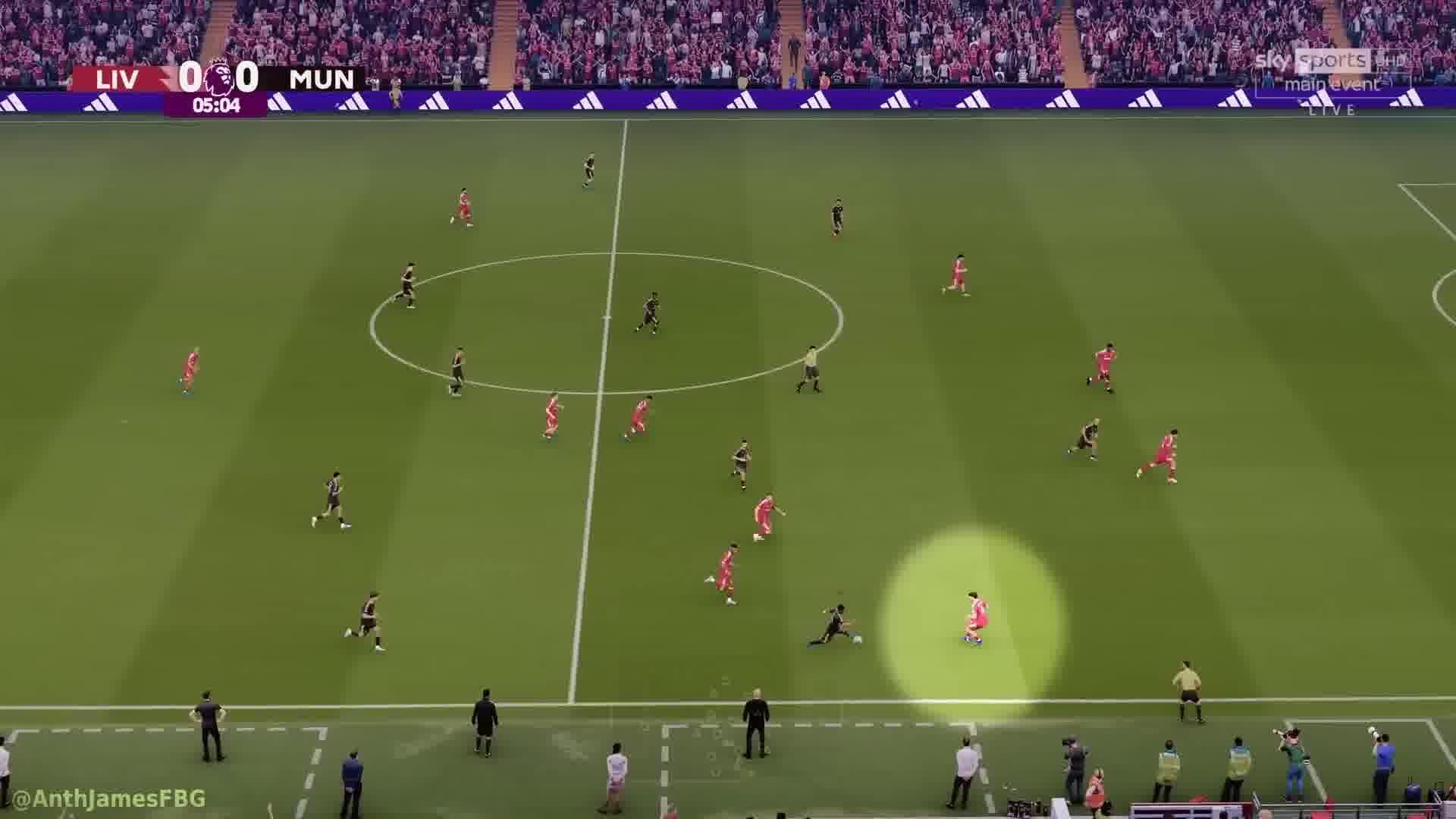
Another important attacking lesson is that narrow formations should not force you to attack exclusively through the center. Tex recognizes when the opponent is defending centrally and uses the wings to stretch the defensive line.
Moving the ball wide forces defenders to cover more space. Once the opponent's backline spreads out, gaps can appear between defenders and midfielders. These openings create opportunities for combinations, through passes, and shots inside the penalty area.
Tex also uses passing triangles and changes the direction of play to keep the opponent guessing. Switching the ball from one fullback to the other is particularly valuable in FC 27 when facing narrow formations. It forces the opponent to shift across the pitch and can expose space on the opposite side.
Stop Mechanics and Decision-Making
Tex's use of different stopping mechanics is another major part of his attacking game. The L1 stop makes the player face toward the opponent's goalkeeper, while holding L2 and R2 allows the player to stop without changing the direction they were already facing.
This difference matters because it gives you more control over the next movement. After an L2+R2 stop, you can use the left stick to take a touch inside or move into a better shooting position.
These techniques are effective because they force defenders to make decisions. When an attacker stops, changes direction, or delays a pass, the defender must choose whether to step forward, hold position, or cover another option. The more difficult that decision becomes, the more likely the defender is to make a mistake.
Tex's gameplay shows that reaching a higher level in FC 27 requires more than memorizing skill moves. Mechanics are useful, but understanding space, timing, defensive behavior, and attacking patterns is what makes them effective. Players who combine these concepts with a well-suited squad and smart use of buy Fut Coins can build a more consistent approach to competing at the highest level.


