
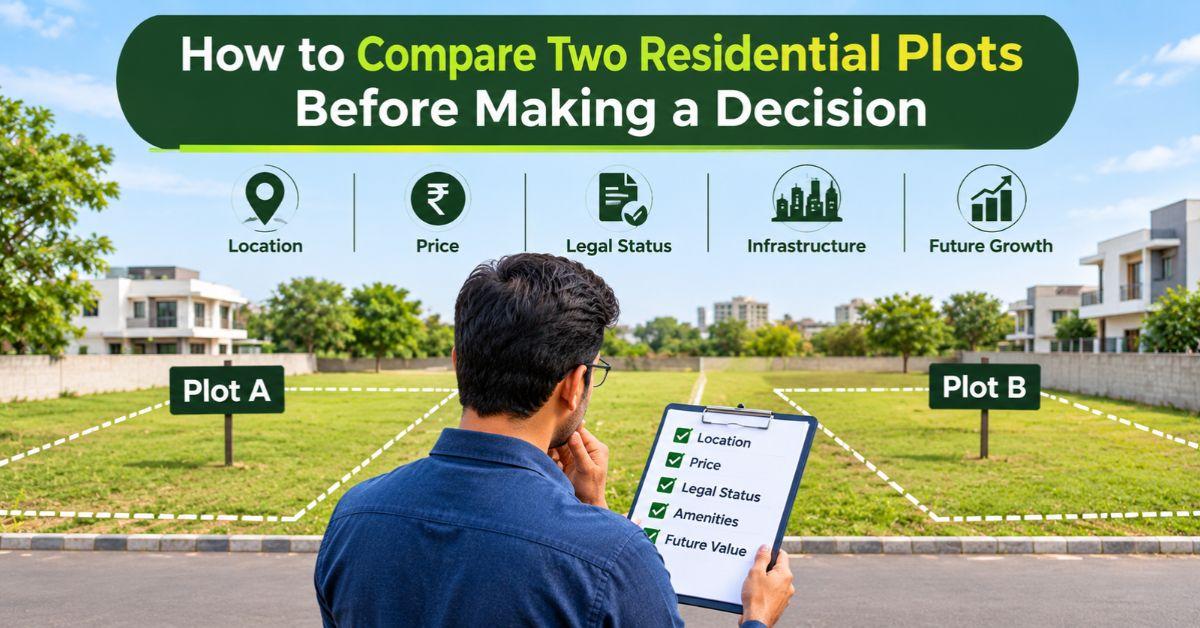
How to Compare Two Residential Plots Before Making a Decision

Choosing the right residential plot requires more than comparing prices or looking at the size of the land. Buyers should carefully evaluate the location, accessibility, physical condition, legal documents, surrounding development, and future construction possibilities before making a commitment. When exploring options such as Land for Sale in Maraimalai Nagar, comparing different properties using the same set of criteria can help buyers understand which plot offers better practical value. A little research before finalising a purchase can prevent unexpected expenses and make the decision more confident.
1. Compare the Location and Surrounding Development
Location is one of the most important factors when comparing two residential plots. Even when two properties have similar dimensions, their surroundings can create significant differences in convenience and long-term value.
Start by checking the distance to essential facilities such as schools, hospitals, supermarkets, banks, and public transportation. Consider how easily family members can reach workplaces and other frequently visited destinations. A plot located near established residential areas may offer better access to daily necessities than one situated in a developing location.
It is also worth observing the surrounding neighbourhood. Look at existing houses, commercial establishments, road conditions, street lighting, and general maintenance. Visit both locations at different times of the day to understand traffic movement, noise levels, and overall activity.
2. Examine the Plot Dimensions and Physical Shape
The total land area does not always indicate how useful a residential plot will be. Two plots with identical square footage can have different construction possibilities depending on their dimensions and physical shape.
Check the frontage, length, width, and overall layout of each property. A regularly shaped rectangular plot may provide more flexibility for designing a house compared to an irregularly shaped property. Corner plots may offer additional road access, while narrow plots could require more careful planning.
Also, consider the direction of the plot and the position of nearby structures. These details can influence natural lighting, ventilation, privacy, and the arrangement of rooms.
Ask for an accurate land survey and compare the physical measurements with the dimensions mentioned in the sale documents. This helps identify discrepancies before proceeding with the purchase.
3. Check Road Access and Infrastructure Facilities
Road access directly affects the usability and convenience of a residential property. When comparing two plots, examine the width of the approach road and whether vehicles can enter and exit comfortably.
A property with a well-maintained connecting road may be more convenient for construction activities and everyday travel. Check whether the road is publicly accessible or involves any private access arrangements.
Infrastructure facilities should also receive attention. Important aspects include:
-
Reliable electricity connections and nearby power infrastructure.
-
Availability of drinking water and suitable water sources.
-
Proper stormwater drainage facilities.
-
Underground or accessible sewage connections.
-
Streetlights and maintained internal roads.
-
Mobile network coverage and internet availability.
Do not assume that these facilities are available simply because nearby houses have them. Confirm the actual arrangements for each property and identify any additional installation expenses that may arise.
4. Verify Legal Documents and Property Ownership
Legal verification is essential before purchasing any residential plot. A property may appear attractive because of its location and price, but unclear ownership or documentation problems can create serious complications later.
Request the parent documents and review the ownership history to understand how the property has been transferred over the years. Check the latest Encumbrance Certificate to identify registered transactions, mortgages, or other recorded claims.
Other important documents include the registered sale deed, patta, approved layout plan, and relevant land revenue records. Verify that the survey number, subdivision details, boundaries, and measurements match across the available documents.
It is equally important to confirm the applicable land-use classification and layout approval with the appropriate authorities. If any document is unclear, consult a property lawyer before paying an advance or signing an agreement.
5. Compare the Total Purchase and Development Costs
The advertised price is only one part of the financial commitment involved in purchasing land. Buyers should calculate the overall cost of acquiring and preparing each plot for construction.
Apart from the basic land price, consider registration charges, stamp duty, legal verification fees, and brokerage if applicable. Check whether the property requires additional spending on boundary walls, soil filling, levelling, or drainage improvements.
For example, a lower-priced plot may require considerable expenditure to make it suitable for construction. Another property with a slightly higher purchase price might already have proper road access, a level surface, and nearby infrastructure.
Create a separate cost estimate for both properties. Comparing the complete financial requirements provides a clearer understanding of which option fits your budget without creating unnecessary financial pressure.
6. Evaluate Soil Conditions and Construction Possibilities
The physical condition of the land can influence the type of foundation required and the overall construction budget. Before selecting either property, examine the soil characteristics and general ground conditions.
Look for signs of waterlogging, uneven surfaces, loose soil, or nearby drainage problems. If one plot is located in a low-lying area, investigate whether rainwater accumulates during heavy rainfall.
A professional soil investigation can provide useful information about the ground's load-bearing capacity and suitability for the proposed building. This is particularly important when planning a multi-storey residential structure.
You should also consider building setbacks, permissible construction limits, road width requirements, and local planning regulations. These factors determine how effectively the available land area can be used.
7. Consider Future Development and Resale Potential
A residential plot should meet present requirements while offering practical advantages for the future. Compare the development activities taking place around both properties, including new residential projects, commercial establishments, road improvements, and public infrastructure.
However, avoid making decisions based entirely on proposed developments. Verify whether announced projects have received the necessary approvals and are progressing as expected.
Think about your long-term requirements as well. Consider whether the plot can accommodate future extensions, additional parking, or other family needs. Properties with convenient access and established neighbourhood facilities may also appeal to a wider range of buyers if you decide to resell.
Conclusion
Comparing two residential plots requires patience, proper documentation, and a realistic understanding of your construction plans. Instead of focusing only on the purchase price, evaluate location, dimensions, infrastructure, legal clarity, soil conditions, and future development opportunities. Prepare a comparison checklist, visit both properties personally, and seek professional assistance wherever necessary. Whether you are considering a developing residential neighbourhood or exploring Neelankarai Land for Sale as a coastal location option, a detailed evaluation will help you select a property that supports your long-term residential goals.


