
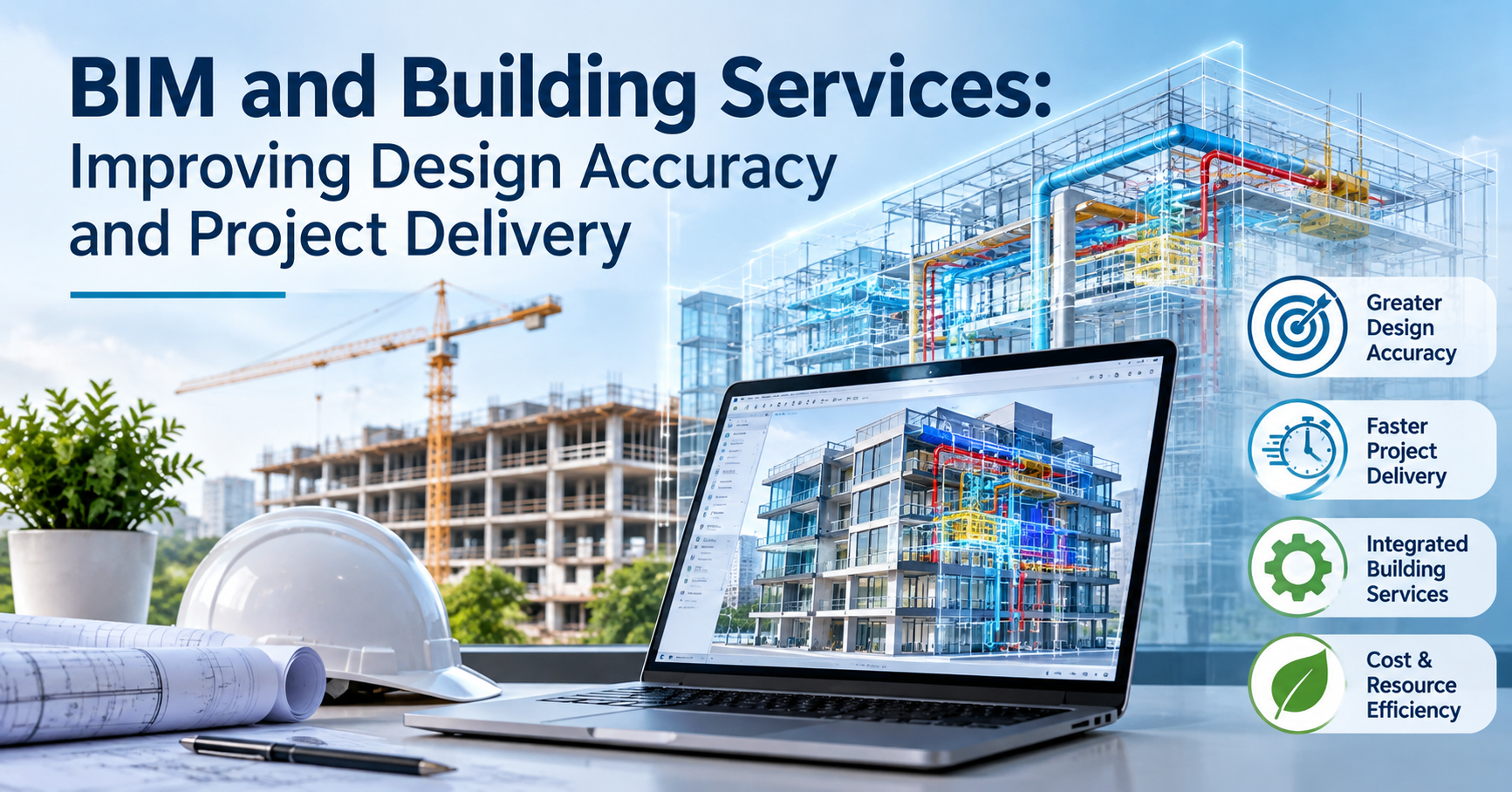

Modern construction projects require accurate planning, efficient coordination, and timely execution. As building designs become more complex, traditional design methods can create challenges such as coordination errors, design conflicts, material wastage, and project delays. Building Information Modelling (BIM) has emerged as an effective solution for addressing these challenges by providing a digital representation of a building's physical and functional characteristics. Many construction organisations collaborate with BIM companies in Chennai to improve design coordination, streamline building services, and achieve better project outcomes. By integrating architectural, structural, and MEP information into a shared digital environment, BIM helps project teams make informed decisions throughout the construction lifecycle.
1. Understanding BIM in Modern Building Services
Building Information Modelling is a digital process that allows construction professionals to create and manage detailed 3D models of buildings. Unlike conventional 2D drawings, BIM models contain information about building components, dimensions, materials, and system specifications.In building services, BIM supports the planning and coordination of mechanical, electrical, and plumbing (MEP) systems. Engineers, architects, and contractors can work with a shared model to understand how different building elements interact before construction begins.
2. Improving Design Accuracy Through Digital Modelling
Design accuracy is essential for avoiding construction errors and unnecessary expenses. BIM provides detailed visual representations of building components, helping engineers identify design inconsistencies at an early stage.
Its benefits include:
-
Accurate measurements and component specifications.
-
Better visualisation of building layouts.
-
Reduced design discrepancies between disciplines.
-
Improved coordination between architectural and engineering teams.
-
More reliable construction documentation.
These capabilities help project teams minimise revisions and maintain consistency throughout the design process.
3. Enhancing MEP Coordination and Clash Detection
Mechanical, electrical, and plumbing systems often occupy the same building spaces. Without proper coordination, conflicts can occur between HVAC ducts, electrical conduits, plumbing pipes, structural beams, and other components.
BIM-based clash detection helps identify these conflicts within the digital model before physical construction starts. Engineers can review potential clashes, adjust component locations, and resolve design issues collaboratively.This approach reduces on-site modifications, prevents avoidable delays, and improves the overall coordination of building services.
4. Supporting Better Project Planning and Execution
BIM improves project delivery by connecting design information with construction schedules and resource planning. With 4D BIM, project teams can integrate time-related information into 3D models to visualise construction sequences.
This helps contractors understand project activities, identify scheduling conflicts, and coordinate different construction stages. BIM also supports quantity take-offs and material estimation, allowing teams to plan procurement more effectively.As a result, project managers can improve resource allocation, monitor progress, and maintain better control over project timelines.
5. Reducing Construction Costs and Material Waste
Errors discovered during construction can increase project costs through rework, material replacement, and labour inefficiencies. BIM helps reduce these risks by providing a coordinated digital environment for reviewing designs before implementation.
Accurate quantity estimation also supports better budgeting and material procurement. Construction teams can identify unnecessary material requirements, minimise wastage, and improve resource utilisation.Additionally, 5D BIM integrates cost-related information with project models, helping stakeholders evaluate financial implications and manage construction budgets more effectively.
6. Improving Collaboration Among Project Stakeholders
Successful building projects depend on effective communication between architects, structural engineers, MEP consultants, contractors, and facility managers.
BIM creates a centralised information environment where stakeholders can access updated project data and coordinate their activities. Changes made to the digital model can be reviewed by relevant teams, reducing communication gaps and inconsistencies between drawings.This collaborative approach improves transparency, supports faster decision-making, and ensures that project stakeholders work towards shared objectives.
7. Supporting Facility Management and Long-Term Performance
The benefits of BIM extend beyond construction completion. Detailed digital models can provide valuable information about equipment specifications, installation details, maintenance requirements, and building systems.
Facility managers can use this information to plan maintenance activities, monitor equipment performance, and manage building operations. Integrating BIM with facility management systems also helps organisations improve operational efficiency and extend the lifespan of building assets.
Conclusion
BIM is transforming building services by improving design accuracy, strengthening MEP coordination, reducing construction errors, and supporting efficient project delivery. Its integration with digital planning, cost estimation, and facility management creates long-term value for construction organisations. Furthermore, sustainable building development requires attention to energy consumption, material efficiency, and environmental performance. Collaborating with ESG consulting firms in India can help organisations establish sustainability goals, assess environmental impacts, and integrate responsible practices into construction projects. Combining BIM capabilities with sustainability strategies supports smarter, more efficient, and environmentally responsible infrastructure development.


