
Budgeting for Heart Care in 2027 – Part D Changes, Deductibles and EECP Therapy Cost
Planning cardiovascular care in 2027 means understanding how prescription drug expenses, Medicare deductibles, and specialized treatment costs fit into your healthcare budget. With changes to Medicare Part D benefits, patients managing chronic heart conditions may need to review their insurance coverage and anticipated out-of-pocket spending. Understanding EECP therapy cost is especially important for individuals considering external counterpulsation as an additional option for chronic angina symptom management. However, Medicare prescription drug limits and outpatient treatment expenses follow different rules, making it essential to budget for them separately.
At CoCardio®, we recognize that financial clarity is an important part of making informed cardiovascular healthcare decisions. Our Encinitas, California, practice provides heart function consultations and circulation-focused services through CoCardio Boost™. As a cash-pay practice, CoCardio® does not bill insurance for consultations, ECP sessions, or preventive cardiovascular wellness services. This guide explains the confirmed 2027 Medicare Part D changes, potential cardiovascular care expenses, and practical steps for planning treatment costs without confusing prescription coverage with procedural benefits.
How Will Medicare Part D Changes Affect EECP Therapy Cost in 2027?
Medicare Part D provides outpatient prescription drug coverage through stand-alone prescription drug plans or Medicare Advantage plans that include drug benefits. The program has undergone significant changes to prescription drug cost sharing, including an annual limit on qualifying out-of-pocket spending. For 2027, the Centers for Medicare & Medicaid Services has confirmed updated deductible and out-of-pocket threshold amounts. These changes may influence medication budgeting, but they do not establish coverage for external counterpulsation or other privately paid cardiovascular services.
What Is the Medicare Part D Out-of-Pocket Cap for 2027?
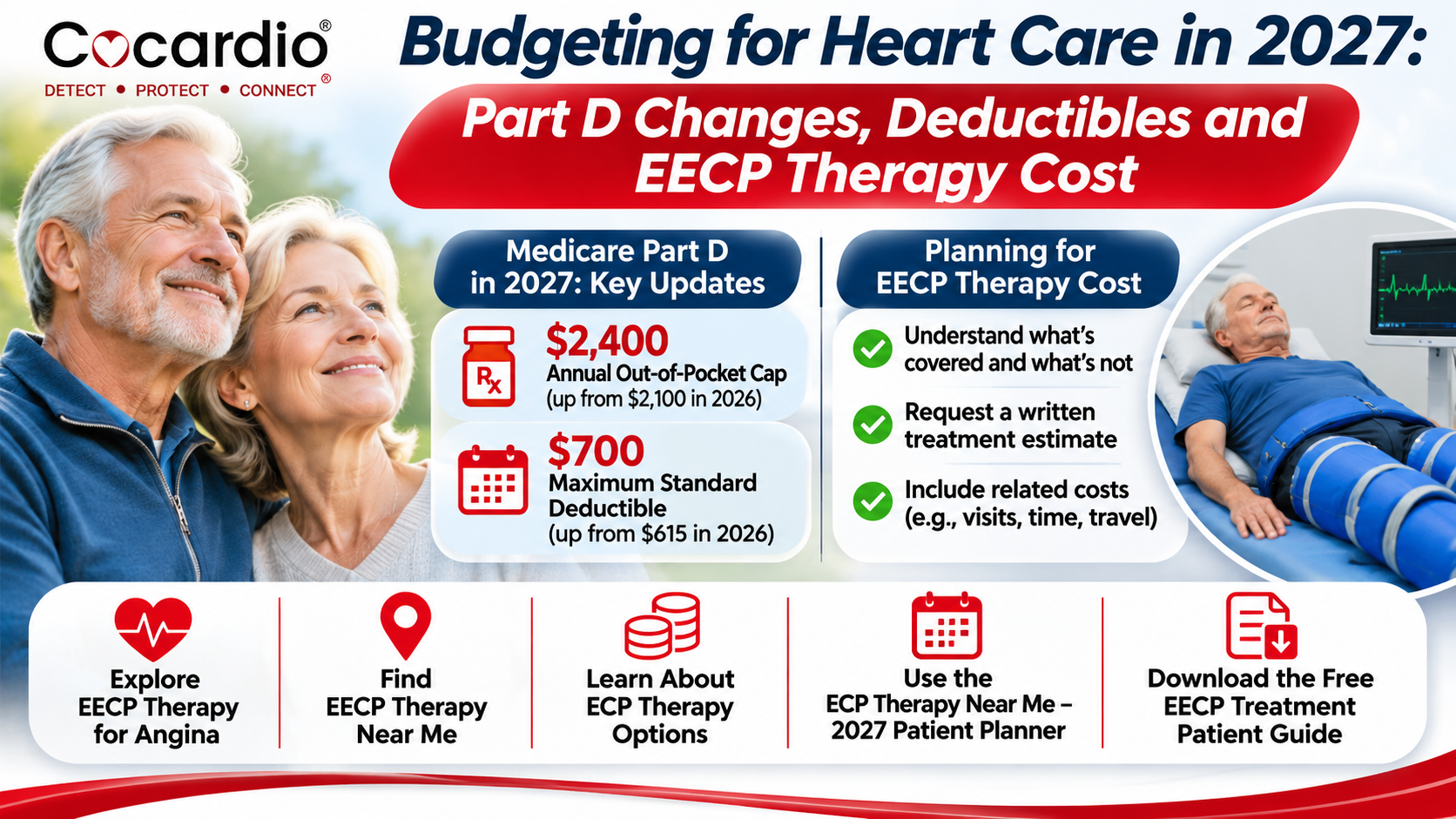
The annual Medicare Part D out-of-pocket threshold increases from $2,100 in 2026 to $2,400 in 2027. This means eligible spending on covered Part D medications is subject to a $2,400 annual limit before the beneficiary enters the catastrophic coverage phase. After reaching this threshold, beneficiaries generally do not pay additional out-of-pocket costs for covered Part D drugs for the remainder of the calendar year. The limit does not apply to every prescription purchase, medical service, or healthcare expense, and the precise amount counted toward the threshold follows Medicare's applicable rules.
What Is the Medicare Part D Deductible for 2027?
The maximum deductible under the defined standard Part D benefit increases from $615 in 2026 to $700 in 2027. However, individual prescription drug plans may charge a lower deductible or offer coverage arrangements that differ from the standard design. Patients should review their plan's Evidence of Coverage and Annual Notice of Change to understand their actual deductible and copayment requirements. The Part D deductible relates to qualifying prescription drug coverage and should not be confused with Medicare Part B deductibles or separate outpatient procedure fees.
How Do These Changes Affect Patients Taking Heart Medication?
People managing coronary artery disease may take several medications for cholesterol, blood pressure, angina symptoms, or other cardiovascular conditions. Individual costs depend on each drug's formulary status, the patient's pharmacy, plan design, and applicable coverage rules. Changes to deductibles and cost-sharing arrangements can affect when patients pay more at the pharmacy, even when their overall annual out-of-pocket spending is capped. Reviewing medication coverage before the new year can help patients anticipate costs and discuss suitable alternatives with their prescribing clinicians when necessary.
Why Part D Does Not Automatically Cover External Counterpulsation
A common budgeting mistake is assuming that Medicare's prescription drug spending limit applies to cardiovascular treatments performed in outpatient clinics. Part D primarily addresses covered outpatient prescription medications, while medically necessary procedures generally fall under different insurance benefits. External counterpulsation may qualify for Medicare coverage under specific clinical circumstances, but that coverage does not arise from the Part D program. Patients should examine medical benefits and prescription drug benefits separately when planning cardiovascular care.
What Does Medicare Cover for EECP?
Medicare National Coverage Determination 20.20 provides coverage for external counterpulsation in patients meeting specific criteria for disabling angina. Covered patients generally have Class III or Class IV angina and are considered unsuitable for certain coronary interventions by a cardiologist or cardiothoracic surgeon because of qualifying clinical circumstances. Coverage does not automatically extend to preventive wellness programs, mild chest discomfort, or every patient with coronary artery disease. A qualified healthcare professional should establish medical eligibility, and patients should confirm applicable coverage requirements with Medicare or their insurer.
What About Medicare Advantage Plans?
Medicare Advantage plans provide Medicare-covered medical benefits through private insurers, often with network rules and other plan-specific requirements. Patients may need to confirm provider participation, referral policies, prior authorization procedures, and applicable cost sharing before receiving outpatient treatment. A service that qualifies for coverage under Medicare's national policy may still require documentation and authorization under a particular plan. Patients should request written benefit information rather than assuming coverage based on a provider's description of the procedure.
Building a Complete Heart Care Budget for 2027
A useful cardiovascular budget should account for recurring medical expenses, possible unexpected needs, and services that insurance may not cover. Medication costs are only one part of the overall financial picture for someone managing a chronic heart condition. Cardiologist visits, diagnostic testing, rehabilitation, transportation, and additional treatments may create separate expenses. Organizing these categories helps patients identify which costs are predictable and which require further confirmation.
1. Prescription Medications and Pharmacy Expenses
Start by creating a complete list of medications used for cardiovascular and other chronic conditions. Record prescription names, dosages, refill frequency, and estimated monthly out-of-pocket expenses based on your 2027 plan. Review whether your preferred pharmacy is included in the plan's network and whether any medications are subject to prior authorization or formulary restrictions. Patients should consult their healthcare professionals before considering medication substitutions or changes based on cost.
2. Cardiologist Visits and Diagnostic Testing
Regular cardiovascular follow-up may involve office consultations, blood tests, echocardiograms, stress tests, or other investigations when clinically appropriate. The financial responsibility for these services depends on medical necessity, insurance coverage, provider participation, and applicable deductibles or coinsurance. Patients should ask which tests are recommended and whether the results would influence medical decisions. A clear estimate of expected costs can help distinguish necessary care from optional services.
3. Rehabilitation and Additional Cardiovascular Services
Some individuals with cardiovascular disease may qualify for structured cardiac rehabilitation or other medically indicated outpatient services. These programs have different clinical goals, eligibility rules, and insurance arrangements from privately offered circulation-focused wellness services. Patients should confirm whether a recommended program is covered and what expenses remain their responsibility. Comparing services requires attention to medical purpose and supporting evidence, not simply the amount charged.
4. Transportation and Time Away From Work
Repeated outpatient appointments can generate additional costs beyond the treatment fees themselves. Patients may need to consider transportation, parking, missed work hours, or assistance from family members. These practical expenses can become significant when a treatment program involves visits over several weeks. Including them in the budget provides a more complete picture of the financial commitment.
Understanding the Financial Commitment of an EECP Treatment Course
A conventional eecp treatment course often consists of approximately 35 one-hour sessions delivered over seven weeks. However, the exact schedule and recommended services depend on the provider's protocol and the patient's clinical circumstances. Patients should ask whether the proposed program includes preliminary assessments, scheduled sessions, monitoring, and follow-up consultations. A written estimate can help clarify what is included before any financial commitment is made.
What Determines Total Treatment Expenses?
Treatment expenses can depend on consultation requirements, the number of sessions, the provider's payment policies, and services included in the proposed plan. Some facilities may bill eligible medical procedures to insurance, while others use direct-payment arrangements. Patients comparing EECP therapy cost should verify these differences rather than relying on generalized prices found online. The lowest quoted price does not necessarily represent the same level of screening, supervision, or treatment services.
Why a Written Estimate Matters
A written estimate helps patients distinguish initial consultation charges from subsequent treatment fees. It should clarify payment schedules, cancellation terms, additional assessment costs, and any relevant refund or rescheduling policies. Patients should also ask how charges are handled if treatment must be paused or discontinued for medical reasons. Understanding these details before starting can reduce the likelihood of unexpected financial difficulties.
CoCardio® Cash-Pay Services and Insurance Considerations
CoCardio® provides heart function consultations and circulation-focused services through its CoCardio Boost™ program in Encinitas, California. The practice does not bill Medicare, Medicare Advantage, or private insurance for consultations, ECP sessions, or preventive cardiovascular wellness services. Patients should therefore plan for direct payment and should not assume that their insurer will reimburse the expenses. The consultation process can help clarify available services, practical scheduling considerations, and financial arrangements.
Can HSA or FSA Funds Be Used?
Certain healthcare expenses may qualify for payment through a Health Savings Account or Flexible Spending Account. However, eligibility depends on applicable tax requirements, the nature of the service, and the individual's plan rules. Patients should contact their account administrator before assuming that a cardiovascular wellness expense qualifies for reimbursement. CoCardio® cannot guarantee that every service will be accepted as an eligible HSA or FSA expense.
Is Treatment Cost the Same at Every Center?
No, providers may offer different consultation services, treatment schedules, monitoring procedures, and payment arrangements. Some facilities focus on insurance-billed clinical treatment for qualifying medical conditions, while others provide privately paid complementary services. Patients should understand the services included in each estimate before comparing prices. Transparent financial policies are particularly important when choosing a program that requires multiple outpatient appointments.
How to Compare Cardiovascular Treatment Options
Financial considerations should support medical decision-making rather than determine treatment selection independently. Patients experiencing persistent angina should first receive appropriate evaluation and guidance from a qualified cardiologist. In selected circumstances, eecp therapy for angina may be considered for symptom relief when suitable conventional treatment options are unavailable. However, the procedure has not been established as a method of reversing coronary disease, preventing heart attacks, or improving survival.
Why Clinical Eligibility Comes Before Financial Planning
Before paying for additional cardiovascular services, patients should understand the purpose of the proposed treatment and whether it is suitable for their condition. A clinician should review relevant symptoms, cardiovascular findings, medical history, and potential contraindications. Patients should be cautious about promises of guaranteed improvement or claims that a treatment will eliminate the need for prescribed medications. The appropriate treatment plan should reflect evidence-based care and individualized medical assessment.
Understanding ECP and EECP Terminology
Patients may encounter different terminology when comparing providers and researching ecp therapy. External Counterpulsation and Enhanced External Counterpulsation are closely related terms frequently used when discussing synchronized lower-body compression procedures. However, terminology alone does not establish that providers use identical equipment, clinical protocols, or payment arrangements. Patients should confirm exactly what service they are considering and whether it matches their medical needs.
Finding EECP Services Near You in 2027
Searching for EECP therapy near me can help patients identify providers and compare available outpatient services. However, location alone does not establish that a center offers clinically appropriate care or suitable medical supervision. Patients should review provider qualifications, screening procedures, equipment maintenance, scheduling requirements, and payment policies. A consultation should explain both the potential benefits and limitations of the services being considered.
Questions to Ask Before Selecting a Provider
Patients searching for ECP therapy near me should clarify whether the center offers medically indicated treatment, complementary wellness services, or both. Ask who assesses clinical eligibility, supervises sessions, and coordinates with the patient's existing cardiologist. Financial questions should include the complete program estimate, payment arrangements, and any expenses excluded from the quoted amount. Taking these steps can help patients make informed decisions without relying solely on promotional claims.
Use the 2027 Patient Planner to Organize Your Budget
A written healthcare budget can help patients manage anticipated expenses and prepare for changes in coverage. The ECP Therapy Near Me – 2027 Patient Planner can serve as a framework for tracking treatment questions, financial estimates, medication expenses, and upcoming appointments. Patients should distinguish insurance-covered prescriptions from separately billed medical procedures and privately paid wellness services. Maintaining this information in one place can make conversations with healthcare professionals and insurance representatives more productive.
What Should Your Patient Budget Include?
Your budget should identify monthly prescription costs, insurance premiums, applicable deductibles, and anticipated medical appointments. It should also include any additional treatment estimates, travel expenses, and potential time away from work. Patients should review their financial plan when insurance benefits or healthcare recommendations change. A budget does not determine medical necessity, but it can help patients prepare for expenses associated with recommended care.
Download the Free EECP Treatment Patient Guide
Understanding treatment expectations is an important part of evaluating both the clinical and financial commitments of a counterpulsation program. Patients should learn how sessions are conducted, what physical sensations may occur, and which side effects require attention. Treatment planning should also include medical screening, appointment schedules, and follow-up arrangements. A structured patient guide can help organize these questions before a consultation.
Prepare for Your Treatment Consultation
Download the Free EECP Treatment Patient Guide to review the typical procedure, session schedule, screening considerations, and treatment expectations. The resource can help patients prepare questions about monitoring, safety, daily activities, and payment responsibilities. Patients should bring relevant cardiovascular records, a medication list, and information about their existing medical care to their consultation. The guide is educational and does not replace individualized recommendations from a licensed healthcare professional.
Important Medicare Enrollment Dates for 2027
The Medicare Annual Enrollment Period runs from October 15 through December 7, 2026, for coverage beginning January 1, 2027. During this period, eligible beneficiaries can review available Medicare Advantage and prescription drug plans. Comparing formularies, provider networks, annual spending limits, and expected prescription costs can help identify meaningful differences. Patients should use official Medicare resources or qualified insurance counseling services when reviewing their coverage options.
Consider the Medicare Prescription Payment Plan
The Medicare Prescription Payment Plan allows participating Part D beneficiaries to spread eligible out-of-pocket prescription drug costs across monthly payments. This arrangement can make pharmacy expenses easier to manage when substantial charges occur early in the year. However, it does not reduce the total amount owed for covered medications or expand coverage to unrelated medical services. Patients should review the program's payment arrangements and determine whether participation would benefit their household budget.
Frequently Asked Questions About Heart Care Costs in 2027
Does the $2,400 Part D Cap Include EECP Sessions?
No, the 2027 Medicare Part D out-of-pocket threshold applies to qualifying spending on covered prescription medications. It does not establish a general $2,400 spending limit for medical procedures, physician visits, or privately paid treatment programs. Separate medical insurance rules govern outpatient services that may qualify for Medicare coverage. Patients should confirm their applicable benefits before relying on an expected reimbursement amount.
Will Every Medicare Part D Plan Have a $700 Deductible?
No, $700 is the maximum deductible under the defined standard Part D benefit for 2027. Individual plans may offer lower deductibles or different cost-sharing structures, subject to Medicare requirements. Patients may also qualify for assistance programs that change their financial responsibilities. Reviewing the specific plan's coverage documents is necessary to determine the actual amount payable.
Does CoCardio® Bill Medicare for Counterpulsation Sessions?
CoCardio® is a cash-pay practice and does not bill Medicare or other insurers for consultations, ECP sessions, or preventive cardiovascular wellness services. This policy is separate from Medicare's national coverage rules for eligible patients receiving medically indicated treatment from participating providers. Patients should request an estimate directly from CoCardio® before scheduling services. They should also avoid assuming that a Medicare benefit available elsewhere applies to privately paid services at the practice.
Can I Reduce Heart Care Expenses by Choosing a Different Provider?
Healthcare expenses may differ depending on insurance participation, provider fees, and the services included in a treatment program. However, choosing a provider solely because of a lower advertised price can overlook important medical considerations. Patients should assess qualifications, treatment eligibility, safety procedures, and coordination with existing cardiovascular care. Appropriate clinical evaluation should remain the priority when comparing treatment options.
Conclusion
Budgeting for cardiovascular care in 2027 requires understanding both changes to Medicare prescription drug benefits and the separate financial responsibilities associated with outpatient treatment. The $2,400 Part D out-of-pocket threshold and $700 maximum standard deductible are important planning figures, but they do not apply universally to every healthcare expense. Patients evaluating EECP therapy cost should obtain written estimates, confirm insurance arrangements, and discuss medical eligibility with qualified healthcare professionals. Separating prescription expenses, covered medical services, and privately paid wellness programs can help patients make informed decisions without unexpected financial assumptions.
At CoCardio®, we provide heart function consultations and circulation-focused services in Encinitas, California, through our cash-pay CoCardio Boost™ program. Our team can provide information about consultation availability, available services, and payment arrangements for patients exploring complementary cardiovascular wellness options. Individuals with chronic angina or other diagnosed cardiovascular conditions should continue following their cardiologist's recommendations and prescribed treatment plans. To request consultation information, visit CoCardio® Contact Us or call (858) 500-1399.
Medical Disclaimer
This article is intended for general educational and informational purposes only and does not constitute medical, financial, legal, or insurance advice. CoCardio® provides complementary cardiovascular wellness and circulation-focused services that do not replace conventional medical care, prescribed medications, emergency evaluation, or treatment recommended by a licensed physician or cardiologist. Medicare coverage, prescription drug expenses, medical eligibility, and treatment outcomes depend on individual circumstances, applicable policies, and professional assessment. Patients should consult qualified healthcare and insurance professionals before making treatment or coverage decisions and call 911 immediately for new, severe, prolonged, or worsening chest pain or other symptoms suggesting a heart attack.