
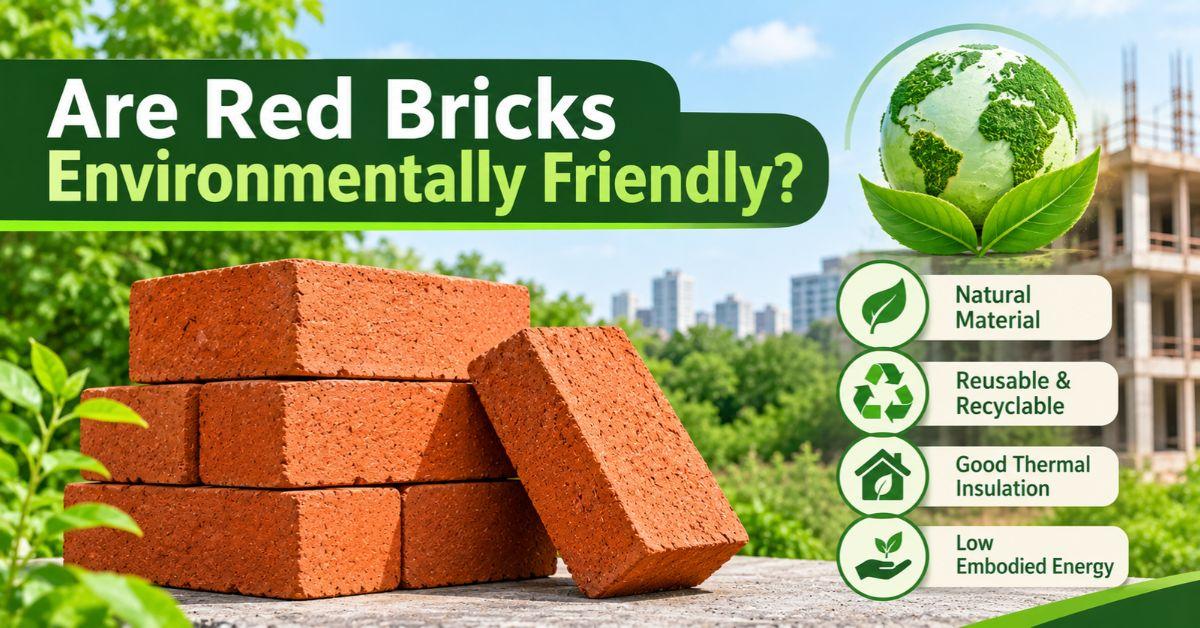

Red bricks have been used in construction for generations because of their strength, durability, and natural appearance. However, modern construction practices increasingly focus on reducing environmental impact and choosing materials that support sustainable building methods. When comparing materials from Brick Suppliers in Chennai, homeowners and builders should consider more than just price and appearance. Factors such as raw material sourcing, manufacturing processes, energy consumption, transportation, and product lifespan all influence how environmentally friendly a brick can be. Understanding these aspects helps buyers make informed decisions when selecting materials for residential and commercial construction.
1. Understanding How Red Bricks Are Made
Red bricks are traditionally manufactured using natural clay, which is shaped into rectangular blocks and dried before being fired in a kiln. The reddish colour develops during the firing process due to the presence of iron compounds in the clay. Although the basic manufacturing method has remained similar over time, modern production facilities may use improved equipment and techniques to maintain product consistency.
The manufacturing process generally involves clay extraction, preparation, moulding, drying, and firing. Each stage requires resources and energy. Clay extraction can affect the surrounding land if it is not managed responsibly, while kiln operations require fuel to generate the heat needed for firing. Therefore, the environmental impact of red bricks depends considerably on how manufacturers source materials and manage their production activities.
2. Are Red Bricks Made from Sustainable Materials?
One advantage of traditional red bricks is that their primary raw material, clay, occurs naturally. Unlike certain synthetic construction products, clay does not require complicated chemical manufacturing processes to become a basic building material. This makes red bricks a familiar option for builders looking for materials derived from natural resources.
However, natural availability does not automatically make a material environmentally sustainable. Excessive clay extraction can contribute to soil degradation, changes in land use, and damage to local ecosystems. Responsible sourcing is therefore important when evaluating the environmental suitability of red bricks.
Manufacturers can improve sustainability by managing clay extraction carefully, reducing unnecessary material waste, and using suitable production practices. Reusing suitable waste materials and restoring extraction sites can also help reduce the environmental burden associated with brick manufacturing.
3. Energy Consumption During Brick Manufacturing
The firing stage is one of the most important factors influencing the environmental footprint of traditional red bricks. Kilns require high temperatures to transform shaped clay into strong, durable building materials. Depending on the kiln design and fuel used, this process can consume considerable amounts of energy.
Traditional brick kilns may use coal, wood, or other fuels, which can release carbon dioxide and other pollutants into the atmosphere. Poorly managed production facilities may also contribute to smoke, dust, and particulate emissions that affect surrounding communities.
Modern kiln technologies can help reduce fuel consumption and improve heat efficiency. Better insulation, controlled firing temperatures, and improved production methods can make the manufacturing process more resource-efficient. Buyers who consider manufacturing practices alongside product quality can make more responsible material choices.
4. Durability and Long-Term Environmental Benefits
The lifespan of a construction material is another important factor when assessing its environmental impact. Red bricks are known for their durability and ability to withstand regular weather conditions when properly manufactured and installed. Their strength can support long-lasting walls and structures with relatively low maintenance requirements.
Long-lasting materials may reduce the need for frequent repairs, replacements, and additional construction resources. This can help limit material consumption over the lifetime of a building.
Red bricks can also be reused in certain renovation and demolition projects, provided they remain in suitable condition. Reclaimed bricks may find applications in garden pathways, boundary walls, landscaping, and other construction work. Reusing existing materials helps reduce construction waste and the demand for newly manufactured products.
5. Can Red Bricks Help Improve Indoor Comfort?
Building materials can influence indoor temperature and overall living comfort. Red bricks have thermal mass, which allows them to absorb and gradually release heat. This characteristic can help moderate temperature changes inside buildings, depending on wall thickness, ventilation, insulation, and local climate conditions.
In warm regions, including Chennai, proper building orientation and suitable wall design are important for managing indoor heat. Red brick walls, when combined with appropriate ventilation and shading, can contribute to comfortable indoor spaces.
However, bricks alone cannot guarantee energy-efficient buildings. Roof insulation, window placement, ventilation systems, and external shading also play important roles. Considering the complete building design helps homeowners achieve better thermal performance and potentially reduce dependence on mechanical cooling.
6. Red Bricks Compared with Other Construction Materials
Red bricks are not the only option available for modern construction. Fly ash bricks, concrete blocks, and other manufactured masonry products provide alternatives with different environmental characteristics.
Fly ash bricks can incorporate industrial by-products, helping utilise certain waste materials that might otherwise require disposal. Concrete blocks may offer advantages in construction speed and material requirements, depending on their design and application.
However, each material has its own manufacturing footprint, resource requirements, and performance characteristics. Comparing products based only on their appearance or initial purchase price may not provide a complete picture.
Builders should consider embodied energy, transportation distance, durability, waste generation, and suitability for the intended structure. A material that performs well in one project may not necessarily be the most sustainable choice for another.
7. How to Choose Environmentally Responsible Bricks
Making a responsible brick selection involves looking beyond basic product specifications. Buyers should understand how materials are manufactured, where they are sourced, and whether the products meet relevant quality requirements.
Some useful considerations include:
-
Manufacturing methods: Understand whether the production process uses energy-efficient equipment and controlled firing techniques.
-
Material sourcing: Check whether clay extraction and raw material procurement follow responsible practices.
-
Product durability: Select bricks with suitable strength, dimensions, and quality for the intended application.
-
Transportation: Consider suppliers located closer to the construction site to reduce unnecessary transportation distances.
-
Waste management: Look for manufacturers that minimise production waste and follow responsible disposal practices.
These factors help builders evaluate the overall environmental impact of their material choices rather than focusing on a single characteristic.
Conclusion
Red bricks can be an environmentally responsible construction option when they are produced using well-managed resources, efficient manufacturing methods, and appropriate quality standards. Their natural composition, durability, thermal properties, and potential for reuse offer several practical advantages. However, clay extraction and kiln emissions remain important environmental concerns that should not be overlooked. Sustainable construction ultimately depends on selecting suitable materials and using them efficiently throughout a building's lifespan. For projects requiring consistent dimensions and a refined finish, comparing Wire Cut Bricks in Chennai can also help builders identify suitable products based on quality, manufacturing practices, and construction requirements.


