
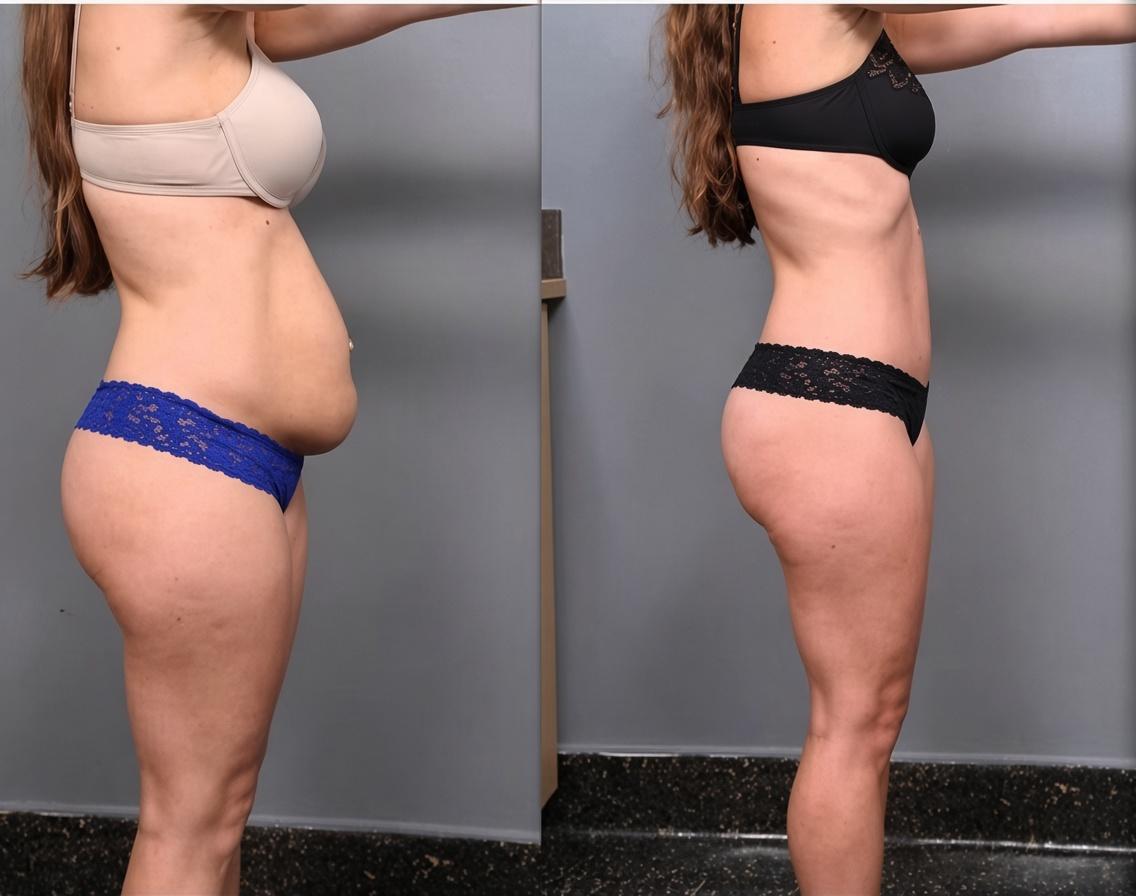
How Do Surgeons Map the Body Before Beginning Liposuction?

Have you ever wondered how a surgeon decides exactly where fat should be removed during liposuction? Creating a balanced body shape involves much more than identifying areas that look fuller. Two people with similar body weights may have completely different fat distributions, skin quality, and natural body proportions. Before performing Liposuction In Islamabad, surgeons carefully assess and map the body to identify treatment areas, preserve important anatomical structures, and plan a balanced contour.
Body mapping is an important part of preoperative planning. It helps the surgeon understand where fat is concentrated, how different areas connect, and which regions should retain their natural volume. The purpose is not simply to remove fat but to create smoother transitions and proportions that suit the patient's anatomy.
Why Is Body Mapping Important Before Liposuction?
Fat is not distributed evenly throughout the body. Some people carry more volume around their lower abdomen, while others have prominent deposits around the waist, flanks, thighs, arms, or back.
Removing fat without considering these differences can produce an uneven appearance. For example, reducing the waist without evaluating the surrounding abdomen and flanks may create an unnatural transition between treated and untreated areas.
Body mapping allows surgeons to plan the procedure as a complete contouring process rather than treating individual fat pockets independently.
Good surgical planning considers the relationship between every selected treatment area.
How Do Surgeons Assess Your Body Before Marking It?
The process begins with a physical examination and discussion of the patient's expectations. The surgeon evaluates body composition, fat distribution, skin elasticity, muscle definition, and any existing asymmetry.
The assessment usually includes examining the body from the front, back, and sides. This helps reveal differences that might not be obvious when looking at the abdomen or another treatment area from a single angle.
The surgeon may also perform a pinch assessment to estimate the thickness of the subcutaneous fat layer. This helps distinguish removable fat beneath the skin from deeper abdominal fullness that liposuction cannot directly address.
Previous operations, medical conditions, weight fluctuations, and medications are also reviewed before finalising the treatment plan.
The initial assessment determines whether liposuction alone can realistically achieve the desired improvement.
How Do Surgeons Map Different Body Areas?
Before surgery, the treatment areas are usually marked directly on the skin while the patient is standing upright. This position allows the surgeon to assess how gravity affects fat distribution, loose tissue, and natural body contours.
During consultation and surgical marking for Liposuction In Islamabad, several anatomical features may be identified:
-
Abdominal area: The surgeon marks localised fat deposits across the upper and lower abdomen while assessing the natural abdominal contour.
-
Waist and flanks: Areas around the sides of the waist are evaluated to plan a smoother transition between the abdomen and hips.
-
Back: Fat deposits around the upper and lower back are assessed from posterior and side views.
-
Thighs: Inner and outer thigh fullness is evaluated while considering leg proportions and natural tissue contours.
-
Upper arms: The surgeon identifies excess fat while examining skin firmness and the relationship between the upper arms and shoulders.
-
Chin and neck: Localised fullness is assessed in relation to the jawline and surrounding facial structures.
Each region requires its own assessment because fat thickness, skin quality, and anatomical structures vary across the body.
Why Do Surgeons Mark the Body While You Are Standing?
Gravity changes how soft tissue sits against the body. Fat deposits and loose skin may shift when a person moves from a standing position to lying down.
Marking the body while standing helps the surgeon identify the natural location of fullness and observe asymmetry more accurately. It also makes it easier to discuss the intended contour with the patient before surgery.
Some surgeons use multiple positions and may ask patients to look at the marked areas in a mirror. This provides an opportunity to confirm which concerns are being addressed and which natural features should be preserved.
Standing markings provide a more realistic picture of how the treated areas appear during everyday posture.
How Do Surgeons Identify Areas That Should Be Preserved?
Effective liposuction planning is not only about identifying where fat should be removed. Surgeons must also recognise areas where tissue volume is important for maintaining smooth contours and natural body proportions.
Certain anatomical regions have important blood vessels, nerves, and connective tissue structures that require careful protection. Some areas also have naturally thin fat layers or strong tissue attachments where aggressive removal could produce visible depressions.
For example, excessive fat removal around the waist or thighs may create irregular transitions rather than a balanced appearance.
Knowing where not to remove fat is just as important as identifying where treatment is needed.
Does Skin Elasticity Influence Body Mapping?
Yes. Skin elasticity is one of the factors assessed before deciding how much fat can safely be removed.
After liposuction, the skin needs to adapt to the reduced volume underneath. Patients with good elasticity generally have a better chance of achieving smoother contours, whereas significant loose skin may remain or become more noticeable after fat removal.
The surgeon may therefore identify areas where skin laxity limits the expected improvement. In selected cases, a tummy tuck or another skin-removal procedure may be more suitable than liposuction alone.
Body mapping helps identify whether the main concern involves excess fat, loose skin, or both.
How Do Surgeons Plan for Natural Body Symmetry?
Human bodies are naturally asymmetrical. One side of the waist may carry slightly more fat, one thigh may have a different contour, or the underlying muscle structure may vary between the left and right sides.
These differences are documented during preoperative assessment. The surgeon may plan different levels of fat reduction on each side rather than removing identical amounts.
The goal is to improve the overall appearance while respecting existing anatomy. Perfect mathematical symmetry is neither realistic nor necessary for a satisfactory contour.
Balanced results depend on proportionate correction, not equal fat removal from every side.
How Does Body Mapping Help Determine the Liposuction Technique?
The planned treatment areas, fat characteristics, and overall surgical goals influence the technique selected. Traditional suction-assisted liposuction, power-assisted liposuction, and energy-assisted methods may be considered depending on individual circumstances and surgeon expertise.
Mapping also helps identify suitable access points for the cannula. These small entry incisions are positioned to allow the surgeon to approach the treatment areas from appropriate directions while considering scar visibility and tissue safety.
The choice of technique should be based on medical suitability rather than the popularity of a particular device.
Advanced equipment cannot replace careful anatomical assessment and surgical experience.
What Happens to the Body Markings on the Day of Surgery?
Preoperative markings are generally reviewed shortly before the procedure. The surgeon confirms the treatment areas, anatomical landmarks, existing asymmetries, and planned access points.
The markings act as a guide during surgery, although tissue position can change when the patient is lying down and under anaesthesia. The surgeon therefore uses anatomical knowledge and intraoperative assessment rather than relying on skin markings alone.
Standardised photographs may also be used to document the original body contours and support treatment planning.
Final markings help translate the surgical plan into a practical approach while allowing appropriate adjustments when necessary.
Can Body Mapping Improve Liposuction Results?
Careful mapping can help surgeons plan more accurately and reduce the likelihood of overlooking important contour differences. It also encourages better communication between the surgeon and patient before surgery.
However, body mapping cannot guarantee perfectly smooth skin or eliminate every possible complication. Swelling, healing, skin elasticity, individual anatomy, and postoperative weight changes all influence the final outcome.
Patients should understand that the final contour develops gradually over several months as swelling settles.
Accurate planning improves the foundation of treatment, but realistic expectations remain essential.
What Should You Discuss During Your Liposuction Consultation?
Before proceeding, explain which areas concern you most and what kind of body shape you hope to achieve. Ask the surgeon how the proposed treatment areas will relate to one another and whether skin laxity could limit the results.
You should also discuss your medical history, previous surgeries, anaesthesia arrangements, recovery requirements, and potential complications. If more than one area is being treated, ask whether combining them is appropriate for your health and the planned surgical duration.
For individuals considering Liposuction In Islamabad, the consultation should include a clear explanation of the body mapping process and the realistic limits of fat removal.
An informed patient and a carefully prepared surgical plan are important parts of responsible body contouring.
Final Thoughts
Body mapping allows surgeons to understand fat distribution, identify natural asymmetries, assess skin elasticity, and plan appropriate treatment areas before liposuction. By considering the body from multiple angles and preserving important anatomical structures, surgeons can develop a more personalised approach to body contouring. The objective is to achieve balanced improvement without unnecessary fat removal or unnatural-looking transitions.
For individuals considering Liposuction In Islamabad, Plastic Surgery Clinic offers personalised body-contouring consultations, experienced board-certified surgeons, and advanced liposuction techniques. Its team can evaluate individual fat distribution, assess natural body proportions, and develop a surgical plan tailored to specific contouring goals.