
Does Equipment Affordability Limit Agricultural Mechanisation Among Smaller Farms?

Agricultural production is becoming increasingly dependent on equipment that can improve operational efficiency, support timely fieldwork, and reduce the physical demands of farming. From soil preparation and planting to crop protection, harvesting, and post-harvest handling, machinery plays a central role in determining how effectively agricultural activities are completed. Changing labour availability, pressure to optimise input use, and the need for more resilient food production systems are strengthening the importance of mechanisation across different farming environments.
According to a Vyansa Intelligence report, the global Agricultural Machinery Market was valued at USD 1.9 Billion in 2025 and is projected to reach USD 2.85 Billion by 2032, registering a CAGR of 6.05% during 2026-2032. This expansion reflects the increasing requirement for equipment that supports productivity, improves operational consistency, and enables farmers to manage larger or more complex agricultural activities. Demand is also influenced by farm size, crop type, mechanisation levels, equipment affordability, and the availability of technical support.
Mechanisation Is Becoming a Core Agricultural Requirement
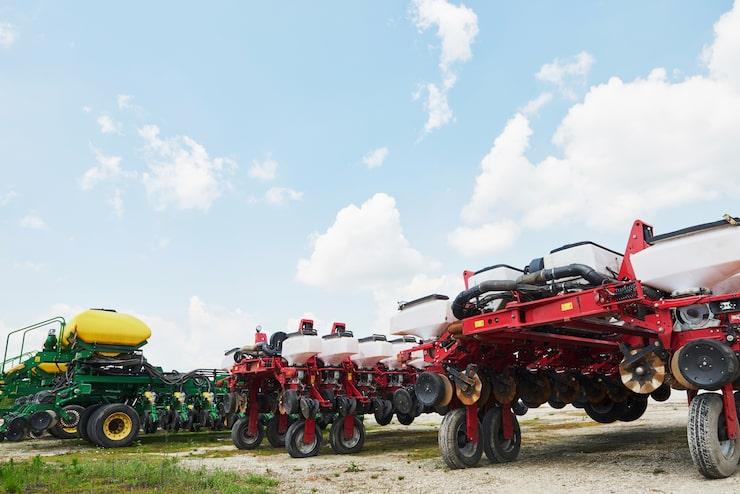
Agricultural machinery supports multiple stages of crop production. Tractors and tillers facilitate land preparation, seeders and planters improve planting operations, sprayers support crop protection, and harvesting equipment helps reduce dependence on manual collection. Irrigation machinery and post-harvest equipment further contribute to more coordinated production processes.
The relevance of these equipment categories differs across agricultural systems. Large commercial farms often require high-capacity machinery that can cover extensive cultivation areas within limited operating windows. Smaller farms typically prioritise compact, versatile, and affordable equipment suited to fragmented landholdings. This creates demand for machinery across different power capacities, configurations, and levels of automation.
The Food and Agriculture Organization (FAO) identifies sustainable mechanisation as more than the introduction of motorised equipment. It also involves technologies and innovations that improve productivity while considering environmental and social impacts. This broader perspective is important because equipment selection increasingly needs to balance operational performance with resource efficiency.
Labour Availability and Farm Efficiency Influence Purchasing Decisions
Labour constraints are an important consideration in agricultural equipment investment. Farming operations often depend on completing activities within specific seasonal windows. Delays in land preparation, planting, spraying, or harvesting can affect production schedules and the efficient use of agricultural resources. Machinery helps farmers complete these activities with greater speed and consistency.
Equipment adoption is also connected to the changing economics of farm operations. Producers assess machinery purchases according to expected utilisation, maintenance requirements, fuel or energy consumption, financing availability, and the cost of hiring equipment services. For farms with limited capital, machinery rental and contractor-based services can provide access without requiring full ownership.
In this report, the distinction between equipment ownership and equipment access is important. Shared machinery models, cooperatives, and custom-hiring services can extend mechanisation to farms that may not be able to justify individual purchases. These arrangements can also improve equipment utilisation by allowing service providers to deploy machinery across multiple agricultural operations.
Digital Technologies Are Expanding Machinery Capabilities
Agricultural machinery is increasingly being integrated with digital technologies that improve operational monitoring and precision. GPS guidance, sensors, automated controls, and data-enabled systems can help operators manage field activities with greater accuracy. These capabilities support more targeted planting, irrigation, fertiliser application, and crop protection.
Precision-enabled machinery can also help reduce unnecessary input use by improving the coordination of agricultural activities. Connected equipment may provide information about machine performance, operating conditions, and maintenance requirements. Such capabilities can support more informed decisions while reducing the likelihood of unexpected equipment downtime.
Latest market analysis indicates that the transition towards digital agriculture is creating opportunities for manufacturers to combine conventional machinery with automation and connectivity features. However, adoption depends on practical considerations such as equipment cost, digital infrastructure, operator skills, and access to maintenance services. Advanced technologies must deliver measurable operational value to justify their integration into farm equipment.
Sustainability Is Influencing Equipment Development
Environmental considerations are becoming more relevant to machinery design and purchasing decisions. Agricultural producers face pressure to improve fuel efficiency, manage water resources, reduce input wastage, and limit avoidable soil disturbance. Equipment manufacturers are responding through developments in precision application, improved engine performance, alternative power technologies, and machinery configurations designed for specific field conditions.
Industry analysis also highlights the importance of matching equipment capabilities with sustainable farming practices. For example, precision application systems can support more controlled distribution of agricultural inputs, while suitable tillage equipment can help farmers adapt field preparation methods to soil conditions. The benefits depend on correct equipment selection, operating practices, and maintenance.
The FAO's research on agricultural automation explains how mechanisation and digital technologies can improve the timeliness and precision of agricultural operations. It also recognises that automation can support more efficient resource use, although adoption remains influenced by investment requirements and access to appropriate technologies.
Opportunities and Challenges for Machinery Manufacturers
Equipment manufacturers have opportunities to serve different farm categories through product diversification. Compact tractors, specialised harvesters, precision sprayers, irrigation equipment, and multipurpose implements can address distinct operational requirements. Manufacturers can also strengthen customer access through dealer networks, financing partnerships, operator training, and dependable after-sales services.
However, equipment affordability remains a significant adoption consideration, particularly among smaller farms. High initial investment, repair costs, spare-parts availability, and limited access to skilled operators can affect purchasing decisions. Machinery designed for large-scale operations may also be unsuitable for farms with narrow access routes, irregular field layouts, or specialised cultivation practices.
A Market research report perspective must therefore consider the complete machinery adoption ecosystem. Detailed market insights depend not only on equipment innovation but also on financing, distribution, servicing, and the availability of machinery suited to local agricultural conditions.
What Will Define the Next Phase of Agricultural Mechanisation?
The future direction of agricultural machinery demand will be shaped by the interaction of productivity requirements, labour availability, precision technologies, and sustainability priorities. Conventional equipment will continue to support essential field operations, while digital features and automation will expand the capabilities of selected machinery categories.
Manufacturers that combine equipment reliability with adaptable configurations, accessible servicing, and practical technology integration will be positioned to address a broad range of agricultural requirements. At the same time, rental and shared-use models can help extend mechanisation beyond farms with the financial capacity for direct ownership.
The sector's long-term development will depend on making machinery more productive, accessible, and compatible with evolving farming practices. As producers seek greater control over operational efficiency and resource use, agricultural mechanisation will remain a significant component of agricultural modernisation.