

In today's digital world, businesses generate enormous amounts of data every day. From customer preferences and sales reports to financial records and marketing performance, data plays an important role in business decision-making. However, collecting data is not enough; organisations need skilled professionals who can analyse information, identify trends, and convert raw data into meaningful insights. This is where Data Analytics becomes essential.
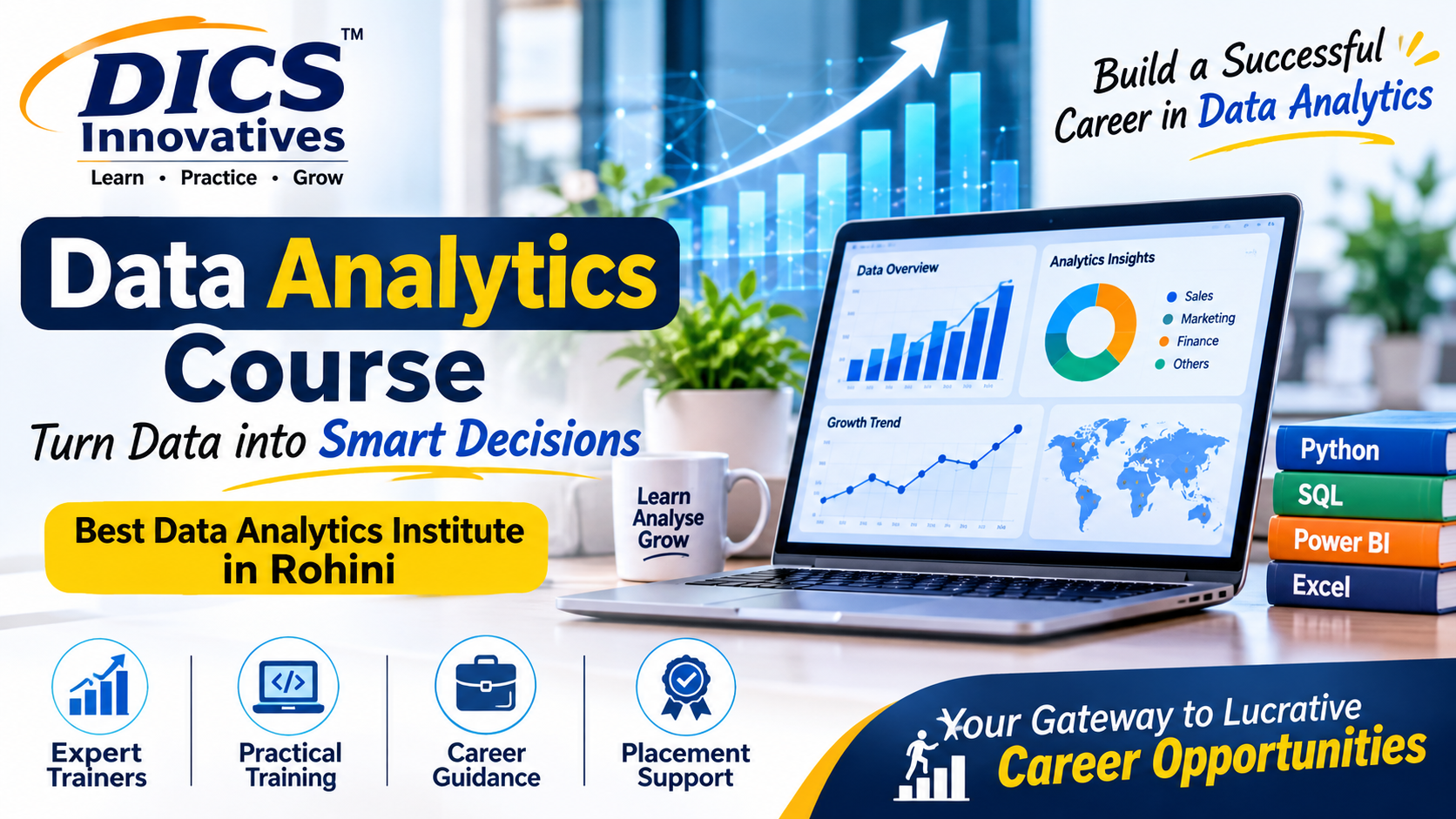
Data Analytics is one of the fastest-growing career fields, offering excellent opportunities for individuals interested in technology, statistics, business intelligence, and problem-solving. If you want to develop professional analytical skills, enrolling in the Best Data Analytics Course in Rohini can be an excellent step towards building a successful career. DICS Innovatives offers career-oriented training designed to help students understand data analysis concepts and gain practical knowledge.
1. What Is Data Analytics?
Data Analytics is the process of collecting, organising, cleaning, processing, and analysing data to discover useful information and support better decision-making. It helps businesses understand their performance, identify opportunities, predict future trends, and solve complex problems.
Data Analytics is widely used across industries, including banking, healthcare, e-commerce, education, finance, retail, and digital marketing. Organisations use analytical tools and techniques to understand customer behaviour, monitor business performance, improve operational efficiency, and make informed decisions.
Some important areas of Data Analytics include:
-
Descriptive Analytics: Understand what happened in the past through reports and dashboards.
-
Diagnostic Analytics: Identify why a particular event or result occurred.
-
Predictive Analytics: Use historical data to estimate future possibilities and trends.
-
Prescriptive Analytics: Recommend suitable actions based on analytical findings.
With the increasing demand for data-driven business strategies, learning Data Analytics can help students develop valuable technical and analytical skills.
2. Why Choose DICS Innovatives?
Choosing the right institute is an important part of developing professional skills. DICS Innovatives focuses on providing quality computer education through structured learning, practical training, and professional guidance.
Here are some reasons to consider DICS Innovatives for Data Analytics training:
Experienced Trainers: Learn essential concepts and analytical techniques with guidance from knowledgeable trainers.
Practical-Based Learning: Work on practical exercises, datasets, assignments, and analytical tasks to understand how data is used in real business situations.
Industry-Oriented Curriculum: Develop knowledge of important tools and technologies used in modern data analysis.
Beginner-Friendly Training: Students with basic computer knowledge can start learning Data Analytics and gradually progress towards advanced concepts.
Personalised Doubt Support: Get assistance in understanding difficult topics, solving technical problems, and improving analytical abilities.
Career Development Guidance: Receive guidance to understand industry requirements, prepare for interviews, and improve professional confidence.
For learners searching for the Best Data Analytics Institute in Rohini, DICS Innovatives provides a learning-focused environment where students can strengthen their technical knowledge and develop practical analytical skills.
3. What Will You Learn in the Data Analytics Course?
A professional Data Analytics course covers essential tools, techniques, and concepts required to work with different types of data. Students learn how to transform unorganised information into meaningful insights.
The major topics covered in Data Analytics training include:
-
Introduction to Data Analytics: Understand data analysis fundamentals, its importance, applications, and different types of analytics.
-
Microsoft Excel: Learn formulas, functions, data cleaning, sorting, filtering, pivot tables, and charts for effective data management.
-
SQL: Understand database concepts, write SQL queries, retrieve information, and manage structured datasets.
-
Python for Data Analytics: Learn Python fundamentals and important libraries such as Pandas, NumPy, and Matplotlib for data processing and visualisation.
-
Data Cleaning: Identify missing values, remove duplicate records, and prepare datasets for accurate analysis.
-
Data Visualisation: Learn how to represent information through charts, graphs, and interactive dashboards.
-
Power BI: Understand data modelling, report creation, dashboard development, and business intelligence techniques.
-
Statistical Analysis: Explore basic statistical concepts to understand patterns, relationships, and trends within datasets.
-
Practical Projects: Apply your knowledge through real-world datasets, assignments, and analytical projects.
These topics help students develop a strong foundation in data analysis and understand how businesses use data to make informed decisions.
4. After the Course: Placement Opportunities
Completing a Data Analytics course can open opportunities in various industries that depend on data-driven decision-making. Organisations require professionals who can collect, analyse, interpret, and present information effectively.
After completing training and developing the required practical skills, students can explore career opportunities such as:
-
Data Analyst: Analyse datasets and prepare reports to support business decisions.
-
Business Analyst: Study business processes and identify opportunities for improvement.
-
MIS Executive: Manage business information, prepare reports, and maintain organisational data.
-
Power BI Developer: Create interactive dashboards and visual reports for business intelligence.
-
Junior Data Analyst: Assist senior professionals with data cleaning, reporting, and analysis.
-
Reporting Analyst: Prepare analytical reports and monitor important business performance indicators.
Students can also expand their knowledge by learning advanced SQL, Python, statistics, machine learning, and business intelligence technologies.
DICS Innovatives focuses on helping students develop industry-relevant skills and provides career guidance to support their professional growth. Placement assistance and employment opportunities depend on individual skills, performance, and available job openings. Course completion alone does not guarantee employment.
5. Final Thought
Data Analytics has become an important part of modern business operations. Companies across different industries depend on data to understand market trends, improve performance, and make strategic decisions. Learning Data Analytics can help you develop technical expertise, analytical thinking, and problem-solving abilities that are valuable in today's competitive job market.
If you are interested in building a career in this growing field, choosing the right training institute is an important first step. DICS Innovatives offers structured learning, practical knowledge, and professional guidance to help students move towards their career goals.
Take the next step towards your professional journey by exploring the Best Data Analytics Course in Rohini at DICS Innovatives. With consistent practice, dedication, and the right training, you can transform your interest in data into valuable professional skills and exciting career opportunities.