


How Does Temperature Affect the Readings of Thermal Flow Meters?
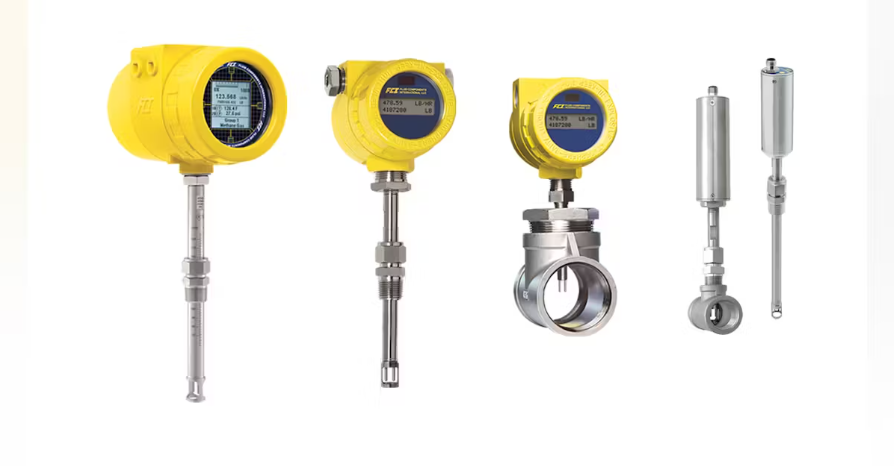
Thermal flow meters are widely used for measuring the mass flow rate of gases and, in some specialized designs, liquids. Their popularity comes from their ability to provide direct mass flow measurement without requiring separate pressure and temperature compensation. However, temperature plays a central role in how these instruments function, and it can significantly influence their accuracy, stability, and long-term reliability. Understanding how temperature affects the readings of thermal flow meters is essential for engineers, technicians, and operators who rely on precise flow data for process control, energy management, and regulatory compliance.
Fundamentals of Thermal Flow Meter Operation
Thermal flow meters operate based on the principle of heat transfer between a heated sensor and the flowing fluid. A typical instrument contains one or more temperature sensors, often resistance temperature detectors or thermistors. One sensor is heated above the fluid temperature, while another measures the actual fluid temperature. As the fluid flows past the heated sensor, it removes heat at a rate that depends on the mass flow rate and the thermal properties of the fluid. The instrument’s electronics interpret the resulting temperature difference or power required to maintain a constant temperature and convert it into a flow signal.
Relationship Between Heat Transfer and Flow
The amount of heat carried away from the sensor increases as mass flow increases. This heat transfer is governed by convective heat transfer mechanisms, which are strongly influenced by fluid temperature, thermal conductivity, specific heat, and density. Because temperature affects each of these properties, any variation in process temperature can alter the relationship between heat loss and mass flow. As a result, temperature is not just a secondary variable but a fundamental part of how thermal flow meters generate their readings.
The Central Role of Temperature in Measurement Accuracy
Temperature affects thermal flow meters in multiple, interconnected ways. It influences the baseline conditions under which the meter was calibrated, the physical behavior of the fluid, and the thermal balance within the sensor assembly. Understanding these interactions is key to interpreting flow readings correctly.
Impact of Process Fluid Temperature
Changes in Fluid Properties
As temperature changes, fluid properties such as density, viscosity, thermal conductivity, and specific heat capacity also change. For gases, density decreases as temperature increases at constant pressure, which directly affects mass flow measurement. Since thermal flow meters rely on heat transfer that is proportional to mass flow rather than volumetric flow, changes in density caused by temperature shifts can alter the heat transfer rate in subtle but important ways.
Thermal conductivity and specific heat determine how efficiently the fluid absorbs and transports heat away from the sensor. At higher temperatures, many gases exhibit increased thermal conductivity, which can enhance heat transfer even at the same mass flow rate. If these property changes are not properly accounted for in the meter’s calibration or compensation algorithms, the flow reading may drift from the true value.
Temperature Gradients and Stratification
Non-uniform temperature profiles within the pipe can also affect thermal flow meter readings. In some processes, especially those involving heated gases or poor mixing, temperature stratification can occur. If the thermal flow meter sensor is exposed to a temperature that is not representative of the average fluid temperature, the inferred mass flow may be inaccurate. This effect becomes more pronounced in larger pipes or at low flow velocities where mixing is limited.
Sensor Temperature and Heat Balance Effects
Sensor Overheat Ratio
Many thermal flow meters operate with a defined overheat ratio, meaning the heated sensor is maintained at a fixed temperature above the measured fluid temperature. This temperature difference is carefully selected during design and calibration to optimize sensitivity and stability. Changes in fluid temperature alter the absolute temperature of the sensor even if the overheat ratio remains constant.
At elevated temperatures, the sensor materials may exhibit different thermal resistance or electrical characteristics, affecting the relationship between power input and heat loss. This can introduce measurement nonlinearity or increased uncertainty if the meter is operated outside its specified temperature range.
Ambient Temperature Influence
Ambient temperature surrounding the meter body and electronics can also influence readings. Heat loss from the sensor is not only to the process fluid but also through the meter structure to the surrounding environment. Significant changes in ambient temperature can shift the thermal equilibrium, particularly in insertion-style thermal flow meters where part of the sensor assembly is exposed outside the pipe. Advanced designs include ambient temperature compensation, but extreme or rapidly changing conditions can still affect measurement stability.
Calibration Temperature and Its Importance
Calibration Conditions Versus Operating Conditions
Thermal flow meters are calibrated at specific temperatures and flow ranges, often using a particular gas composition under controlled laboratory conditions. If the actual process temperature deviates significantly from the calibration temperature, the relationship between heat transfer and mass flow may no longer match the calibration curve. This mismatch can lead to systematic errors in the indicated flow.
Manufacturers often provide correction factors or multi-point calibrations to address this issue. Some instruments include built-in temperature compensation algorithms that adjust the flow calculation based on real-time fluid temperature measurements. However, these algorithms are only valid within defined limits, making it essential to operate the meter within its specified temperature range.
Gas Composition and Temperature Interaction
For gas applications, temperature effects are closely linked to gas composition. A thermal flow meter calibrated for one gas at a given temperature may show increased error if the gas temperature changes along with composition. This is because different gases respond differently to temperature changes in terms of thermal conductivity and specific heat. In processes where both temperature and composition vary, such as combustion air or mixed gas streams, careful calibration and compensation become especially important.
High-Temperature and Low-Temperature Applications
Effects of High Process Temperatures
At high process temperatures, several challenges arise for thermal flow meters. Sensor materials may approach their thermal limits, leading to drift, reduced lifespan, or permanent damage. Electrical resistance changes in temperature sensors become more pronounced, potentially affecting measurement accuracy. Additionally, radiation heat transfer can become significant at elevated temperatures, introducing another heat loss mechanism that is not directly related to mass flow.
To address these issues, high-temperature thermal flow meters often use specialized materials, extended probe designs, or thermal isolation techniques. Even with these measures, temperature remains a dominant factor that must be carefully managed to ensure reliable readings.
Performance at Low Temperatures
Low-temperature applications, such as cryogenic or near-ambient gas flows, present a different set of challenges. Reduced thermal conductivity and changes in fluid properties can decrease the sensitivity of the heat transfer mechanism. Condensation or icing on the sensor can further disrupt heat transfer, leading to unstable or biased readings. In such environments, maintaining accurate temperature measurement and preventing external heat influences is critical.
Long-Term Stability and Temperature Cycling
Effects of Thermal Cycling
Repeated temperature cycling can affect the long-term stability of thermal flow meters. Expansion and contraction of sensor materials, solder joints, and electronic components can lead to mechanical stress and gradual changes in sensor characteristics. Over time, this can cause calibration drift, even if the meter remains within its specified operating temperature range.
Regular verification and recalibration are often recommended in applications with frequent or wide temperature swings. Monitoring temperature trends alongside flow readings can help identify early signs of temperature-related drift.
Aging and Sensor Degradation
Elevated operating temperatures can accelerate aging processes in sensor materials and electronics. Oxidation, diffusion, and changes in material structure can alter the thermal response of the sensor. These effects are cumulative and may not be immediately apparent, underscoring the importance of considering temperature not only as an instantaneous variable but also as a long-term influence on measurement performance.
Conclusion
Temperature has a profound and multifaceted impact on the readings of thermal flow meters. It affects fluid properties, heat transfer dynamics, sensor behavior, and calibration validity. While modern thermal flow meters incorporate sophisticated temperature compensation and robust sensor designs, they are still fundamentally dependent on stable and well-understood thermal conditions. Accurate flow measurement therefore requires careful attention to process temperature, calibration limits, installation practices, and long-term operating trends. By recognizing how temperature influences every aspect of thermal flow measurement, users can achieve more reliable data, improved process control, and extended instrument life in demanding industrial applications.
 Greek
Greek
 English
 Arabic
 French
 Spanish
 Portuguese
 Deutsch
 Turkish
 Dutch
Dutch
 Italiano
 Russian
 Romaian
 Portuguese (Brazil)