

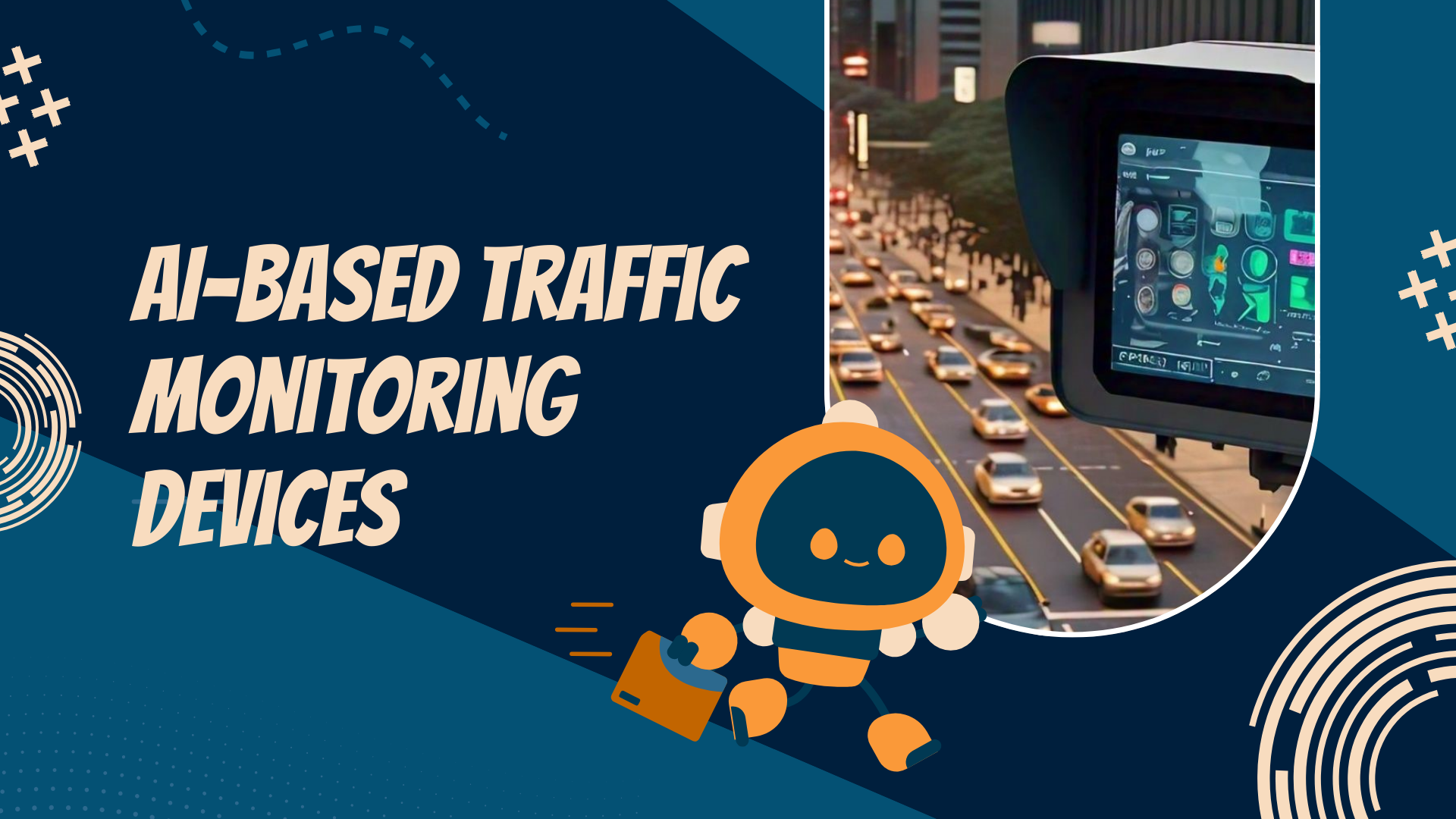
What Problems Can AI-based Traffic Monitoring Devices Solve on Busy Roads?

Why do traffic jams, accidents, and rule violations keep increasing on busy roads despite better infrastructure? The simple answer is that human-led traffic control cannot process real-time data fast enough. This is where traffic monitoring devices powered by artificial intelligence step in. They analyze road activity instantly, predict risks, and help authorities act before small issues turn into major disruptions.
AI-driven traffic monitoring helps reduce congestion, prevent accidents, enforce traffic laws, and improve emergency response; all in real time.
How AI Traffic Monitoring Works on Busy Roads
AI traffic monitoring systems use cameras, sensors, and data analytics to observe vehicle movement continuously. Instead of relying on manual observation, these systems process thousands of data points per second.
They can:
- Track vehicle speed and density
- Identify unusual driving patterns
- Detect incidents the moment they occur
- Share alerts with control rooms automatically
This real-time intelligence allows traffic authorities to move from reactive control to proactive management.
Key Traffic Problems AI Monitoring Devices Solve
1. Chronic Traffic Congestion
Congestion is not just caused by high vehicle volume. Poor signal timing, minor accidents, and lane misuse often create bottlenecks.
AI-powered systems:
- Adjust traffic signals dynamically based on flow
- Identify congestion hotspots instantly
- Suggest alternate routes through navigation systems
As a result, traffic keeps moving instead of piling up.
2. Delayed Accident Detection and Response

On busy roads, accidents often go unnoticed for critical minutes, worsening injuries and blocking lanes.
AI monitoring solves this by:
- Detecting sudden stops or collisions in real time
- Automatically alerting traffic police and ambulances
- Triggering warnings for approaching vehicles
Faster response times save lives and reduce secondary accidents.
3. Ineffective Traffic Law Enforcement
Manual enforcement struggles to monitor every lane and intersection simultaneously.
AI-enabled cameras ensure:
- Continuous monitoring without fatigue
- Accurate evidence collection
- Fair and consistent enforcement
This reduces dangerous behaviors like signal jumping and overspeeding.
4. Pedestrian and Cyclist Safety Risks
Busy roads are especially dangerous for pedestrians and cyclists, who are often overlooked in traffic planning.
With AI vision, monitoring systems can:
- Detect pedestrian movement near crossings
- Identify cyclists in blind spots
- Alert drivers or adjust signals automatically
This significantly lowers the risk of vulnerable road user accidents.
5. Unauthorized Lane Usage and Parking Violations
Improper parking and lane violations reduce road capacity and create sudden slowdowns.
AI monitoring helps by:
- Identifying illegally parked vehicles
- Detecting lane encroachment in real time
- Sending instant alerts to enforcement teams
Clearing these obstructions keeps traffic flowing smoothly.
6. Limited Data for Traffic Planning

Traditional traffic surveys are expensive and outdated by the time they are analyzed.
AI systems provide:
- Continuous data collection
- Accurate traffic volume trends
- Insights into peak hours and risky zones
Urban planners use this data to design better roads and policies.
7. Hit-and-Run and Vehicle Identification Challenges
Identifying vehicles involved in violations or crimes on busy roads is often difficult.
Using Number Plate Detection, AI systems can:
- Automatically read vehicle registration numbers
- Track vehicle movement across multiple locations
- Assist investigations with timestamped evidence
This increases accountability and discourages reckless driving.
Why AI Traffic Monitoring Is Essential for Smart Cities
AI traffic monitoring is no longer optional for growing cities. It supports:
- Faster emergency response systems
- Lower fuel consumption due to reduced idling
- Better air quality from smoother traffic flow
Smart cities rely on intelligent road systems to balance safety, efficiency, and sustainability.
Final Summary
AI-driven traffic solutions are transforming how cities manage busy roads. By improving congestion control, accident response, law enforcement, and data-driven planning, traffic speed monitoring systems help to create safer, faster, and more reliable road networks for everyone.
Common Questions About AI Traffic Monitoring
Q1. Can AI traffic monitoring really reduce accidents?
Yes. By detecting risky behavior early and enabling faster response, accident rates drop significantly.
Q2. Is AI monitoring accurate in heavy traffic?
Modern AI systems are trained on large datasets, making them highly reliable even in dense traffic conditions.
Q3. Does AI traffic monitoring invade privacy?
Most systems focus on vehicle behavior, not personal identity, and operate under strict data protection guidelines.