


Can Flow Meters Be Used for Very Low or High Flow Rates?
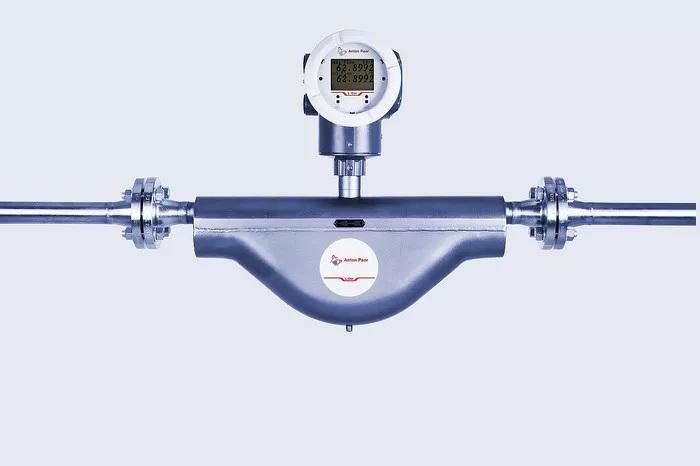
Flow measurement is a critical component of modern industrial, commercial, and scientific systems. Whether controlling chemical reactions, managing water distribution, monitoring gas delivery, or ensuring precise dosing, accurate flow data underpins safety and efficiency. A common question in system design and instrumentation is whether Flow Meters can be effectively used at the extreme ends of measurement—very low flow rates or very high flow rates. The answer is nuanced. While flow meters can indeed operate in these extremes, their performance depends heavily on technology selection, installation conditions, and an understanding of inherent limitations.
Understanding Flow Rate Extremes
Flow rate extremes present unique challenges. Very low flow rates involve minimal movement of fluid, where signal resolution and sensitivity become critical. Very high flow rates, on the other hand, involve large volumes, high velocities, and often elevated pressures, placing mechanical and structural stress on measuring devices.
Flow meters are designed with specific operating ranges, known as turndown ratios, which define how far above or below a nominal flow they can accurately measure. Outside these ranges, accuracy, repeatability, and reliability can degrade.
Defining Low and High Flow Conditions
Low flow conditions typically involve small volumes per unit time, such as laboratory-scale dosing, medical gas delivery, or leak detection. High flow conditions are common in pipelines, cooling water systems, power generation, and bulk transfer applications.
The physics of fluid behavior changes significantly across these ranges. Laminar flow dominates at very low rates, while turbulent flow is common at high rates. These differences directly affect how flow meters sense and calculate flow.
Flow Meters for Very Low Flow Rates
Sensitivity and Resolution Challenges
At very low flow rates, the primary challenge is detecting movement accurately. Small changes in flow may produce signals that are close to the noise threshold of the instrument. Flow meters used in these conditions must have high sensitivity and fine resolution.
Technologies such as thermal mass flow meters, positive displacement meters, and some Coriolis meters are well-suited for low flow measurement. These designs can detect subtle changes in heat transfer, displacement, or mass that correspond to small flow variations.
Importance of Turndown Ratio at Low Flow
The turndown ratio defines how wide a flow range a meter can measure while maintaining accuracy. For low flow applications, a high turndown ratio is essential. If the flow drops below the meter’s minimum measurable threshold, readings become unstable or inaccurate.
Flow meters with poor low-end performance may indicate zero flow when fluid is moving or fluctuate erratically. Selecting a meter specifically designed for low flow conditions ensures reliable diagnostics and process control.
Installation Effects on Low Flow Measurement
At low flow rates, installation factors have a greater impact on accuracy. Minor leaks, vibration, or air entrainment can distort readings. Flow meters must be installed in locations that minimize disturbance and maintain consistent fluid properties.
Straight pipe lengths, stable temperature conditions, and clean fluid are particularly important. Even slight deviations can overwhelm the small signals associated with low flow measurement.
Flow Meters for Very High Flow Rates
Structural and Mechanical Considerations
Very high flow rates subject flow meters to significant mechanical forces. High velocity fluid can cause erosion, vibration, and stress on internal components. Flow meters used in these applications must be robust and designed to withstand these conditions without degradation.
Technologies such as ultrasonic flow meters, differential pressure meters, and some turbine meters are commonly used for high flow rates. These designs can handle large volumes without introducing excessive pressure drop or mechanical wear.
Managing Pressure and Velocity Effects
At high flow rates, pressure drop across the flow meter becomes a critical concern. Excessive pressure loss can reduce system efficiency and increase operating costs. Flow meters must be selected to balance measurement accuracy with minimal flow restriction.
Velocity profiles also become more complex at high flow. Turbulence, swirl, and asymmetry can distort measurements if the meter is not properly installed. Flow conditioning and adequate straight pipe runs help mitigate these effects.
Thermal and Environmental Stress
High flow systems often operate under extreme temperatures or pressures. Flow meters must maintain accuracy despite thermal expansion, material fatigue, and environmental exposure.
Material selection becomes crucial. Metals, linings, and seals must resist corrosion, abrasion, and thermal cycling. Failure to match materials to operating conditions can lead to drift, leakage, or catastrophic failure.
Accuracy Across Extreme Ranges
Calibration Limitations
Flow meters are calibrated within specific ranges. At extreme low or high flows, calibration uncertainty increases. Maintaining accuracy requires calibration procedures that reflect actual operating conditions.
For low flow applications, calibration must account for signal resolution and baseline noise. For high flow applications, calibration must consider dynamic effects such as pulsation and turbulence.
Repeatability Versus Absolute Accuracy
In extreme conditions, repeatability may be more achievable than absolute accuracy. A flow meter may consistently report the same value under identical conditions even if the absolute value has some error.
Many process control applications prioritize repeatability because consistent trends allow for stable control. Understanding this distinction helps determine whether a given flow meter is suitable for extreme flow measurement.
Selecting the Right Technology for Extremes
Matching Flow Meter Type to Application
No single flow meter technology is ideal for all flow extremes. The choice depends on fluid type, flow range, accuracy requirements, and operating environment.
For very low flow rates, meters that measure mass or displacement directly tend to perform better than velocity-based designs. For very high flow rates, non-intrusive or low-obstruction meters reduce wear and pressure loss.
Selecting the wrong technology can lead to persistent measurement errors, maintenance issues, and compromised safety.
System Integration and Signal Processing
Modern flow meters often incorporate advanced signal processing to extend usable range. Digital filtering, temperature compensation, and adaptive algorithms help improve performance at extremes.
However, signal processing cannot overcome fundamental physical limitations. Understanding both the capabilities and boundaries of a meter ensures realistic performance expectations.
Maintenance and Longevity at Extreme Flows
Wear and Fouling at High Flow
High flow rates accelerate wear on mechanical components. Erosion from particulates and cavitation can damage sensors and housings. Regular inspection and maintenance are essential to sustain accuracy.
Flow meters designed for high flow often minimize moving parts or isolate sensors from direct contact with fluid, reducing wear and extending service life.
Drift and Sensitivity Loss at Low Flow
At low flow rates, long-term drift and sensitivity loss can occur due to contamination, sensor aging, or environmental changes. Routine verification helps detect these issues early.
Flow meters used in low flow applications benefit from stable operating conditions and periodic recalibration to maintain reliability.
Applications Where Extremes Are Common
Industries such as pharmaceuticals, semiconductor manufacturing, oil and gas, power generation, and environmental monitoring frequently operate at flow extremes. In these sectors, accurate measurement is critical for safety, quality, and compliance.
Flow meters used in these applications are often specialized, reflecting the importance of matching technology to flow conditions. General-purpose meters may not perform adequately at the extremes.
Conclusion: Flow Meters and Extreme Flow Rates
Flow Meters can indeed be used for very low or very high flow rates, but success depends on careful selection, proper installation, and realistic performance expectations. Extreme conditions amplify the inherent challenges of flow measurement, making technology choice and system design critical.
For very low flows, sensitivity, resolution, and stability are paramount. For very high flows, mechanical robustness, minimal pressure drop, and resistance to wear are essential. Understanding these requirements allows flow meters to deliver reliable data even at the edges of their operating range.
By aligning flow meter technology with application demands, industries can achieve accurate measurement, improved control, and long-term reliability across the full spectrum of flow conditions.

 English
 Arabic
 French
 Spanish
 Portuguese
 Deutsch
 Turkish
 Dutch
Dutch
 Italiano
 Romaian
 Portuguese (Brazil)
 Greek
Greek